Films People Pull a Fast One Night Beat Reading Room On TV Shop
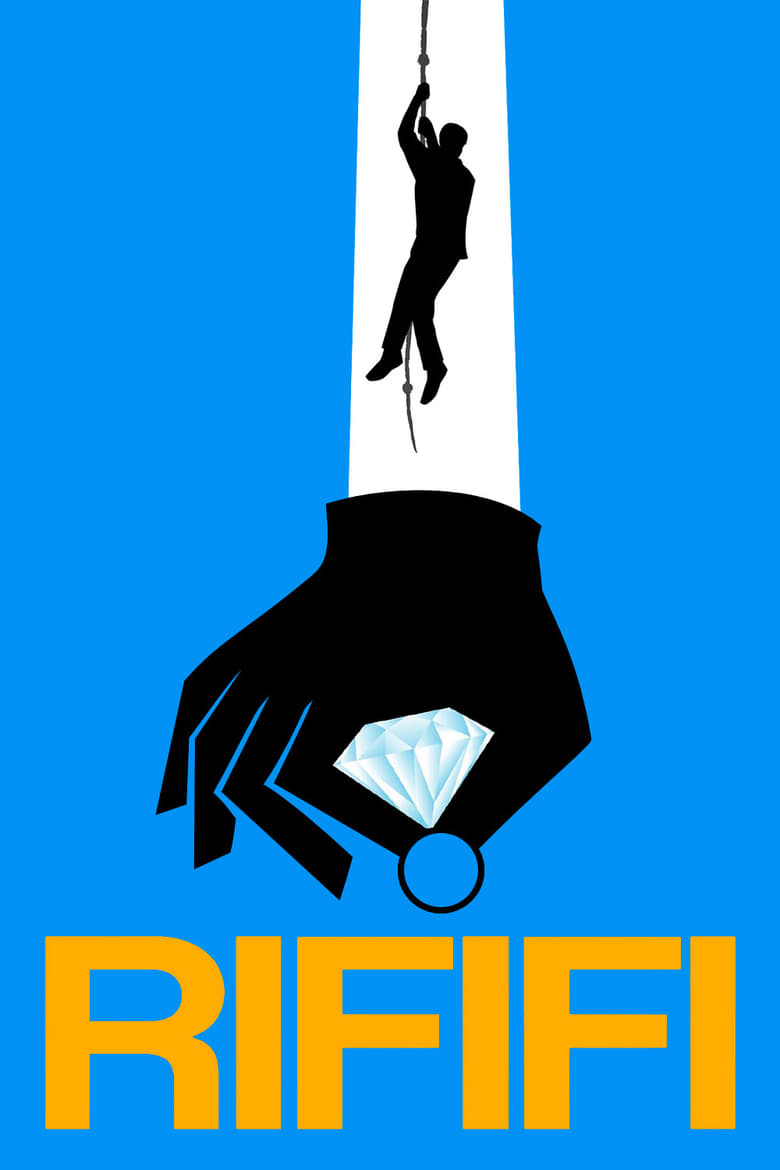
Rififi 1955
1955 Indusfilms
★★★★★ Essential
Film Noir · 118 minutes · Black & White

Rififi

Directed by Jules Dassin
Year 1955
Runtime 118 min
Studio Indusfilms
TMDB 7.8 / 10
"Three men plan a perfect crime; the city waits to collect what is owed."

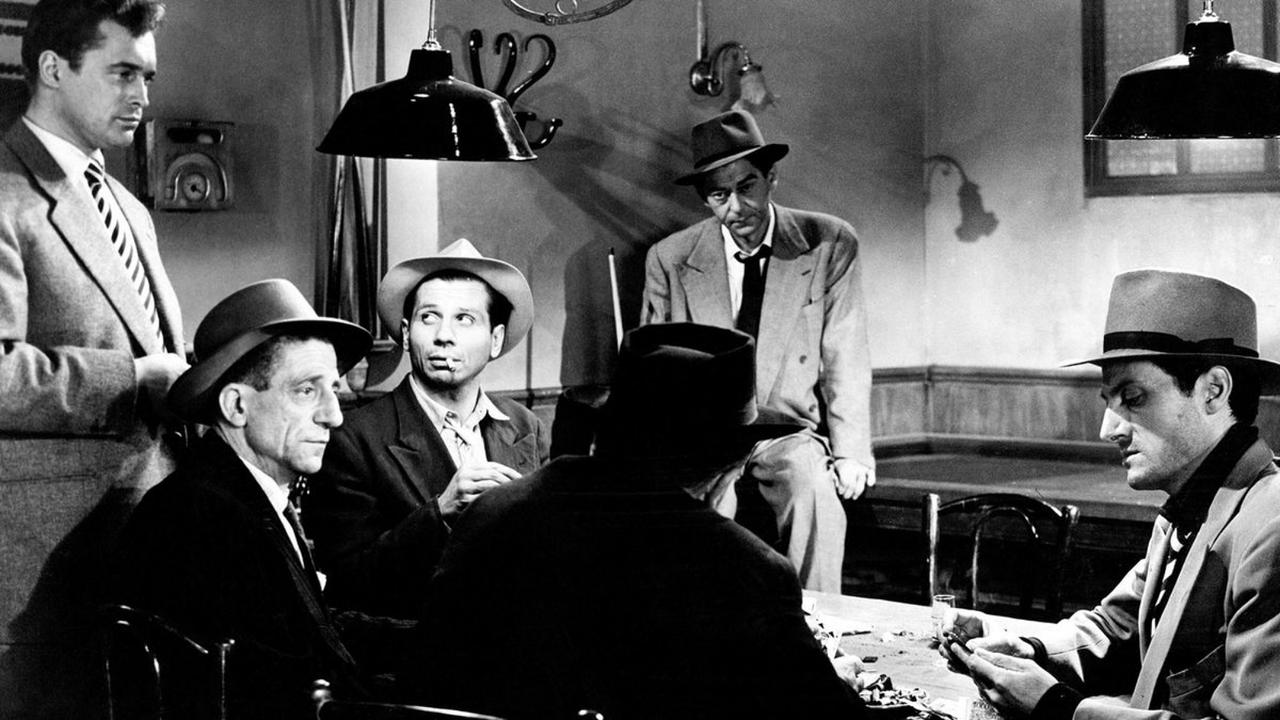
Tony le Stéphanois returns to Paris after a stretch in prison, older and worn through, with a gambling debt and little else to show for his years. His friends Jo and Mario pull him toward one last score: a jewel robbery at the Rue de Rivoli shop of Mappin & Webb. Tony agrees, and the crew is completed by César, a locksmith with a taste for women that will prove costly. What follows is methodical preparation – the surveillance, the tools, the silence – as four men commit themselves to a single violent act of acquisition.

The heist itself unfolds without dialogue or score, a sustained sequence of craft and nerve that leaves no room for sentiment. But the silence does not hold. César breaks discipline over a woman, and the jewels pass into hands connected to the Grutter syndicate, a Montmartre operation with reach and patience. The theft of the stolen goods forces Tony back into motion, now working alone and against men who hold something more valuable than diamonds: Jo's young son Tonio, taken as leverage.

Rififi places the heist film inside a moral structure where professional competence offers no immunity from consequence. The world Jules Dassin builds belongs to the tradition of French poetic realism as much as to American noir – fatalism runs beneath every transaction, and loyalty, the one virtue these men share, becomes the instrument of their ruin. The film asks what a man's word is worth in a world that has already decided his worth for him.
Classic Noir

Rififi arrived in 1955 as the work of an American director in exile – Jules Dassin, blacklisted in Hollywood, reconstituting himself in Europe – and the film carries that displacement in its bones. Shot in Paris locations that feel simultaneously documentary and doomed, it reroutes the procedural energy of the American crime film through a French sensibility where fate is not a plot device but a condition of existence. The celebrated heist sequence, nearly thirty minutes without dialogue or music, remains the film's argument in concentrated form: that technical mastery and human fallibility occupy the same body, and that one will always undo the other. What distinguishes Rififi from its genre contemporaries is its refusal to treat the criminal milieu as either glamorous or contemptible. Tony le Stéphanois is neither redeemed nor condemned by the film's conclusion; he simply exhausts himself against the weight of what he is. Dassin's picture established a template for the European heist film that would influence a generation of filmmakers, while remaining firmly its own work – precise, cold-eyed, and entirely earned.

– Classic Noir
5 ★★★★★ Essential
Credits

The Crew

DirectorJules Dassin
ScreenplayRené Wheeler
CinematographyPhilippe Agostini
MusicGeorges Auric
EditingRoger Dwyre
CostumesRosine Delamare
ProducerPierre Cabaud
Performances

The Cast

Close Reading

The Signature Scene

Rififi – scene
The Jewelry Store Heist Silence in the Vault

Philippe Agostini's camera works in a register of extreme restraint during the heist sequence, holding to medium and close shots that track tools and hands rather than faces, emphasizing the physical texture of the work: the slow penetration of the ceiling, the umbrella rigged to catch falling plaster, the careful neutralization of the alarm. Light is reduced to what the thieves themselves carry – a single lamp that carves the frame into functional zones of visibility and darkness, leaving the surrounding space to implication. Agostini composes the sequence as a series of self-contained problems, each shot a question about whether the next action will hold.

The absence of music or dialogue does not create tension so much as it creates a kind of professional intimacy – the viewer is admitted into the discipline of the act, permitted to understand it on its own terms before the consequences arrive. What the scene reveals about character is almost incidental: these men are good at this, and that goodness changes nothing about where they are going. The sequence argues, without stating it, that competence is not the same as control, and that the silence surrounding a crime is always temporary.

Visual Language

The Cinematography

🎞️
Philippe Agostini – Director of Photography

Philippe Agostini brings to Rififi a visual logic rooted in postwar French cinema rather than in Hollywood expressionism, and the distinction matters. Where American noir frequently deploys high-contrast lighting as moral commentary – shadow falling on the corrupt, light reserved for the innocent – Agostini distributes darkness more evenly, treating it as a condition of the milieu rather than a judgment upon it. Location shooting in Paris gives the film an atmosphere of ambient authenticity: wet streets, the geometry of Montmartre stairways, interiors that feel inhabited rather than dressed. Studio sequences, particularly the heist itself, are lit with a rigor that mirrors the characters' own concentration, the frame pared to essentials. Agostini uses middle focal lengths that keep the viewer at the distance of a careful observer, never pulling into the conspiratorial intimacy of the close-up except at moments of genuine emotional exposure. The result is a visual grammar that treats crime as ordinary labor and its practitioners as men legible within the world they inhabit.

In the Catalogue

Themes & Motifs

Availability

Where to Watch

Also in the Directory

See Also