Films People Pull a Fast One Night Beat Reading Room On TV Shop
Big Heat 1953
1953 Columbia Pictures
★★★★☆ Recommended
Film Noir · 89 minutes · Black & White

Big Heat

Directed by Fritz Lang
Year 1953
Runtime 89 min
Studio Columbia Pictures
TMDB 7.7 / 10
"A decent man cleans a corrupt city, and the city makes him pay for it."

When a veteran police sergeant named Tom Duncan puts a bullet in his own head, his wife Bertha quietly buries the suicide note and begins collecting payments from Mike Lagana, the crime boss whose organization Duncan served. Det. Sgt. Dave Bannion, assigned to close the case as a routine matter, cannot leave it alone. A phone call from a frightened woman, a threat made against his family, and a department that wants silence all push Bannion toward a private obsession that no badge can contain.

After a car bomb meant for Bannion kills his wife Katie, he is suspended, stripped of institutional protection, and forced to operate outside the law he once represented. Into his orbit drifts Debby Marsh, the kept woman of Lagana's enforcer Vince Stone, whose casual sadism she has absorbed until a moment of impulsive sympathy brings his violence down on her. Bannion and Debby form an uneasy alliance – each damaged, each with something to prove – and the investigation becomes as much about survival and retribution as it is about justice.

The Big Heat belongs to a cycle of early 1950s noirs in which the procedural thriller is rerouted through domestic catastrophe and institutional betrayal. Fritz Lang frames the corrupt syndicate not as a foreign intrusion but as an extension of civic life, embedded in the police department, the mayor's office, and the quiet arrangements of ordinary citizens. The result is a crime film in which rectitude is the most dangerous quality a man can possess.
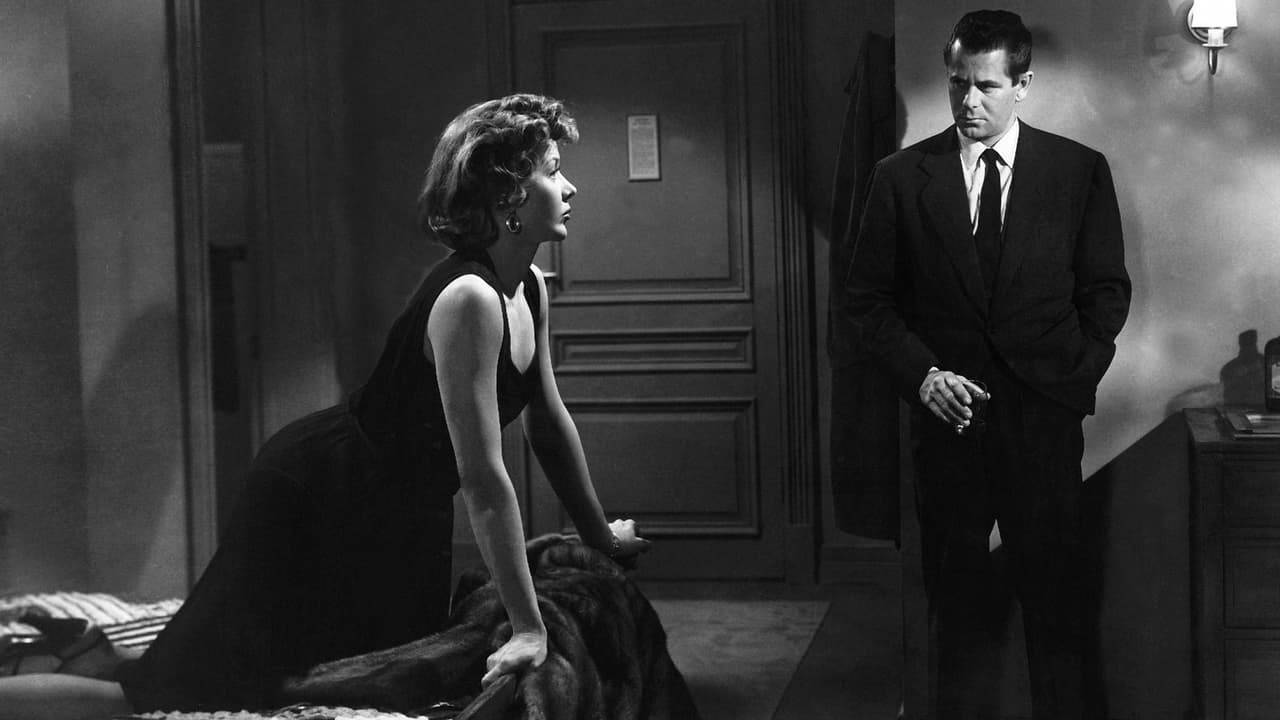
Classic Noir

Fritz Lang's American noir masterwork is among the most cold-eyed indictments of organized corruption the genre produced. Where many noirs locate moral failure in the seductive femme fatale or the weak man who follows her, The Big Heat distributes its pathology far more widely: the police lieutenant who looks away, the widow who banks her silence, the neighbors who ask no questions. Glenn Ford's Bannion is not a romantic figure undone by desire but a functionally decent man whose decency, once activated, cannot be switched off – a quality the film treats as both virtue and liability. Lang and screenwriter Sydney Boehm, adapting William P. McGivern's serial novel, keep the mechanics of the syndicate deliberately mundane; power here is administrative rather than theatrical. The film arrived in 1953, when Senate hearings on organized crime were still fresh in public memory, and it absorbs that anxiety into its fabric without ever becoming a civics lesson. What lifts it above topicality is Lang's precision with space and threshold – doorways, telephones, the domestic interior as a place that can be breached.

– Classic Noir
4 ★★★★☆ Recommended
Credits

The Crew

DirectorFritz Lang
ScreenplaySydney Boehm
CinematographyCharles Lang
MusicHenry Vars
EditingCharles Nelson
Art DirectionRobert Peterson
CostumesJean Louis
ProducerRobert Arthur
Performances

The Cast

Close Reading

The Signature Scene

Big Heat – scene
Vince Stone's Apartment Coffee Thrown at Debby

Lang and cinematographer Charles Lang frame the sequence in the functional mid-range of a well-lit apartment, refusing the shadows that softer noir would reach for. Vince Stone occupies the center of the frame, Debby slightly behind him and to the left, her body angled as though already bracing. The camera does not cut away or reframe to protect the viewer; it holds as Stone lifts the coffee pot and the scalding liquid crosses the air. Light falls cleanly on both faces, making the act legible and unhurried.

The scene's argument is not about shock but about transaction: Debby has tolerated Stone's world as a form of economic arrangement, and what she receives here is the arrangement's honest face. Lang refuses to aestheticize the violence or to sentimentalize the victim's reaction. The moment functions as a pivot on which Debby's allegiances shift – not because she discovers conscience but because the cost of complicity has become physical and undeniable. It is the film's thesis rendered in a single gesture.

Visual Language

The Cinematography

🎞️
Charles Lang – Director of Photography

Charles Lang – a studio craftsman with a long Columbia career and a sensibility more quietly precise than florid – shoots The Big Heat in a mode that might be called institutional realism. The lighting setups are rarely expressionistic in the German manner one might expect from Lang; instead, they favor the flat, slightly harsh illumination of office interiors and suburban living rooms, environments whose ordinariness amplifies rather than conceals the violence passing through them. Lang and Fritz Lang together resist the temptation to code corruption through shadow and exotic geometry. When darkness does appear, it is earned rather than decorative, as in the low-key compositions surrounding Bannion's solitary movement through the city's margins after his suspension. The camera maintains a middle distance that respects character without offering refuge; close-ups are reserved for moments of decision or recognition, giving them a weight they would lose if deployed more freely. The visual language insists that what we are watching is not a fever dream but a civic reality.

In the Catalogue

Themes & Motifs

Availability

Where to Watch

Also in the Directory

See Also