Films People Pull a Fast One Night Beat Reading Room On TV Shop
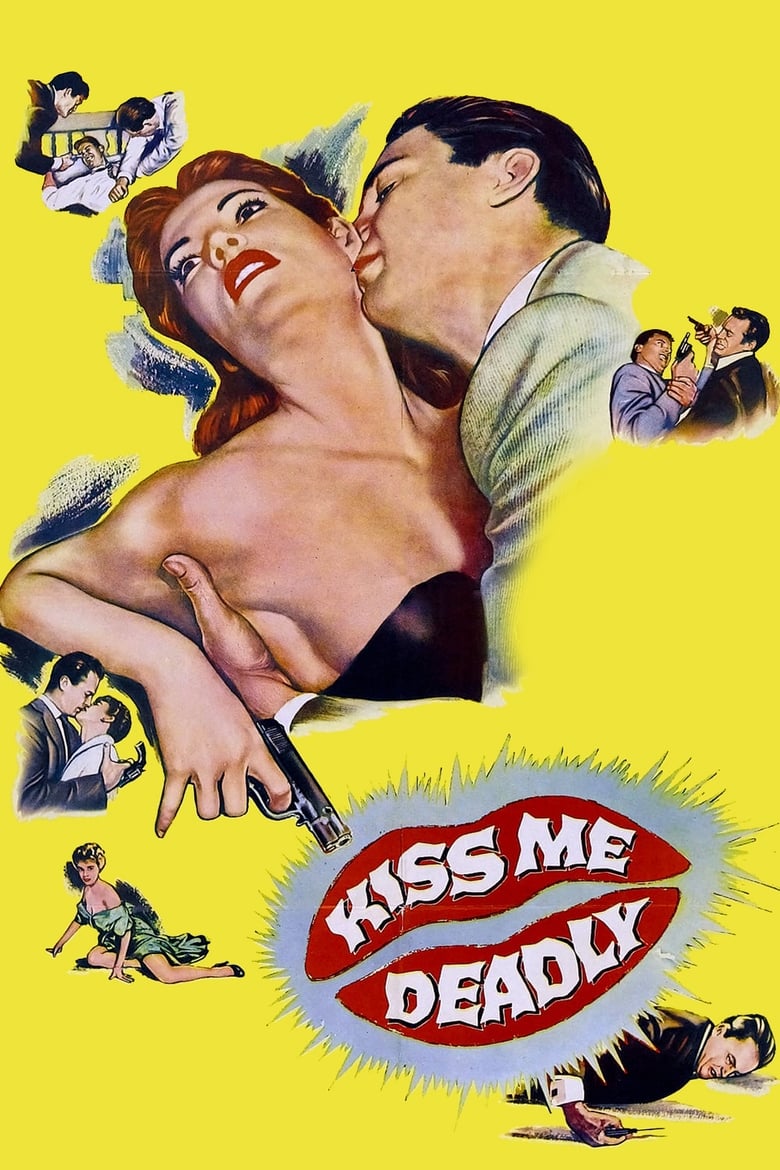
Kiss Me Deadly 1955
1955 Parklane Pictures Inc.
★★★★☆ Recommended
Film Noir · 106 minutes · Black & White

Kiss Me Deadly

Directed by Robert Aldrich
Year 1955
Runtime 106 min
Studio Parklane Pictures Inc.
TMDB 7.2 / 10
"A private detective follows a dead woman's secret into territory where no one walks away clean."

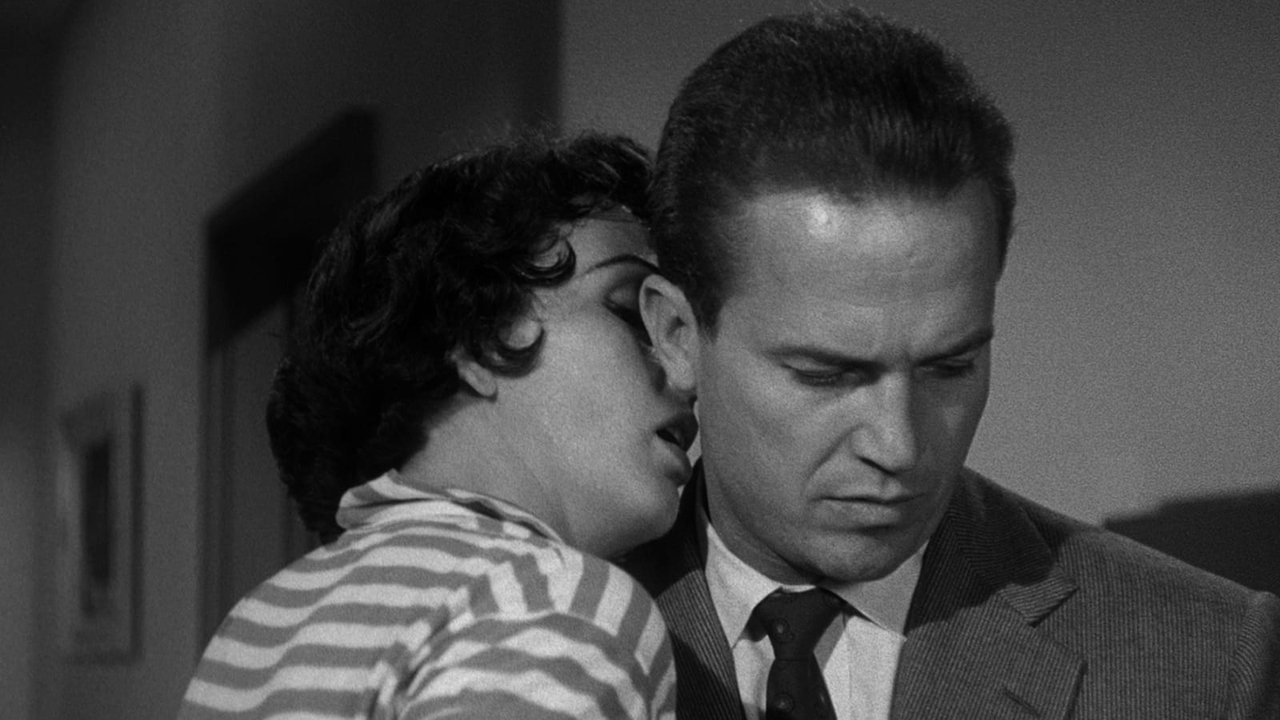
On a dark California highway, Mike Hammer – Ralph Meeker's coarse, self-interested private investigator – picks up Christina Bailey, a terrified hitchhiker played by Cloris Leachman. Before the night is over she is dead, and Hammer, nearly killed alongside her, finds himself pulled toward a conspiracy he cannot name and does not fully understand. The trail leads through Los Angeles underworld figures, federal investigators, and a circle of desperate people orbiting something referred to only as 'the great whatsit.'

Hammer is not a sympathetic protagonist. He extorts, manipulates, and bullies his way through the investigation, treating everyone around him – including his loyal associate Velda, played by Maxine Cooper – as instruments. The antagonists are no simpler: Dr. G.E. Soberin, rendered by Albert Dekker with cold precision, operates at a level of ambition that the film takes pains to distinguish from ordinary criminal greed. The syndicate figure Carl Evello and the various agents closing in from multiple directions keep allegiances deliberately unstable.

Kiss Me Deadly uses the architecture of the hardboiled detective film to arrive somewhere the genre had not previously gone. The Spillane source novel is largely discarded in favor of something more corrosive – a post-atomic parable in which masculine aggression and acquisitive instinct collide with a force neither can contain. The film sits at the extreme edge of classical Hollywood noir, where genre conventions are present but under sustained pressure.
Classic Noir

Robert Aldrich's 1955 film is one of the few American pictures of its decade that earns the description apocalyptic without hyperbole. Working from A.I. Bezzerides's script – which strips Spillane's novel of most of its politics and replaces them with something darker – Aldrich constructs a Los Angeles that operates as a moral void dressed in postwar prosperity. Hammer is a figure the film refuses to redeem: he is brutal, mercenary, and largely indifferent to the people who die around him, yet the camera follows him with the same procedural attention classical noir gives its more tortured protagonists. That formal continuity with genre convention, set against a narrative that systematically demolishes genre satisfactions, is what gives the film its unresolved charge. Ernest Laszlo's low-angle, wide-lens compositions reinforce a world that will not hold still long enough to be understood. Kiss Me Deadly anticipated the European art cinema's use of noir as cultural diagnosis by several years, and its influence runs through Godard, Pakula, and well beyond.

– Classic Noir
4 ★★★★☆ Recommended
Credits

The Crew

DirectorRobert Aldrich
ScreenplayA.I. Bezzerides
CinematographyErnest Laszlo
MusicFrank De Vol
EditingMichael Luciano
Art DirectionWilliam Glasgow
ProducerRobert Aldrich
Performances

The Cast

Close Reading

The Signature Scene

Kiss Me Deadly – scene
Malibu Beach House – Final Act The Box Opens at Last

Aldrich and Laszlo keep the camera low and close as the beach house interior floods with an otherworldly light. The source – a cylindrical container whose contents the film has withheld from visual confirmation – pulses from off-screen, throwing hard sodium-white light across faces that register something between awe and dissolution. The frame is deliberately disorienting: vertical lines of the doorframe and the horizontal floor produce a geometry that the encroaching light begins to erase. There is no editorial flourish, no music swell. The camera holds its position as the room changes around it.

The scene functions as the film's argument made literal. Everything Hammer's brutish investigation has been pointed toward turns out to be something no one – not the criminals, not the federal agents, not Hammer – had the framework to handle. The 'great whatsit' is not wealth or leverage or even power in any familiar sense. The film suggests that the postwar appetite for acquisition, for knowing and possessing whatever lies behind the next locked door, is not a human trait that can be satisfied. It is one that can only detonate.

Visual Language

The Cinematography

🎞️
Ernest Laszlo – Director of Photography

Ernest Laszlo shoots Kiss Me Deadly with a deliberate visual aggression that matches the film's tonal argument. Working frequently with wide-angle lenses at close range, Laszlo distorts faces and interiors in ways that keep the viewer slightly off-balance without announcing the technique. Low camera placement – a recurrent choice throughout – makes ceilings visible and confines characters within the frame rather than liberating them within open space. Location shooting in Los Angeles grounds the film in recognizable mid-century geography while Laszlo's lighting refuses that geography any warmth: streetlamps and neon produce isolated pools of visibility surrounded by dense black. Interior scenes use hard, directed sources rather than fill, leaving half a face or an entire wall unlit. The effect is a visual register in which information is always partial and nothing can be fully seen. This is not stylistic decoration but moral logic: the film is about the consequences of reaching for things one cannot see clearly, and Laszlo's cinematography enacts that condition in every setup.

In the Catalogue

Themes & Motifs

Availability

Where to Watch

Also in the Directory

See Also