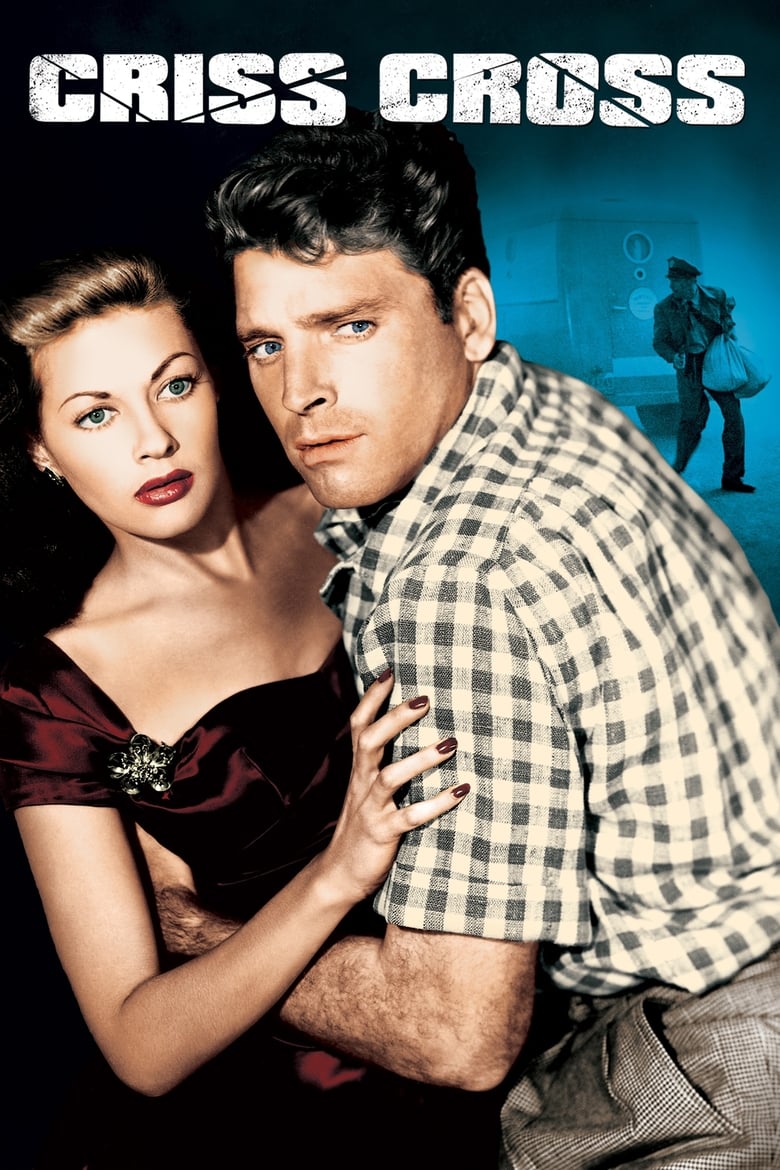
Steve Thompson (Burt Lancaster) has come back to Los Angeles, back to his old neighborhood, back to his job as an armored car driver – and back, inevitably, to Anna (Yvonne De Carlo), the woman he divorced and cannot stop wanting. When he finds her dancing with small-time racketeer Slim Dundee (Dan Duryea) at a local bar, the reunion feels less like chance than compulsion. Anna has since married Dundee, but the attraction between her and Steve reignites with the same self-destructive heat that destroyed their marriage the first time.
Caught by Dundee's men in what looks like a compromising situation, Steve improvises a cover: he claims he was proposing a heist to Dundee, offering inside knowledge of the armored car routes. The lie becomes a plan. Detective Pete Ramirez (Stephen McNally), who has long suspected the triangle forming around Anna, watches from the margins as Steve moves deeper into collusion with Dundee's syndicate. What Steve tells himself is a scheme to win Anna back and then escape with her is, in every observable detail, a trap he is constructing around himself.
Criss Cross belongs to that strain of postwar noir where the femme fatale operates less through overt manipulation than through the hero's own inability to see clearly. The heist at the film's center functions not as a thriller mechanism but as an externalization of Steve's psychology – a man so determined to believe in a future with Anna that he engineers his own destruction in her name. The film refuses sentiment without abandoning sympathy, tracking its protagonist toward a conclusion that feels, from the opening frames, already written.
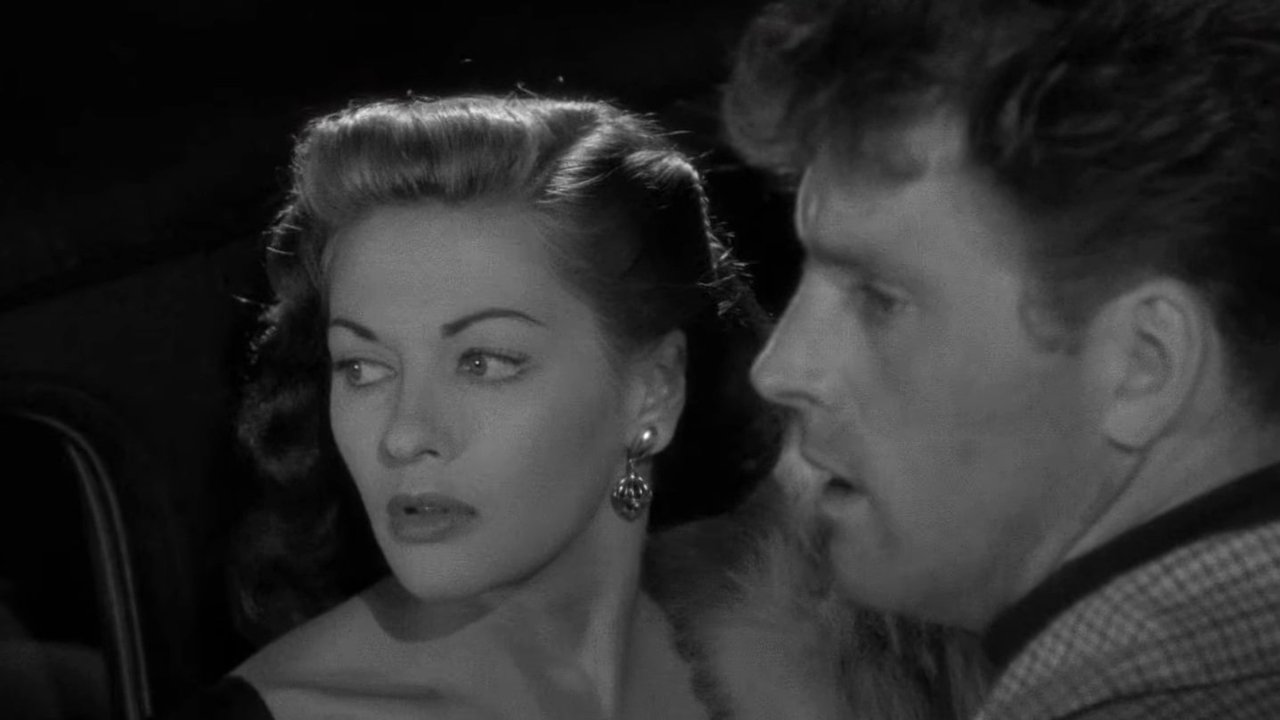
Robert Siodmak's Criss Cross arrived near the peak of his American period, following The Killers (1946) and The Spiral Staircase (1946), and it consolidates rather than advances his formal concerns. What distinguishes the film is its structural fatalism: a brief prologue set late in the narrative plants the audience inside the outcome before the backstory begins, a device that converts suspense into something closer to elegy. Lancaster brings an unusual quality to Steve Thompson – not cunning, not hardboiled, but genuinely deluded, a man whose obsession reads as ordinary emotional weakness scaled to fatal consequence. Yvonne De Carlo's Anna is deliberately difficult to read, which is the point; she may be calculating or she may simply be opportunistic, and the film declines to arbitrate. Dan Duryea, cast against the grain of his usual sly menace, plays Dundee as something more volatile. Franz Planer's cinematography and Miklós Rózsa's score – the latter recycling motifs from The Killers with purpose rather than laziness – give the film a consistency of mood that compensates for a mid-section that loses some tension. It is a film about a man who understands, on some level, exactly what is happening to him, and proceeds anyway.
– Classic Noir
Following the heist ambush that leaves Steve badly wounded, Anna visits him in the hospital. Planer frames the scene in tight, shallow space: the white institutional walls offer no shadow to hide in, an almost clinical reversal of the film's prevailing nocturnal palette. The camera holds on Lancaster's face – bruised, immobile, stripped of the physical confidence that defines him elsewhere – while De Carlo moves in and out of the frame's edge, her presence contingent, never fully committed to the center of the image. Light falls flatly from above, the source neutral and indifferent, denying both characters the romanticism that low-key chiaroscuro might otherwise provide.
The scene functions as the film's moral X-ray. Steve, unable to act, can only watch and listen, and what he hears from Anna is not reassurance but evasion. The composition – his confinement, her mobility – makes visible what the narrative has implied throughout: he has been stationary all along, the fixed point around which other people's intentions rotate. The hospital's white walls, replacing the bar's neon and the street's shadow, suggest not safety but exposure. Whatever Steve believed about Anna, and about himself, the room's flat light leaves nowhere for illusion to survive.
Franz Planer brings to Criss Cross a visual strategy rooted in location specificity and controlled tonal contrast. Shooting partly on location in Los Angeles – the Bunker Hill neighborhood, Olvera Street, the actual topography of working-class postwar LA – Planer grounds the film's fatalism in geography that feels inhabited rather than constructed. His key-light placements tend to isolate Lancaster within the frame, cutting him off from backgrounds that suggest community or escape; supporting players are frequently lit from angles that flatten or obscure their expressions, reinforcing the protagonist's inability to read the people around him. Shadow work in the nightclub sequences uses venetian-blind and lattice patterns with restraint, avoiding the decorative excess such devices sometimes produce in lesser noirs. When the film moves indoors to the heist sequence, Planer shifts to harder, more angular sources that make the space feel mechanically hostile. The cinematography does not merely illustrate the story's moral logic – it enacts the narrowing of Steve Thompson's world, frame by frame.
Criterion Channel's presentation is the most reliable source for a clean, uncompressed transfer of the film, often included within curated Siodmak or noir programming contexts.
PeacockSubscriptionAs a Universal International production, Criss Cross has historically appeared on Peacock as part of the studio's classic library, though availability should be confirmed at time of viewing.
TubiFreeTubi has carried the film in its classic noir rotation; picture quality varies, but the platform offers free access without registration.