Films People Pull a Fast One Night Beat Reading Room On TV Shop
Reckless Moment 1949
1949 Walter Wanger Productions
★★★★☆ Recommended
Film Noir · 82 minutes · Black & White

Reckless Moment

Directed by Max Ophüls
Year 1949
Runtime 82 min
Studio Walter Wanger Productions
TMDB 6.8 / 10
"A mother's desperate secret draws a stranger into a debt neither can repay."

When Lucia Harper, a composed suburban wife managing her family's Balboa Island home while her husband works abroad, discovers that her teenage daughter Bea has been involved with Ted Darby – a dissolute older man with a taste for blackmail – she moves swiftly to end the affair. She travels to Los Angeles to confront Darby and pay him off, but he refuses. Hours later, Darby turns up dead on the Harpers' property, and Lucia, believing Bea responsible, conceals the body before dawn breaks over the water.

The concealment does not hold. Martin Donnelly, a quietly watchful Irish-American working for a criminal syndicate, arrives at the Harper house holding Darby's letters as collateral for a debt. He is there to collect money from Lucia, yet something shifts in him as he observes the household – its domestic rhythms, its small dignities, the weight Lucia carries alone. Donnelly is neither villain nor savior: he occupies the film's moral middle ground with a kind of rueful clarity, drawn into a situation he can neither profit from nor leave behind.

The Reckless Moment belongs to a strand of postwar noir in which the family home itself becomes a trap rather than a refuge. The crime is not romantic; it is practical and domestic, growing out of the ordinary labor of keeping a household intact. Ophüls threads the film's genre mechanics – blackmail, a concealed body, syndicate pressure – through the architecture of middle-class life, and the result is a noir that measures its darkness not in back alleys but in mortgage payments and unreturned telephone calls.
Classic Noir

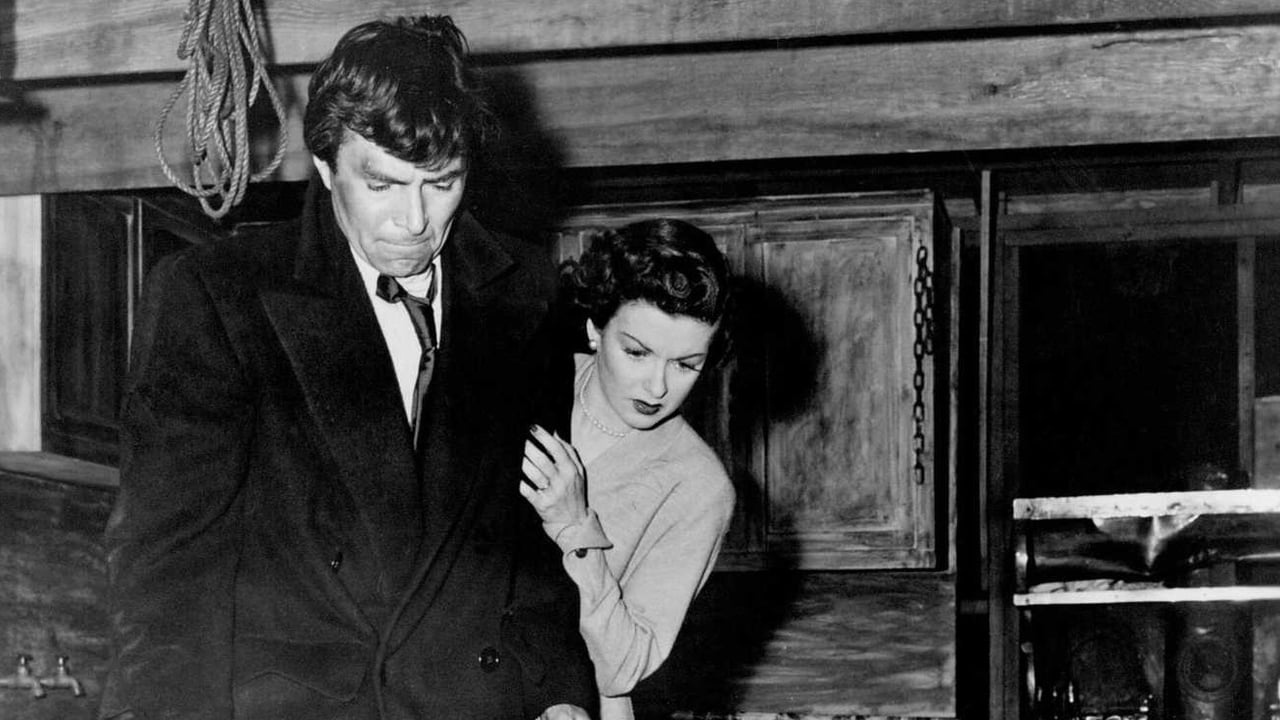
The Reckless Moment occupies a precise and underexplored position in the American noir cycle: it is a film about complicity that treats the suburban household not as an ironic backdrop but as the actual site of entrapment. Ophüls, working in a register considerably quieter than his European melodramas, finds in Lucia Harper's predicament a structural critique of the postwar domestic ideal – the absent husband, the burden of competence assigned to the wife, the isolation that competence conceals. James Mason's Donnelly is among the period's more nuanced male figures: he is coercive and tender by turns, and his trajectory carries the film's emotional logic more fully than any scene of overt threat could. Joan Bennett's performance, largely internal, does the harder work of showing a woman who has run out of room to maneuver. Burnett Guffey's cinematography keeps the Balboa Island setting luminous and cold in equal measure, denying the audience any comfortable picturesque. The film's brevity – eighty-two minutes – is not a limitation; it is the correct length for a story about a life with no margin left.

– Classic Noir
4 ★★★★☆ Recommended
Credits

The Crew

DirectorMax Ophüls
ScreenplayRobert Soderberg
CinematographyBurnett Guffey
MusicHans J. Salter
EditingGene Havlick
Art DirectionCary Odell
ProducerWalter Wanger
Performances

The Cast

Close Reading

The Signature Scene

Reckless Moment – scene
The Boathouse, Before Dawn Weight Dragged Through Water

Guffey's camera holds on Lucia at the shoreline in the pre-dawn dark, the frame organized around the diagonal pull of rope and the flat black surface of the water. Light comes from no identifiable source – a diffuse gray that dissolves the horizon line and leaves the figure of Lucia half-absorbed into the background. The composition refuses to dramatize: there is no expressive shadow, no theatrical contrast. The ordinariness of the framing is the point. The camera tracks her effort at a measured distance, close enough to observe but not close enough to console.

The scene establishes the film's central argument before a word of dialogue has complicated it. Lucia is not a woman undone by passion or greed – she is a woman performing labor, the same competent, invisible labor the film will trace throughout. What Ophüls shows here is that the line between the domestic work she does every day and the concealment of a body is, in material terms, not a very wide line at all. The scene's quiet is the film's darkest statement.

Visual Language

The Cinematography

🎞️
Burnett Guffey – Director of Photography

Burnett Guffey shoots The Reckless Moment with a restraint that refuses to let the genre's visual conventions do the moral work for it. Where classic noir DP work reaches for Expressionist shadow to signal corruption or danger, Guffey keeps much of the film in an even, coastal gray – a light that is neither flattering nor condemning. The Balboa Island exteriors carry a bleached quality, as if the sun has dried everything out rather than warmed it, and the domestic interiors are lit functionally, with shadows that accumulate in corners rather than slashing across faces. Ophüls's characteristic moving camera is present but subdued: the long takes that track Lucia through the house emphasize the physical extent of her domain while simultaneously measuring its confinement. The lens choices favor a slight compression of space that makes rooms feel occupied in the wrong way – too full of objects, too watched. Guffey's work here supports a film whose moral argument depends on the mundane looking exactly like itself.

In the Catalogue

Themes & Motifs

Availability

Where to Watch

Also in the Directory

See Also