Films People Pull a Fast One Night Beat Reading Room On TV Shop
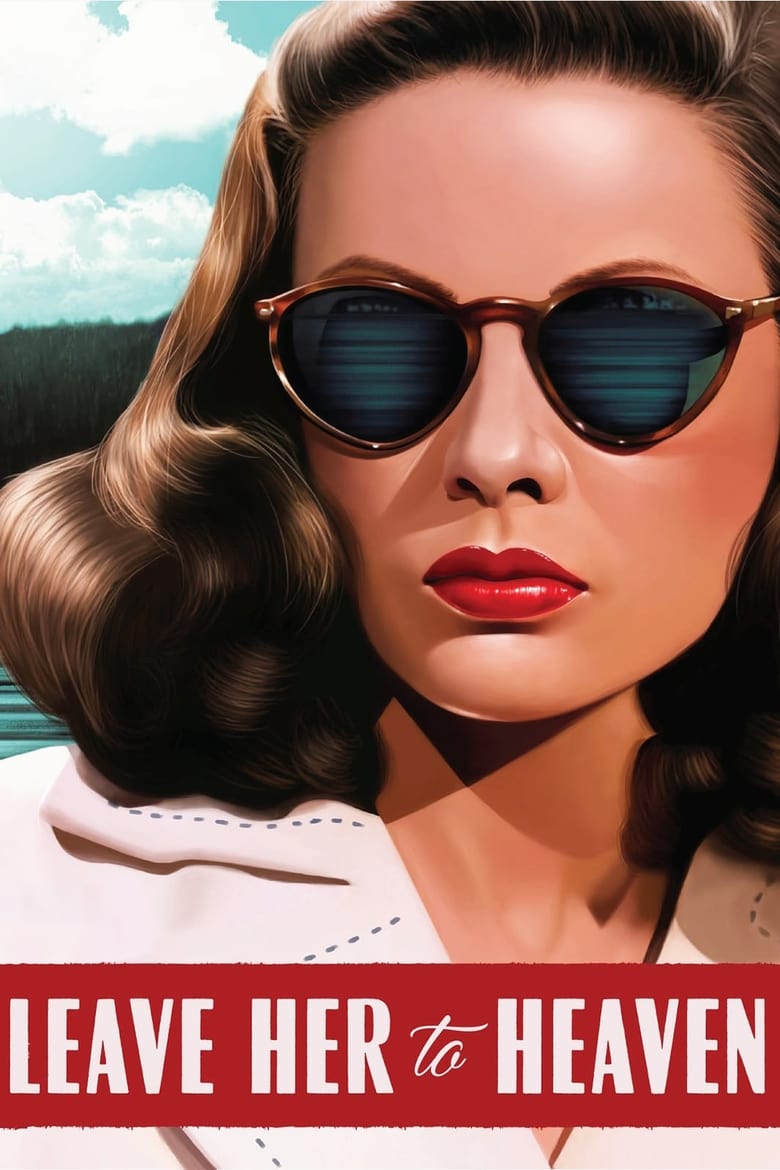
Leave Her to Heaven 1945
1945 20th Century Fox
★★★★☆ Recommended
Film Noir · 110 minutes · Technicolor

Leave Her to Heaven

Directed by John M. Stahl
Year 1945
Runtime 110 min
Studio 20th Century Fox
TMDB 7.4 / 10
"A man marries a woman who loves him too completely to share him with the living."

Novelist Richard Harland meets Ellen Berent on a train to New Mexico and is drawn immediately into her orbit. She is beautiful, composed, and already in mourning for her recently deceased father – a man she loved with an intensity that unsettled everyone around her. Richard, blind to the warning in that devotion, courts her quickly and marries her, retreating with Ellen to Back of the Moon, a lakeside property in Maine that belongs to his family.

Ellen's love for Richard is not affection but possession. She resents his crippled younger brother Danny for occupying Richard's attention, and she resents her own pregnancy for threatening her figure and her hold on her husband. When Ruth Berent, Ellen's warm and uncomplicated stepsister, arrives at Back of the Moon, Richard's easy friendship with Ruth begins to register as a threat in Ellen's calculus. The household tightens around unspoken cruelties, and Ellen moves through it with the patience of someone who has already decided what must happen.

Leave Her to Heaven occupies an uneasy position within noir – shot in saturated Technicolor rather than the shadows the genre usually demands, yet driven by one of the most controlled and remorseless femme fatales in American cinema. The film asks how evil registers when it wears the face of ideal beauty, and whether a legal system built on visible evidence can reckon with a crime committed through stillness and omission.
Classic Noir

Leave Her to Heaven is one of the few American films of the 1940s that takes female obsession seriously as a subject rather than a device. John M. Stahl directs without sensationalism – there are no confessions extracted in the rain, no shadows crawling across walls to announce menace. The threat is ambient, domestic, and entirely credible. Gene Tierney's performance operates almost entirely through restraint: a held gaze, a stillness at the edge of a lake, a refusal to move when movement would mean mercy. Leon Shamroy's Technicolor photography, which won an Academy Award, works against genre convention by placing this darkness in clear mountain light and saturated color – a deliberate displacement that makes the film's moral corruption feel more, not less, disturbing. What the film reveals about its era is partly the pressure placed on postwar domestic life – the expectation that love should be total, that a woman's world should contract to a man – and the cost when that expectation is literalized into something pathological. The legal proceedings in the final act are almost beside the point; the real verdict has already been delivered by the landscape.

– Classic Noir
4 ★★★★☆ Recommended
Credits

The Crew

DirectorJohn M. Stahl
ScreenplayJo Swerling
CinematographyLeon Shamroy
MusicAlfred Newman
EditingJames B. Clark
Art DirectionMaurice Ransford
CostumesKay Nelson
ProducerWilliam A. Bacher
Performances

The Cast

Close Reading

The Signature Scene

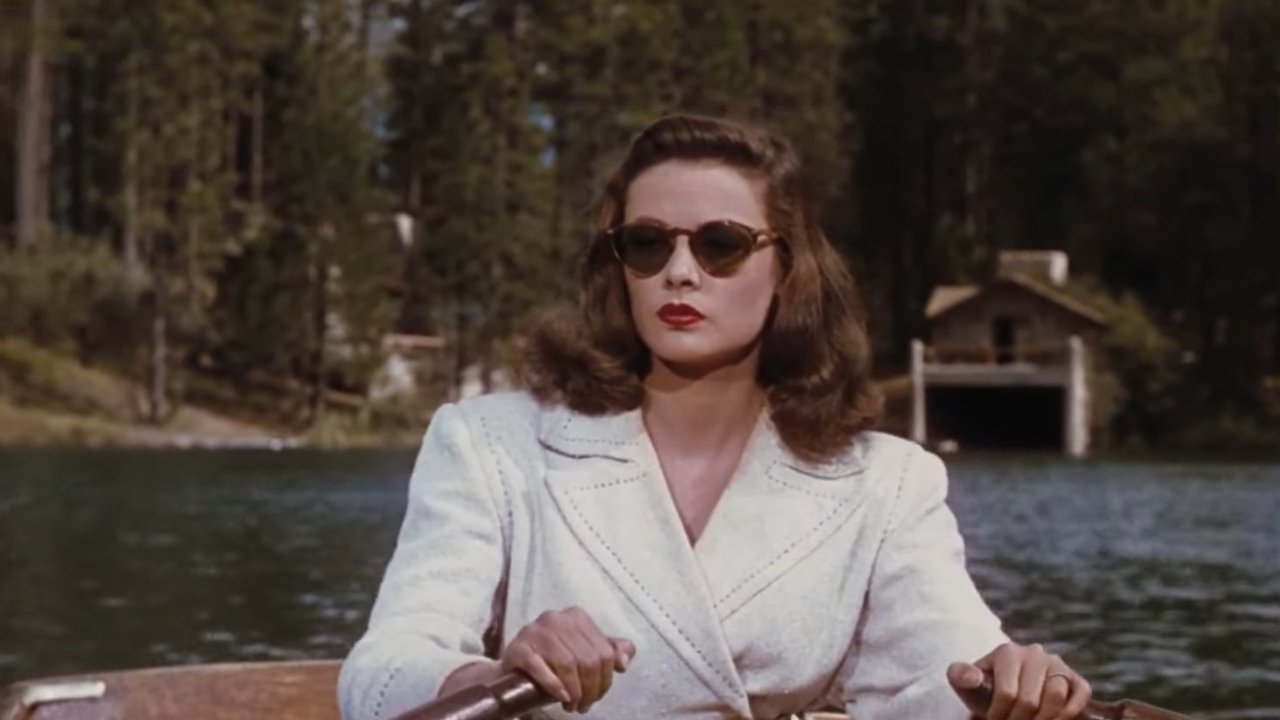
Leave Her to Heaven – scene
The Lake at Back of the Moon Watching Danny Go Under

The scene is composed with an almost aggressive simplicity. Danny struggles in the open water, his cries growing less frequent, while Ellen sits motionless in a rowboat in the middle distance. Shamroy holds the frame wide – blue water, bright sky, the far green shore – so that Ellen's stillness reads against the full breadth of the landscape. The camera does not cut away to spare the audience. There is no shadow, no musical heightening at the moment of drowning. The light is flat and generous. Ellen removes her dark glasses, watches, and replaces them.

The scene is the film's thesis statement. Ellen does not kill with violence; she kills by withdrawing the ordinary human reflex to intervene. Stahl frames this as a choice made in daylight, in full color, with nowhere to hide – which is precisely the point. The Technicolor palette, so often associated in this period with innocence and spectacle, becomes the film's most disquieting instrument. What the scene argues is that evil of this particular kind does not require darkness. It requires only someone willing to sit still.

Visual Language

The Cinematography

🎞️
Leon Shamroy – Director of Photography

Leon Shamroy's Technicolor photography for Leave Her to Heaven is a sustained argument against the idea that noir requires shadow. Working in a process that demanded exceptional light levels and tended toward warmth and saturation, Shamroy uses the format's constraints as moral instruments. The New Mexico sequences are shot in high desert light that flattens faces into icons. The Maine lake locations – partly location work, partly augmented with studio control – maintain a color temperature that is clear and cool, the water rendered in shades of blue-green that photograph as beautiful and communicate as cold. Shamroy resists the temptation to bracket Ellen's most extreme acts with low-key lighting; the lake scene, the staircase scene, and the aftermath of the miscarriage are all lit without dramatic shadow. The logic is precise: a world that cannot see Ellen's pathology through visual cues has no defense against it. The film's Technicolor is not a concession to genre convention but a subversion of it.

In the Catalogue

Themes & Motifs

Availability

Where to Watch

Also in the Directory

See Also