Films People Pull a Fast One Night Beat Reading Room On TV Shop
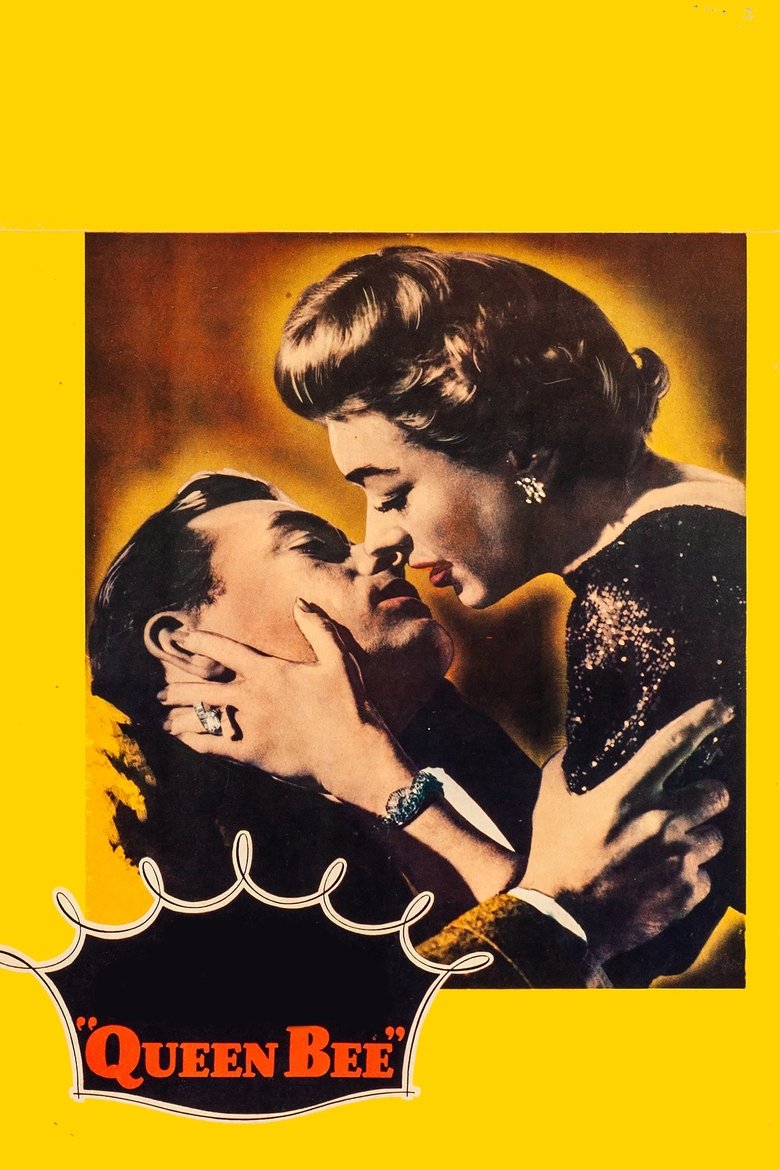
Queen Bee 1955
1955 Columbia Pictures
★★★☆☆ Notable
Film Noir · 95 minutes · Black & White

Queen Bee

Directed by Ranald MacDougall
Year 1955
Runtime 95 min
Studio Columbia Pictures
TMDB 6.3 / 10
"She runs the house, the men, and the ruin – with a smile that never wavers."

Jennifer Stewart arrives at the sprawling Southern estate of her cousins, the Phillips family, expecting a comfortable visit and instead finds a household existing under quiet siege. Avery Phillips, a man of evident intelligence and broken will, drinks steadily and speaks carefully. His wife Eva – beautiful, composed, and remorseless – presides over the estate the way a warden presides over a prison, using charm as her instrument and cruelty as her enforcement. Jennifer is young enough to be dazzled and perceptive enough to be frightened.

Eva's control extends beyond the domestic. Her history with Judson Prentiss, a man still in her orbit despite every reason to escape it, creates a fault line running beneath the Phillips marriage. Carol Lee, Avery's fragile sister, is engaged to Ty McKinnon, but Eva has a claim on that arrangement too – one rooted less in desire than in the compulsion to possess and deny. As Jennifer falls for Ty, the full architecture of Eva's dominion becomes visible: no relationship in the house exists outside her jurisdiction.

Queen Bee belongs to a cycle of 1950s domestic noirs in which the femme fatale is not a creature of the street or the underworld but of the home itself – a figure whose danger is inseparable from her social respectability. The film uses the Southern Gothic setting to frame questions about power, complicity, and the violence that well-maintained surfaces conceal. What follows is not simply a melodrama of jealousy but a clinical study of how one person's will to dominate can hollow out everyone around her.
Classic Noir

Queen Bee occupies an instructive position in Columbia's mid-decade output – neither a prestige production nor a programmer, but a carefully mounted star vehicle that earns its noir credentials through psychological precision rather than expressionist technique. Crawford's performance as Eva Phillips is controlled to the point of severity; she plays the character's malevolence as a form of absolute self-possession, which is more unnerving than any conventional villainy. The film's director, Ranald MacDougall, had co-written Mildred Pierce a decade earlier, and the structural rhyme is deliberate: where Mildred's possessiveness is rooted in maternal love, Eva's is rooted in nothing more than appetite for dominance. That distinction makes Eva the colder figure, and the film the darker one. Queen Bee also participates in the era's broad cultural anxiety about powerful women in domestic spaces – an anxiety the film neither endorses nor entirely interrogates, but renders with enough clarity that it still reads as a document of its moment.

– Classic Noir
3 ★★★☆☆ Notable
Credits

The Crew

DirectorRanald MacDougall
ScreenplayRanald MacDougall
CinematographyCharles Lang
MusicGeorge Duning
EditingViola Lawrence
Art DirectionRoss Bellah
CostumesJean Louis
ProducerJerry Wald
Performances

The Cast

Close Reading

The Signature Scene

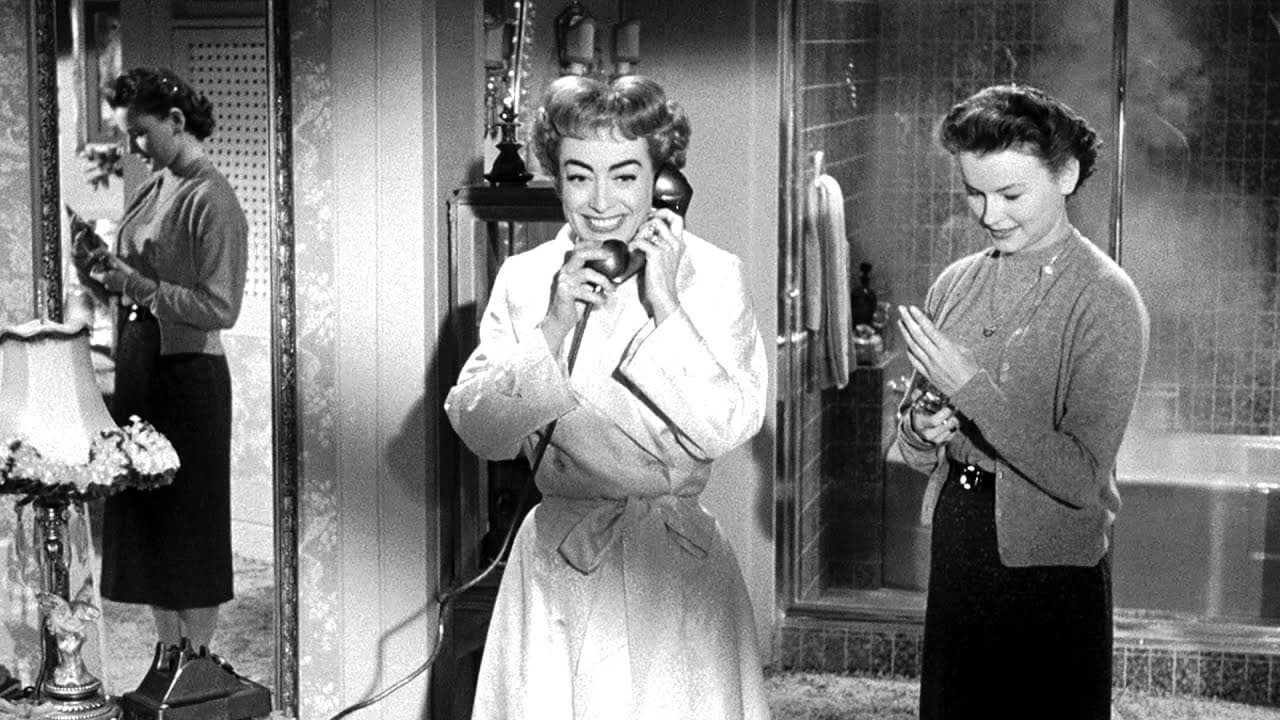
Queen Bee – scene
The Staircase Confrontation Eva Descending, Everyone Watching

Charles Lang frames Eva on the upper landing with the staircase curving below her like a formal stage – the camera positioned low, looking up, so that she occupies the full upper third of the frame. The light is hard and frontal, flattening shadow on her face and giving her the particular blankness of a portrait. The other characters are arranged in the lower space, their faces turned upward, an arrangement that makes spectators of them and a performance of her entrance. When she begins to descend, the camera does not cut; it withdraws slowly, keeping her centered, as though the house itself is making room.

The scene crystallizes the film's central argument: Eva's power is theatrical, and the domestic space has been converted into a theater by her presence alone. The people below are not gathered – they have been summoned, consciously or not, into their positions as audience. That Lang holds the shot rather than cutting to reaction faces denies the viewer the relief of an outside perspective and forces a sustained, uncomfortable attention on Eva alone. It is the film's most economical declaration of where authority lives in this household.

Visual Language

The Cinematography

🎞️
Charles Lang – Director of Photography

Charles Lang, who brought a classical precision to everything from westerns to romantic comedies, works here in a minor key that suits the material without announcing itself. Queen Bee is a studio-bound production – Columbia's back lots and interior stages throughout – and Lang turns that containment to advantage, using the recurring motif of doorframes and interior thresholds to articulate Eva's territorial logic: she is always in the frame's dominant position, always framed by architecture that looks like it was built to accommodate her. His lighting on Crawford is notably harder than the era's typical approach to female stars – less flattering diffusion, more directional sources that emphasize the geometry of her face rather than its softness. Shadow work in the peripheral spaces, the hallways and the night-lit gardens, gives the house a depth that its genteel surface would otherwise deny. The cinematography does not attempt noir expressionism; it operates at a lower register, building unease through spatial control and tonal restraint.

In the Catalogue

Themes & Motifs

Availability

Where to Watch

Also in the Directory

See Also