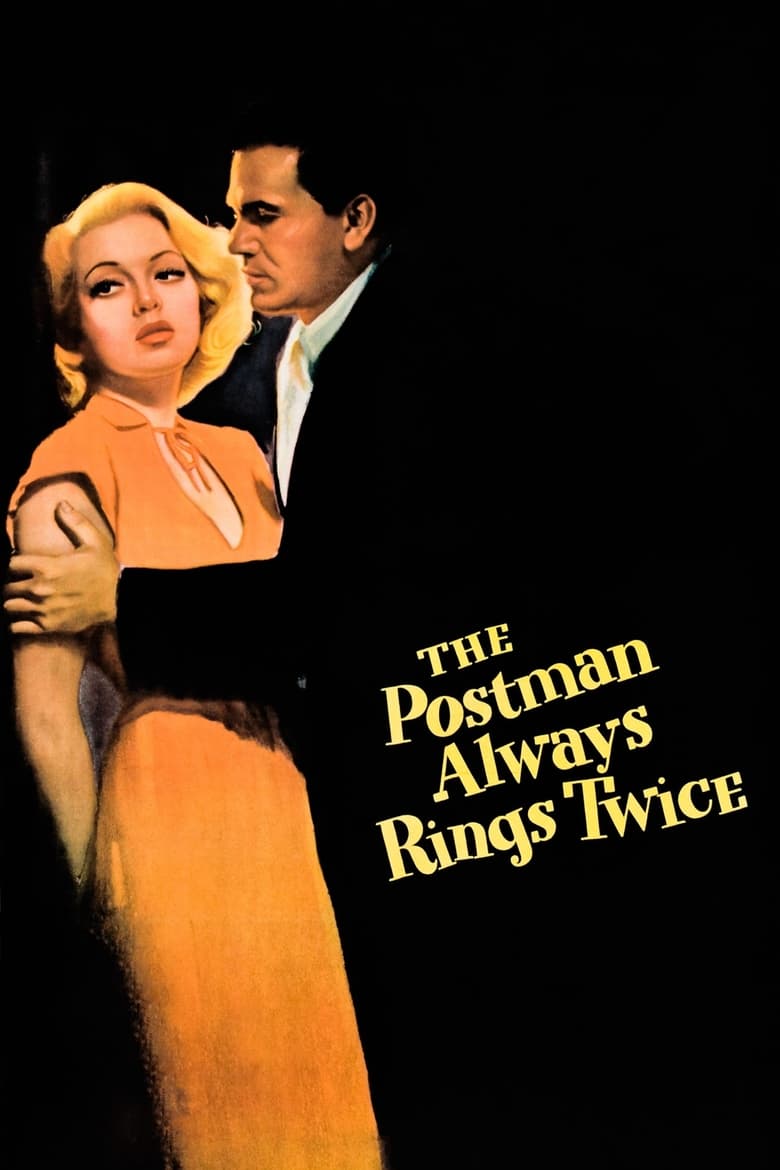
Frank Chambers, a drifting laborer with no fixed destination, stops at a roadside diner outside Los Angeles and immediately fixes on Cora Smith, the young wife of the establishment's affable Greek owner, Nick. Frank takes a job, and the two begin an affair conducted in plain sight of Nick's cheerful obliviousness. The arrangement is domestic on the surface and corrosive underneath.
Frank and Cora's passion hardens into conspiracy. They plan to kill Nick and claim the diner, but their first attempt fails, and the aftermath forces them into an uneasy truce with the law and with each other. A second attempt succeeds, yet success brings no relief. Lawyers circle, allegiances shift, and the couple discovers that a shared crime does not produce shared trust. The legal machinery – represented by the competing figures of defense attorney Arthur Keats and prosecutor Kyle Sackett – threatens to turn each lover into a weapon against the other.
The film belongs to the mid-1940s cycle of American noir that drew directly on hard-boiled fiction, in this case James M. Cain's 1934 novel. Like its literary source, the film treats desire not as liberation but as mechanism – a force that sets events in motion and then cannot be controlled. It stands alongside the era's other Cain adaptations as an examination of how ordinary people rationalize catastrophic choices and discover, too late, that the logic of passion is also the logic of entrapment.
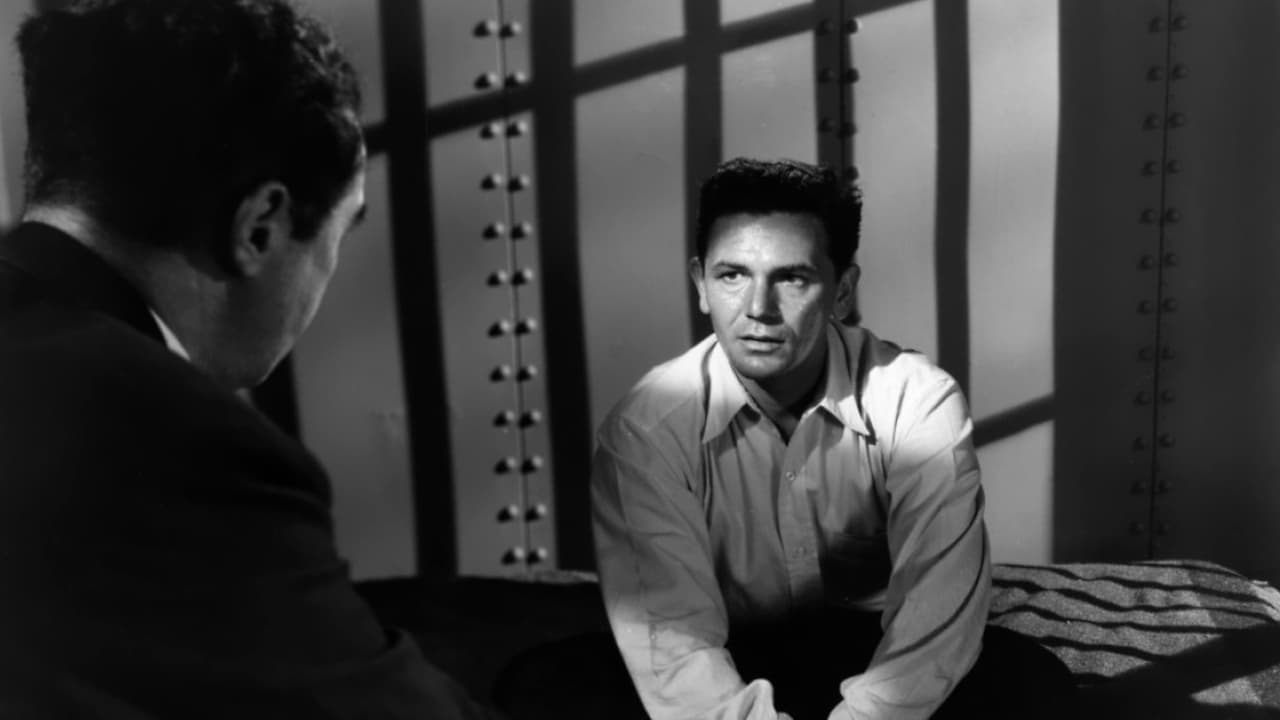
The Postman Always Rings Twice occupies a particular position in Hollywood noir: it is the studio system's most direct engagement with Cain's deterministic universe, produced at MGM under conditions that required the sexuality to be translated into atmosphere rather than stated. Tay Garnett's direction is not flashy, which works in the film's favor – the camera stays close to behavior, letting Lana Turner's composed blankness and John Garfield's physical restlessness carry the moral argument. What the film achieves is an unusually accurate rendering of Cain's central idea: that the people most destroyed by a crime are the people who commit it. The courtroom sequences, handled largely by Hume Cronyn's quietly reptilian Keats, reveal how legal process can be as predatory as the original act it adjudicates. Seen in the context of 1946 – a country readjusting to peacetime and confronting economic anxiety – the film's portrait of two people destroying themselves over a roadside diner reads as social observation as much as melodrama.
– Classic Noir
Sidney Wagner lights Turner almost entirely in high-key white – her dress, the diner counter, the tiled surfaces behind her – so that she reads less as a person than as a focal point the frame cannot escape. Garfield enters from the right, and the camera holds a two-shot in which the spatial relationship between the characters is already unequal: she is still, centered, apparently passive; he is in motion, displaced, peripheral. Wagner allows very little shadow to fall on Turner herself, reserving the darker tonal range for the edges of the frame and for Garfield's face, which is caught between light and its absence.
The composition encodes the film's central deception. Cora appears to be the object of the scene – the thing Frank moves toward – but the lighting scheme gives her structural dominance. The scene argues, without dialogue, that desire in this film operates as a kind of optical illusion: Frank believes he is the agent and she the prize, when the frame has already arranged them otherwise. It is one of the cleaner visual statements in 1940s Hollywood noir about the difference between who acts and who controls.
Sidney Wagner's cinematography for The Postman Always Rings Twice works against the grain of what audiences might expect from a studio noir. Rather than relying on deep shadow and expressionist angles, Wagner shoots much of the film in a flattened, high-contrast style that makes the California roadside locations feel overexposed and airless – appropriate for a story about people with nowhere to go. The diner interiors are lit with a harshness that removes glamour from the setting while preserving it, strategically, on Turner. Wagner uses this selective contrast to establish the film's moral geometry: the world Frank and Cora inhabit is banal and unforgiving, and the brief moments of beauty within it are the ones most likely to cause harm. Exterior sequences use natural California light in ways that feel less like location realism than like exposure – the characters are visible, readable, without shelter. The lens work is largely conventional in focal length, which reinforces the film's refusal of melodramatic excess at the visual level even as the narrative escalates.
TCM airs the film periodically as part of its classic Hollywood programming and streams it via the TCM app with an AMC+ subscription, typically presenting the original MGM print without editorial alteration.
Criterion ChannelSubscriptionWhen available on the Criterion Channel, the film appears in curated noir programming contexts that provide useful comparative viewing alongside related titles from the same cycle.
Amazon Prime VideoRental / PurchaseAvailable for digital rental or purchase through Amazon; availability varies by region and licensing period, so confirm before seeking.