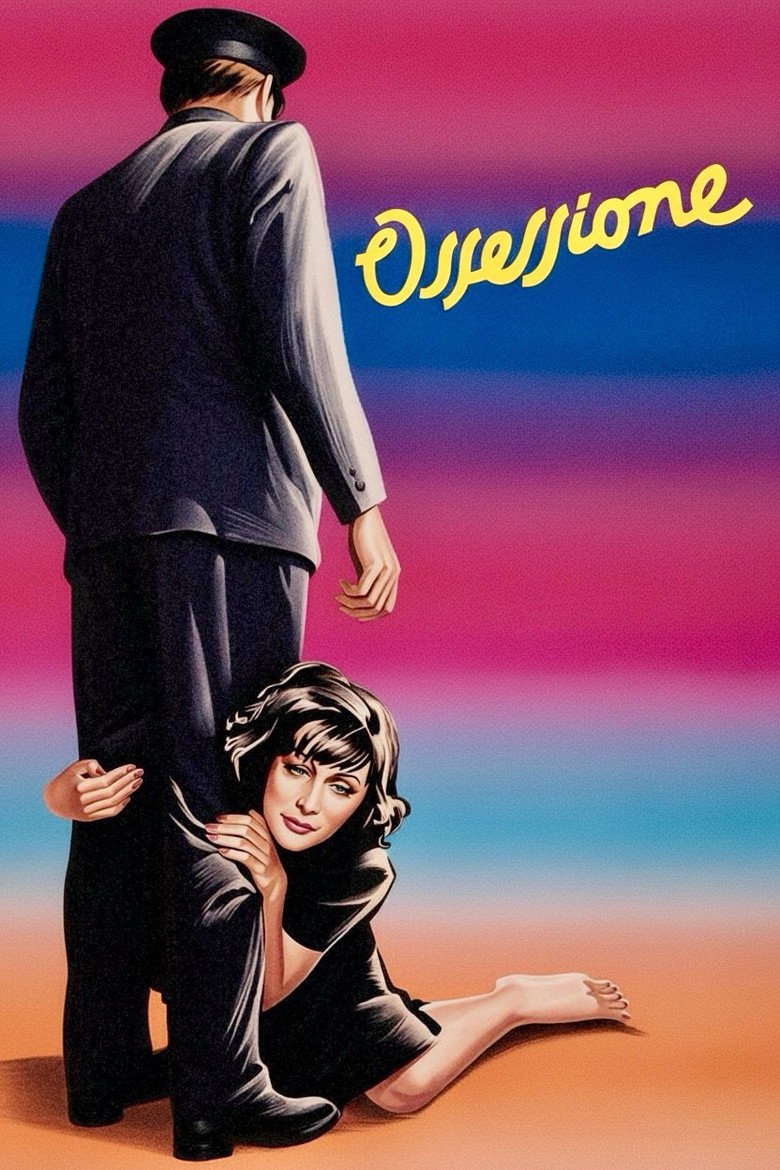
A drifter named Gino Costa arrives at a roadside trattoria along the Po Valley flatlands and is taken in by its owner, the coarse and good-natured Giuseppe Bragana. Giuseppe's wife, Giovanna, is younger, restless, and trapped – bound to a man she does not love in a landscape that offers no horizon. Gino and Giovanna begin an affair almost immediately, drawn together less by romance than by a shared hunger for escape.
Their plan to leave together falters when Gino grows uncertain and Giovanna refuses to abandon the security of the trattoria. The affair curdles into conspiracy. A murder is arranged, executed, and survived – but survival introduces pressures neither lover anticipated. Gino drifts toward a traveling performer named Anita and toward a drifter called the Spaniard, whose presence suggests alternative lives, alternative loyalties. Giovanna pulls him back through a combination of need and threat. The couple's bond, forged in transgression, becomes its own form of captivity.
Adapted from James M. Cain's novel The Postman Always Rings Twice without official rights, Ossessione transposes the American source material into the Ferrara countryside and the world of Italian neorealism, producing something that belongs fully to neither tradition. The result is a noir structured around atmosphere as much as plot – the heat of the Po Delta, the dust of roadside stops, the social claustrophobia of a postwar Europe that has not yet admitted it is postwar. Fate here is not a mechanism but a climate.
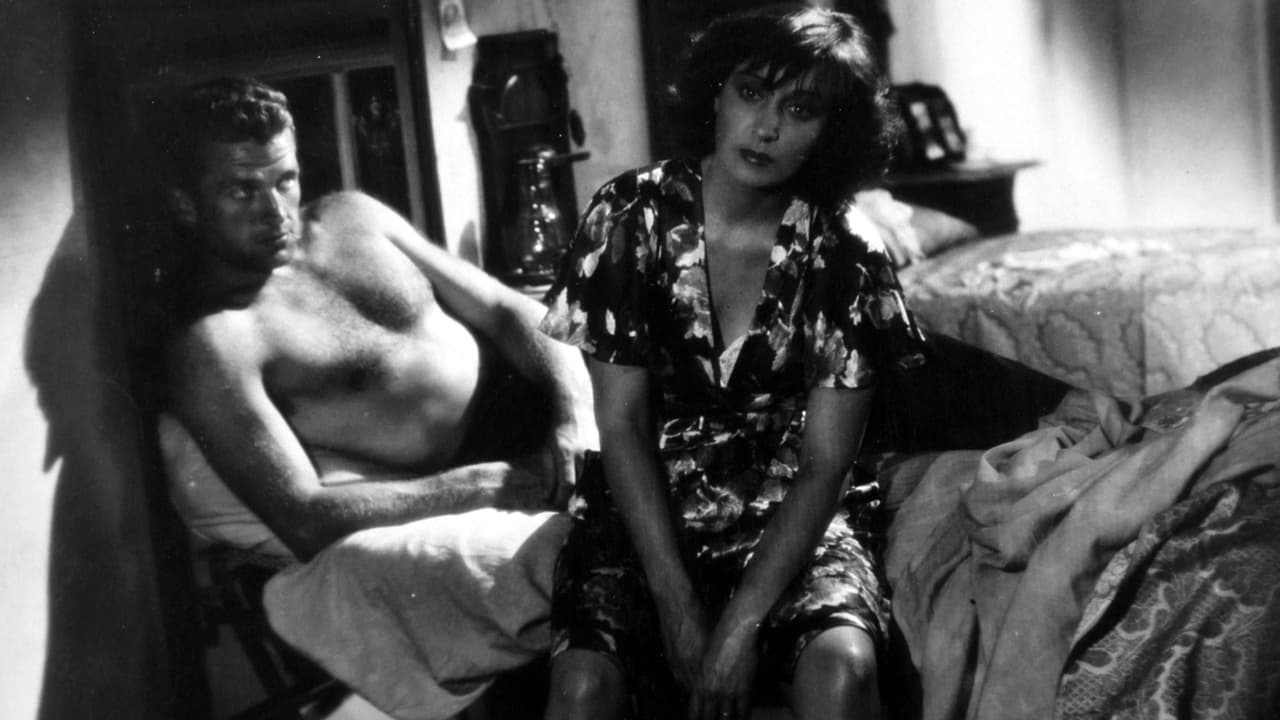
Ossessione occupies an anomalous position in film history: simultaneously a founding document of Italian neorealism and one of the earliest European works to absorb the moral and visual grammar of American noir. Visconti shoots on location in the Po Valley with an attention to environment that functions as argument – the flat, humid landscape mirrors the characters' psychological constriction, and the trattoria becomes a space where desire and economic desperation are indistinguishable. Clara Calamai's Giovanna is not a conventional femme fatale; she is a woman whose options have already been exhausted before the film begins, and that distinction gives the familiar betrayal plot a weight Cain's source material rarely achieves on screen. The film's suppression by Mussolini's government on grounds of its unflattering portrait of Italian provincial life paradoxically confirms its documentary honesty. What Visconti achieves is a noir stripped of genre decoration, in which the trap is not constructed by villains but by the ordinary conditions of poverty, marriage, and geography.
– Classic Noir
Visconti places Gino and Giovanna at the edge of the Po River in flat, mid-afternoon light that offers no relief or shadow. Domenico Scala's camera holds the pair in a medium two-shot, with the river stretching behind them into a horizon that appears to lead nowhere. There is no dramatic chiaroscuro here – the light is indifferent, even, almost bureaucratic. The frame does not compress them so much as expose them, refusing the cover that noir interiors typically provide.
The scene's force lies in what it withholds. The characters argue about the future, but the setting insists there is no future available to them – only the flat land, the slow water, and the road that brought them to this point. Visconti uses the location not as backdrop but as verdict. The river does not symbolize freedom; it marks a boundary. This is the film's argument made visible: the landscape is not indifferent to human desire, it is its antagonist.
Domenico Scala's cinematography for Ossessione is foundational to the film's moral seriousness. Working almost entirely on location in the Po Delta and in practical interiors, Scala forgoes the studio-controlled shadow work associated with Hollywood noir in favor of a bleached, naturalistic light that implicates the environment in the characters' fate. His lens choices favor moderate focal lengths that preserve spatial relationships without flattering them – faces are not glamorized, rooms are not dramatized. When shadow does appear, as in the trattoria's interior scenes, it falls practically from windows and doorways rather than from constructed lighting rigs, lending the darkness a quality of inevitability rather than expressionist intent. The effect is a visual register that refuses moral clarity: no one stands in redemptive light, no space offers safety. Scala's approach anticipates what the emerging neorealist movement would codify, while remaining in productive tension with the genre conventions Visconti was simultaneously invoking and subverting.
Criterion's transfer is drawn from a restored print and includes contextual materials on the film's production history and its suppression under Fascist censorship.
MUBISubscriptionMUBI periodically programs Ossessione in curated Italian cinema retrospectives; availability rotates, so confirm before seeking.
KanopyFree with library cardKanopy offers free access through many public library systems and carries the film in its classic world cinema catalog.