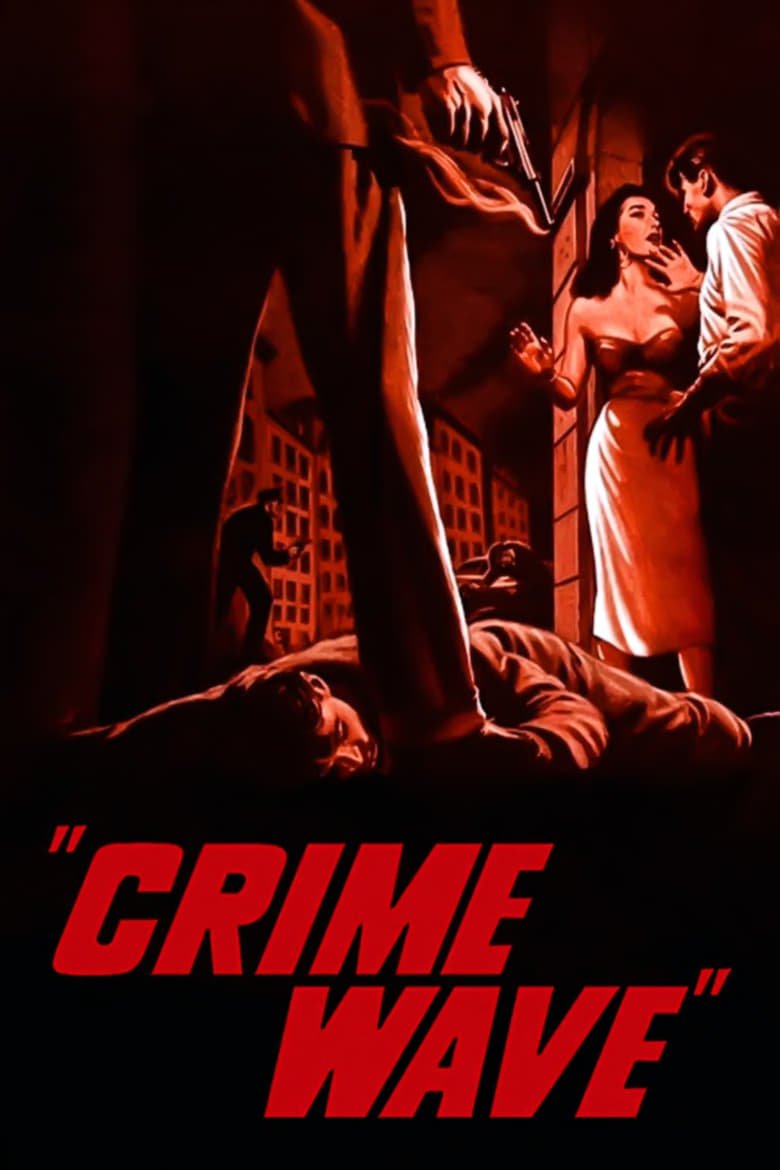
Steve Lacey is a reformed ex-convict building a quiet life in Los Angeles with his wife Ellen when three fugitives from a botched San Diego robbery force their way into his home. One of them, a former associate named Doc Penny, dies on his floor. The other two – the volatile Ben Hastings and the cold-eyed Gat Morgan – use Ellen as leverage to keep Steve in line. Det. Lt. Sims, a blunt and impatient homicide detective, locks onto Steve as the most convenient thread to pull and pulls hard.
Caught between the criminals who need a driver and the police who assume the worst, Steve occupies an impossible middle ground. His attempts to cooperate with Sims are undermined at every turn by the detective's contempt and by the gang's escalating demands, which culminate in a plan to rob a local bank. A small-time fence named Dr. Otto Hessler and a sympathetic parole officer named O'Keefe complicate the moral landscape further, one representing the criminal infrastructure Steve is trying to escape, the other the institutional goodwill he is not sure he can afford to trust.
Crime Wave belongs to the procedural strain of early-1950s noir, shot largely on location in the streets, motels, and filling stations of Los Angeles and Burbank. It frames the wrong-man predicament not as existential terror but as bureaucratic grinding – a man processed by systems, criminal and legal alike, that have no particular interest in his innocence. The film's low runtime and refusal to sentimentalize its resolution give it an efficiency that distinguishes it from more melodramatic contemporaries.
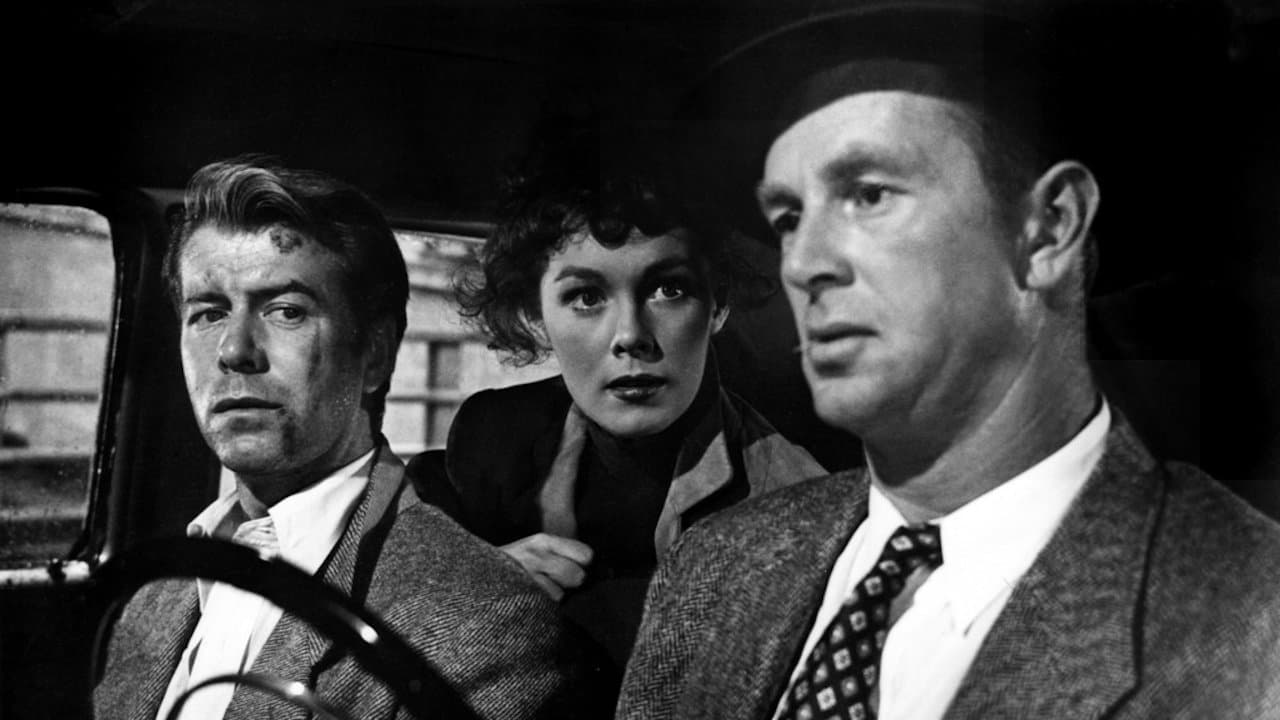
Crime Wave arrives at a moment when Warner Bros. was leaning into the semi-documentary procedural as a commercially and morally respectable form – a mode that allowed studios to appear civic-minded while still delivering the genre's essential confrontations. André de Toth uses that framework without being captured by it. Sterling Hayden's Sims is not a hero in any functional sense; he is coercive, presumptuous, and correct largely by accident of circumstance rather than by rigor. That ambivalence about institutional authority – the cop who gets his man through pressure rather than insight – locates the film closer to the cynical center of noir than its procedural surface suggests. Gene Nelson, cast against his musical-comedy profile, carries Steve Lacey's exhaustion convincingly. Charles Bronson, in an early role, projects menace without effort. At 73 minutes, the film has no patience for psychological elaboration, and that restraint is itself an argument: in this world, character is fate, and fate does not pause for reflection.
– Classic Noir
De Toth and cinematographer Bert Glennon compose the sequence in tight, low-angle frames that flatten the space around Steve's car. The camera stays close to the ground, making the neon and streetlight sources feel distant and unreliable. Glennon uses the reflective surface of the forecourt concrete to spread available light horizontally rather than overhead, which keeps faces partially obscured and denies the viewer the clean moral legibility that overhead studio lighting provides. The effect is less dramatic chiaroscuro than a kind of ambient uncertainty – everything lit just enough to be seen, not enough to be understood.
The scene encapsulates the film's central argument about trapped men and bad choices. Steve is physically present in a location that commits him to a crime he has not chosen, under observation by people who will interpret his compliance as guilt and his resistance as a threat. The camera's refusal to give him expressive close-ups at this moment – holding instead in a medium two-shot with Hastings – positions him as one figure among others rather than an individual fighting fate, which is precisely the film's point about what institutions and criminal structures share.
Bert Glennon shoots Crime Wave on location across Los Angeles County – motels on the fringes, gas stations, the corridors of actual police facilities – and the decision to leave the studio is not merely logistical but moral. Studio noir controls shadow and geometry; location noir inherits the ambient disorder of actual urban space. Glennon, whose career extended back to silents and included work with Ford, brings a disciplined eye to material that could easily become reportage. He uses available architectural light where possible, supplementing with hard sources that cast long parallel shadows on flat ground rather than the expressionist ceiling patterns of more self-conscious studio work. Wide-angle lenses pressed into confined interiors create a mild spatial distortion that makes rooms feel both cramped and slightly wrong without calling attention to the technique. The cinematography does not underline the story's themes so much as absorb them into surface texture – Los Angeles in 1953 rendered as a place where the light is never quite where you expect it.
TCM holds Crime Wave in regular rotation and streams it via the TCM app with Turner's typically clean broadcast-standard transfer – the most reliably accessible option for this title.
TubiFree (Ad-Supported)Tubi has carried Crime Wave as part of its Warner Bros. noir library; transfer quality varies, but the price makes it a practical first viewing.
Archive.orgFreeA public domain print circulates on Archive.org; resolution is inconsistent and should be treated as a fallback rather than a primary viewing option.