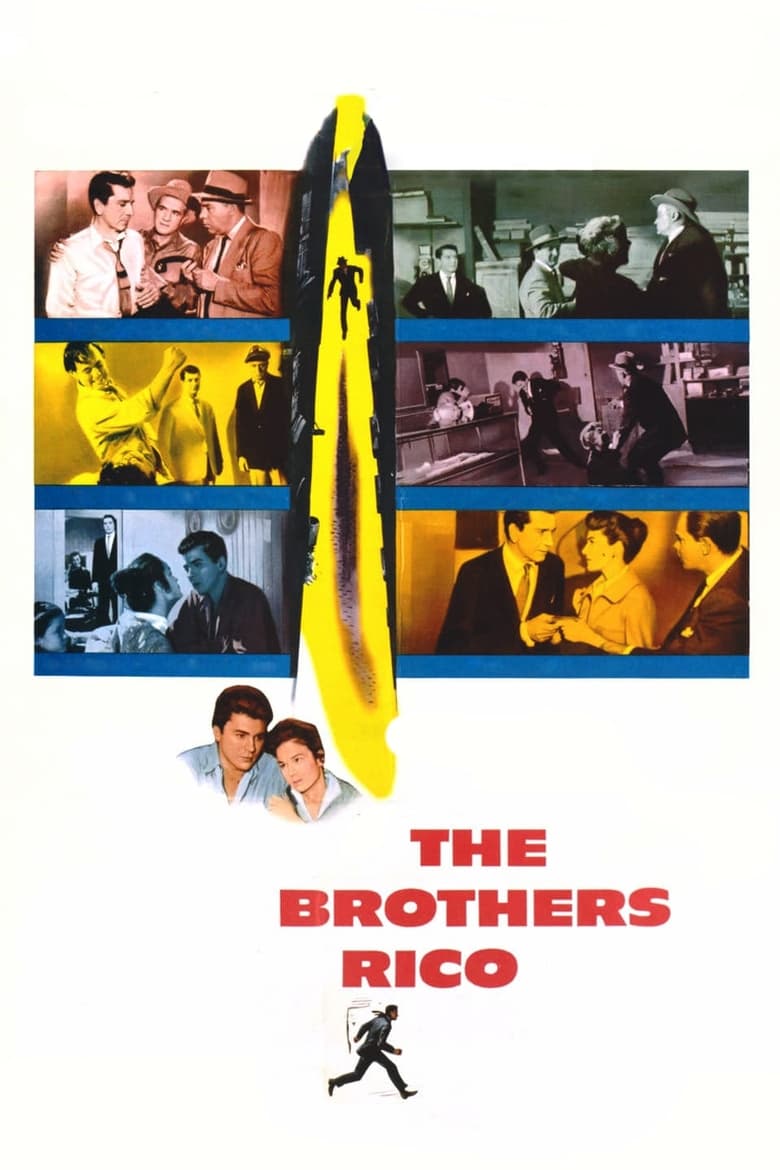
Eddie Rico has put the syndicate behind him – or so he believes. Settled in Florida with his wife Alice, running a prosperous laundry business built on money he prefers not to examine too closely, Eddie is the picture of legitimate success. When his younger brothers Johnny and Gino disappear, Eddie assumes the organization will protect them as it once protected him. He contacts Sid Kubik, the calm, courteous syndicate boss who set Eddie up in business years ago, and accepts Kubik's reassurances at face value because accepting them is easier than the alternative.
The search for his brothers pulls Eddie across the American South and West, through motel rooms and suburban living rooms that look ordinary and conceal nothing good. What he uncovers, slowly and then all at once, is that Kubik has already decided the brothers are liabilities. Johnny, who married outside the organization's approval, and Gino are marked men. Eddie's loyalty to the syndicate and his loyalty to his family cannot both survive, and the film watches him work through this arithmetic with a patience that borders on the methodical.
Brothers Rico belongs to the cycle of late-1950s noir that moved away from expressionist shadow-play toward a flat, sun-bleached dread – films preoccupied not with the criminal as romantic outlaw but with the criminal as organization man. Adapted from Georges Simenon's novel, it frames organized crime as a corporation indistinguishable in manner and structure from any other postwar American business, and asks what it costs a man to have ever believed otherwise.
Phil Karlson was among the most undervalued directors working in American crime cinema during the 1950s, and Brothers Rico stands as one of his most controlled achievements. Where his earlier Kansas City Confidential and The Phenix City Story used violence as a blunt instrument, Brothers Rico is quieter and, finally, more corrosive. The film's central insight – that the syndicate operates through the language of loyalty, gratitude, and mutual benefit, and that this language is indistinguishable from ordinary American commerce – anticipates The Godfather by fifteen years without the operatic ambition. Richard Conte's performance is calibrated to a man who has spent years not thinking too hard about things, and the film's suspense derives less from action than from watching that willful ignorance become impossible to sustain. Simenon's source novel lends the material a European fatalism that Karlson neither sentimentalizes nor entirely strips away, leaving a film that sits at the intersection of the procedural and the moral fable.
– Classic Noir
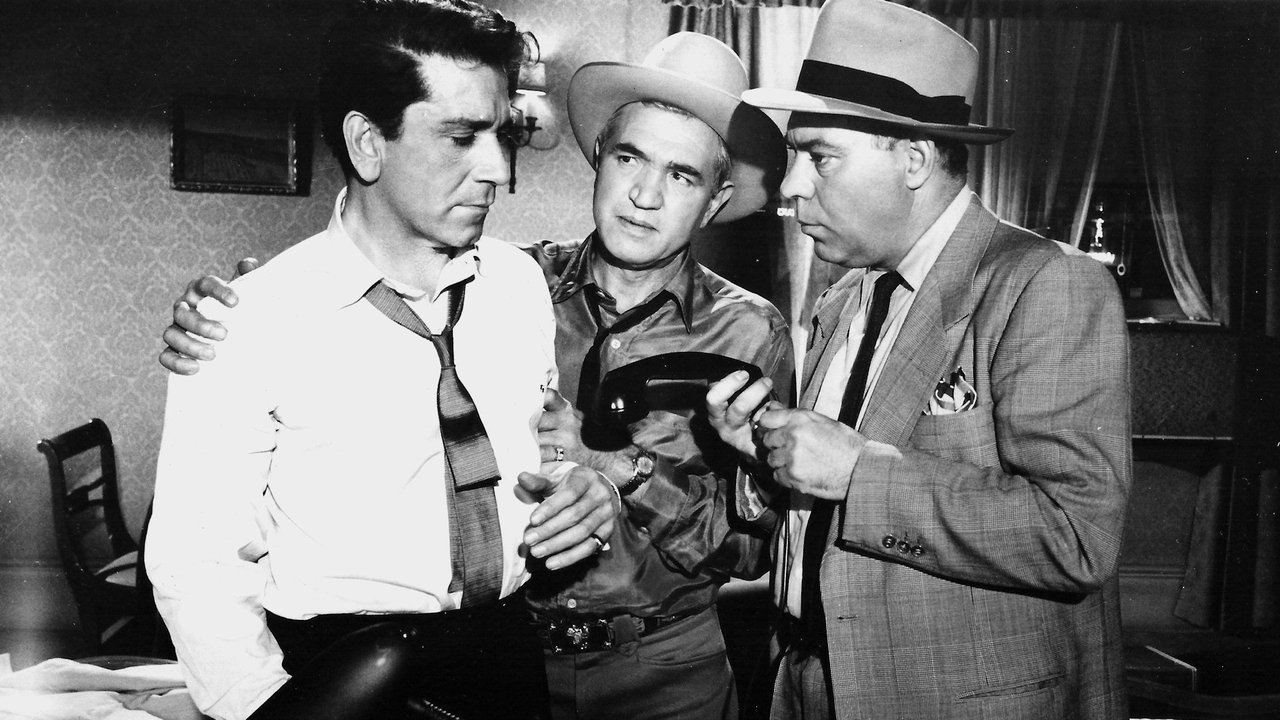
Karlson and cinematographer Burnett Guffey refuse the scene any cover of darkness. Eddie takes a call from Kubik in a bright, ordinarily furnished room – walls flat, light even, no shadow to suggest threat. Guffey frames Conte in a medium shot that keeps him slightly small within the domestic space, the telephone a conspicuously solid object in his hand. The camera does not move dramatically; it simply watches. The absence of noir's conventional visual grammar – the oblique angle, the chiaroscuro – is itself the technique, a choice that makes the danger harder to locate and therefore harder to resist.
The scene argues that the syndicate's true weapon is normalcy. Kubik's voice arrives through a consumer appliance in a middle-class room, and Eddie accepts what it tells him because the setting provides no visual cue for suspicion. The film's moral logic depends on this: evil is not atmospheric here, not shadowed or stylized, but domestic and transactional. Eddie's failure is not weakness but a trained incapacity to read a room that looks exactly like every other room he has worked to earn.
Burnett Guffey's work on Brothers Rico represents a deliberate departure from the high-contrast studio lighting that defined the genre's earlier decade. Shooting largely on location across Florida and the American Southwest, Guffey favors wide, flat expanses of natural light – parking lots at midday, motel exteriors under a white sky, interiors lit without the expressionist raking that would signal danger in an earlier noir. The effect is one of exposure rather than concealment: characters have nowhere to hide within the frame. Guffey uses longer focal lengths to compress space on occasion, flattening the distance between pursuer and pursued, but the dominant visual strategy is openness. This serves Karlson's thematic argument precisely: the syndicate does not operate in back alleys but in offices and on telephones, and a cinematography built on shadow would misrepresent it. Guffey, who would later photograph Bonnie and Clyde, demonstrates here that a sun-lit frame can carry as much dread as any shadow.
The most reliable source for a clean transfer of this title, presented without interruption alongside contextual programming.
TubiFree (Ad-supported)Periodically available at no cost, though transfer quality varies and availability shifts; worth checking as a first option if access is the priority.
Archive.orgFreePublic domain versions may be available though print quality is uncertain; recommended only if no other option is accessible.