Kansas City, 1927. Pete Kelly leads a small Dixieland band out of a speakeasy called Big Benny's, playing for tips and whatever peace the decade allows. Kelly is a man of fixed habits and narrow loyalties – he owns his corner of the world and wants nothing more. That equilibrium ends when Fran McCarg, a local racketeer with territorial ambitions, moves to place Kelly's band under his protection at a price that amounts to ownership. Kelly resists; McCarg escalates. Into this friction steps Ivy Conrad, a society woman drawn to the jazz life, and Rose Hopkins, a broken singer McCarg keeps as a kind of ornament and cautionary example.
McCarg's methods are not subtle. He installs himself as the band's de facto manager, skims the earnings, and uses Rose as proof of what compliance costs a person over time. When Kelly's closest friend and bandmate Joey Firestone pushes back against McCarg's demands, the violence that follows is swift and without negotiation. Kelly must weigh the code of a man who keeps his own counsel against the claims of loyalty and the mounting evidence that neutrality is itself a form of complicity. Ivy offers an exit; the music offers a reason to stay.
Pete Kelly's Blues works within the tradition of the postwar crime picture while reaching back to the Prohibition-era gangster film for its period texture. The film is less concerned with investigation or flight than with the slow corrosion of a man who believes self-sufficiency is armor. It belongs to a strand of American noir preoccupied with professional identity under duress – the craftsman or artist who discovers that talent offers no protection from institutional force.
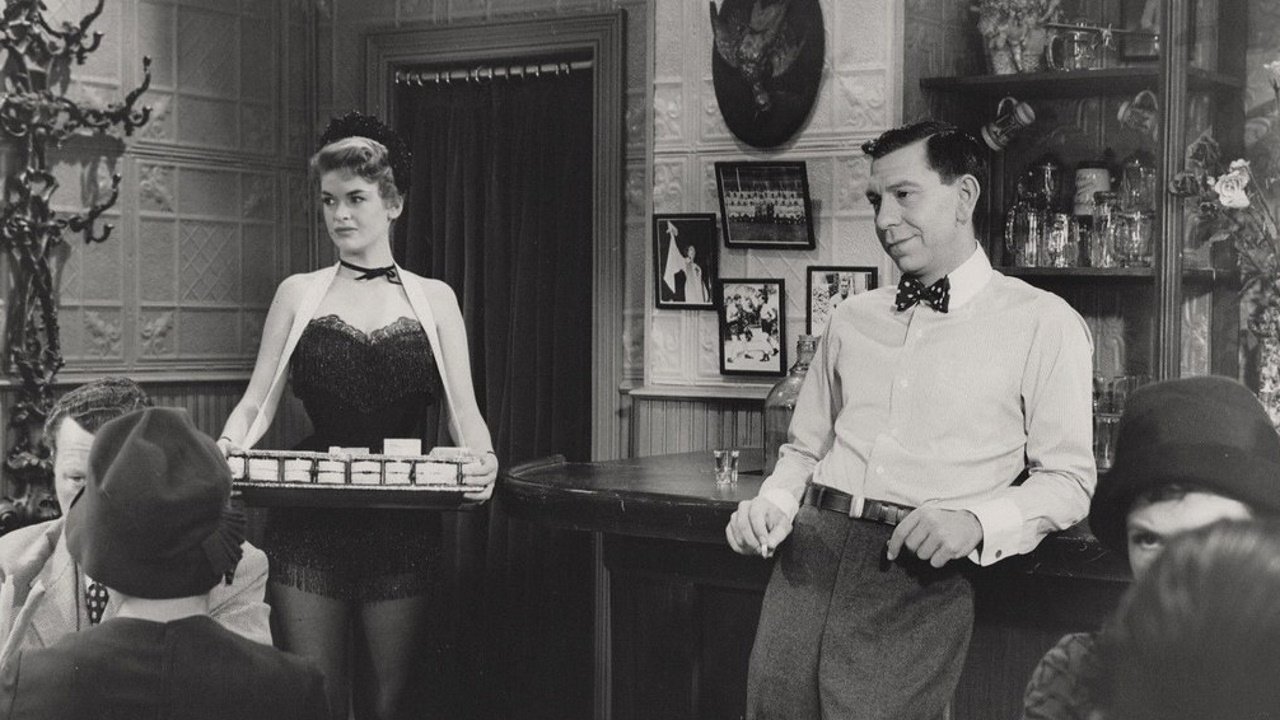
Jack Webb directed Pete Kelly's Blues with the same economy he brought to Dragnet – controlled, procedural, suspicious of sentiment. The film is not a conventional noir in terms of structure; there is no femme fatale in the strict sense, no labyrinthine plot. Its claim on the genre rests on atmosphere and moral weight. Harold Rosson's photography renders the Kansas City jazz world in deep-focus interiors and pool-of-light compositions that owe something to the stage and something to the chiaroscuro of classical noir. What distinguishes the film is its treatment of victimhood: Peggy Lee's Rose Hopkins is among the more honest portraits of psychological disintegration in 1950s Hollywood cinema, played without the redemptive arcs the period typically demanded. Edmond O'Brien's McCarg is menace rooted in banality rather than theatrics. The period setting allows Webb some distance from the Production Code's present-tense restrictions, but the film's real subject – the cost of accommodation with power – reads directly against its postwar moment. It is not a great film, but it is a precise one.
– Classic Noir
Rosson frames the scene in a tight, low-ceilinged room where the only strong light falls across the table between Kelly and McCarg, leaving both men's faces partially in shadow. The camera holds at a middle distance that refuses to flatter either figure. McCarg occupies the center of the frame with the ease of a man who has arranged this geometry before; Kelly sits at an angle, his position already slightly defensive without the screenplay having required it. Cigarette smoke diffuses the light from a single overhead source, flattening the background into near-darkness and concentrating the visual argument in the space between the two men's hands on the table.
The scene is the film's structural hinge. Kelly's refusal here is the act that drives everything that follows, and Rosson's composition underlines what the dialogue leaves implicit: that Kelly is already enclosed, already on McCarg's terrain. The darkness at the frame's edges is not decoration but geography – a world in which the only illuminated space is the negotiating table, and the only question is on whose terms.
Harold Rosson, a veteran whose credits stretched back to silent comedy and whose work with Vincente Minnelli demonstrated equal facility with color spectacle, here operates in a register closer to his black-and-white dramatic work. Shooting on studio sets designed to evoke the confined interiors of Prohibition-era Kansas City, Rosson uses a tight range of contrast – deep blacks in corners and backgrounds, concentrated key light on faces and surfaces – that confines characters within their environments rather than illuminating them against it. Lens choices favor moderate focal lengths that maintain background detail while keeping the foreground figures slightly compressed, reinforcing the sense of a world with no empty space, no exit. The jazz performance sequences use a different logic: broader illumination, more movement, but always with the bandstand raised and surrounded by darkness, the music framed as an island. The cinematography's consistent argument is that competence and craft exist in small, lit pools within a much larger dark.
TCM holds reliable broadcast rights to the Mark VII library and is the most consistent source for a properly framed print.
TubiFree / Ad-SupportedTubi has carried the film intermittently; verify availability before seeking it here as catalog listings shift.
Amazon Prime VideoRental / PurchaseAvailable for digital rental or purchase in HD; a practical option when broadcast and streaming sources are unavailable.