Emily Borden is a quietly determined young woman living under the thumb of her domineering grandmother in a comfortable but stifling household. When she falls for Henry Summers, a decent if somewhat passive man, the prospect of marriage offers an escape – until Ralph Cobb, a calculating opportunist with a talent for leverage, enters the picture. Cobb knows things about the Borden family that money and reputation would prefer buried, and he is not shy about using that knowledge.
The arrival of Constance Powell, a sleek and self-possessed woman with her own claims on Henry, fractures whatever security Emily thought she had secured. Cobb moves between these parties with the practiced ease of someone who profits from other people's uncertainty, tightening the web of obligation and threat until the question is no longer who Henry will choose but what any of them will do to protect themselves. Loyalties that seemed fixed begin to bend under sustained pressure.
Other Woman operates in the domestic register of noir – the danger here is not back-alley violence but the slow corruption of private life by secrets and social ambition. The film belongs to a cycle of early-forties Fox programmers that tested noir's moral architecture in modest, contained settings, relying on character pressure rather than expressionist spectacle to generate unease.
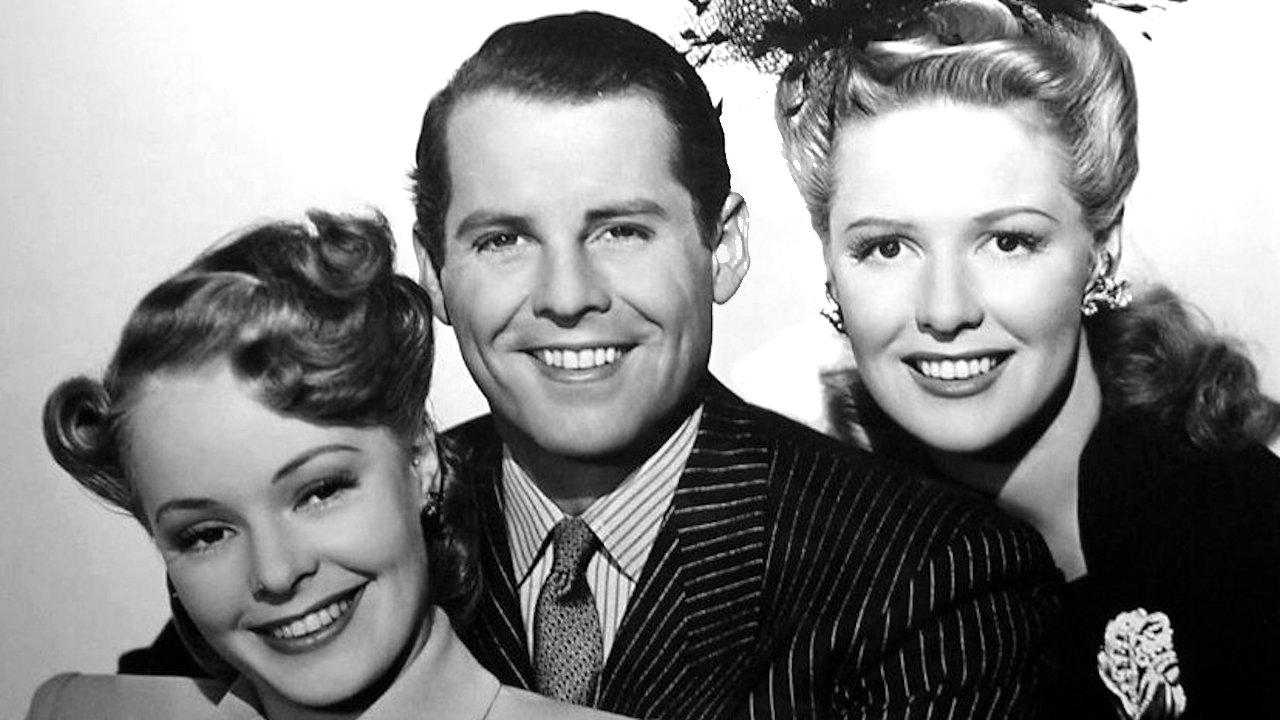
Other Woman arrives early enough in the American noir cycle that it still carries traces of the melodrama it is in the process of leaving behind, yet the presence of Dan Duryea – cast here in one of his first significant villain roles – marks it as a film that knows exactly what kind of darkness it wants to traffic in. Duryea's particular gift was the suggestion of enjoyment in cruelty, a quality that lends Ralph Cobb a menace disproportionate to the film's modest budget and runtime. Ray McCarey, working efficiently within Fox's B-unit, keeps the pace taut and trusts his cast to carry the film's psychological weight. Virginia Gilmore brings a restrained credibility to Emily that prevents the film from collapsing into victimhood narrative, and Janis Carter's Constance is drawn with more dimension than the role strictly requires. As a document of the genre in formation, Other Woman reveals how thoroughly noir's concerns – sexual competition, class anxiety, the violence latent in domestic arrangement – were present before the style fully crystallized.
– Classic Noir
McCarey and cinematographer Joseph MacDonald position Cobb at the room's center while Emily and Henry occupy the frame's edges, their postures turned slightly inward as if instinctively retreating. MacDonald lights Cobb from a source slightly above and to the side, throwing one half of his face into shadow without committing to full chiaroscuro – a choice that keeps the scene grounded in the domestic while still encoding its moral distortion. The background remains soft and recognizably bourgeois: furniture, curtains, the trappings of a life built on appearances.
The composition makes the argument the dialogue only implies: Cobb occupies the space that properly belongs to the couple, and they have no architecture of resistance to offer him. The scene establishes that Other Woman's real subject is not rivalry or even blackmail in the conventional sense, but the ease with which a private world can be entered and rearranged by someone who has nothing to lose and understands that others have everything to lose.
Joseph MacDonald, who would go on to shoot Panic in the Streets and Pickup on South Street for Fox, brings a disciplined economy to Other Woman that suits its confined domestic world. Working on studio-built interiors with controlled lighting rigs, MacDonald favors mid-range lenses that keep the backgrounds legible – a deliberate choice in a film where social environment carries moral meaning. His shadow work is selective rather than pervasive: darkness pools in doorways and falls across faces at specific moments of threat or deception, reserving expressionist treatment for scenes that earn it rather than applying atmosphere as a generic coating. The result is a visual grammar that reinforces the film's argument about ordinary life as the site of corruption. MacDonald does not need to distort the domestic world to make it threatening; he simply lights it in ways that reveal what is already present beneath the surface order.
Public domain prints of early Fox programmers from this period surface here regularly; verify image quality before committing to a full viewing.
TubiFreeTubi's rotating catalog of 1940s Fox B-pictures makes it a reasonable first stop for titles of this kind, though availability changes without notice.
TCMSubscriptionTCM remains the most reliable broadcaster for studio-era Fox programmers and typically presents the best available transfer when it schedules films of this vintage.