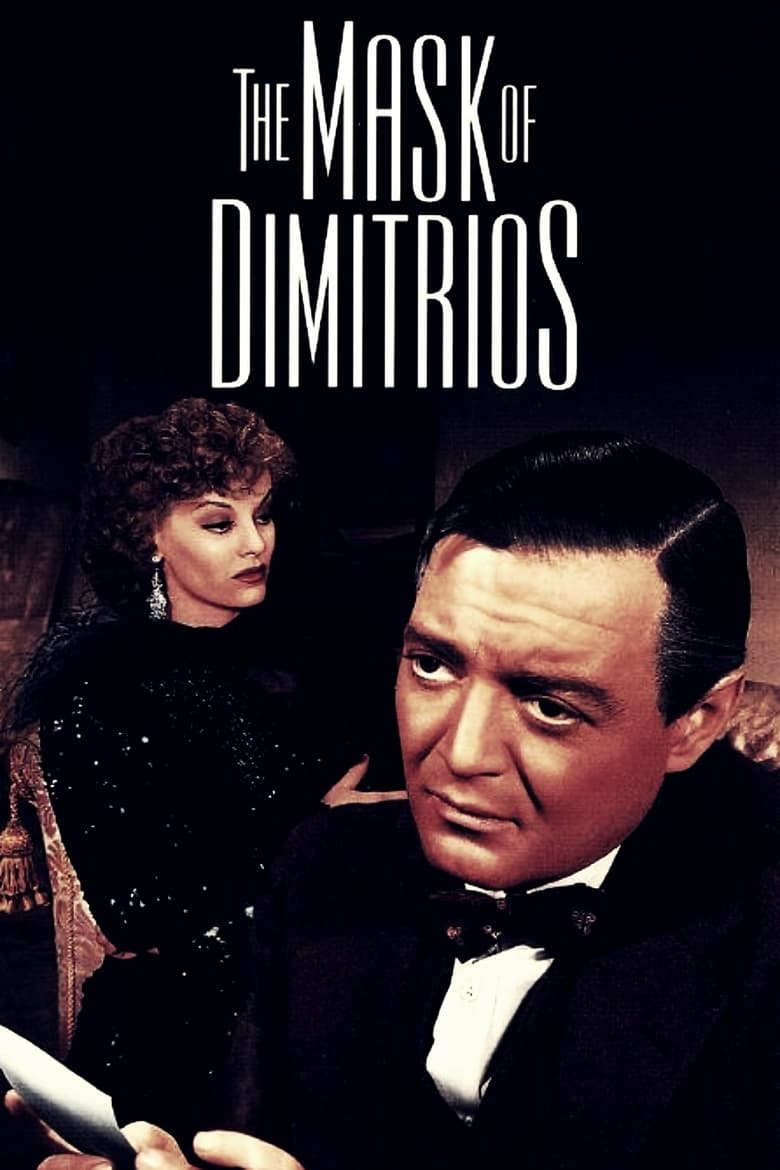
Dutch mystery writer Cornelius Leyden, a mild and bookish man with a taste for criminal biography, arrives in Istanbul and is shown the waterlogged corpse of Dimitrios Makropoulos by his acquaintance Marukakis, a journalist who knows the city's shadows. The dead man's file, held by Turkish police, traces a career of murder, espionage, and treachery across two decades and half a dozen European capitals. Leyden, convinced that real villainy makes better material than fiction, begins retracing Dimitrios's movements from city to city, interviewing survivors.
In Sofia, Athens, and Paris, Leyden reconstructs a biography of calculated betrayal – a man who sold out a spy ring, ruined a petty gambler named Bulic, and served a narcotics syndicate run by the shadowy Wladislaw Grudek. Threading through every account is Irana Preveza, a woman who once loved Dimitrios and paid for it. Into Leyden's amateur investigation steps Mr. Peters, a large and affable man who shares a personal interest in Dimitrios's history and whose motives remain opaque long after his manner has become familiar. The two form an uneasy alliance, each concealing what he cannot afford the other to know.
The film belongs to a strand of wartime noir that displaces its anxieties onto the European past – corrupt capitals, stateless criminals, allegiances traded like currency. Leyden's pursuit is framed as scholarly curiosity, but the deeper the file goes, the more he is implicated in a present-tense danger that his narrator's detachment cannot protect him from. The question the film poses is not who killed Dimitrios, but whether knowing the truth about such a man carries its own cost.
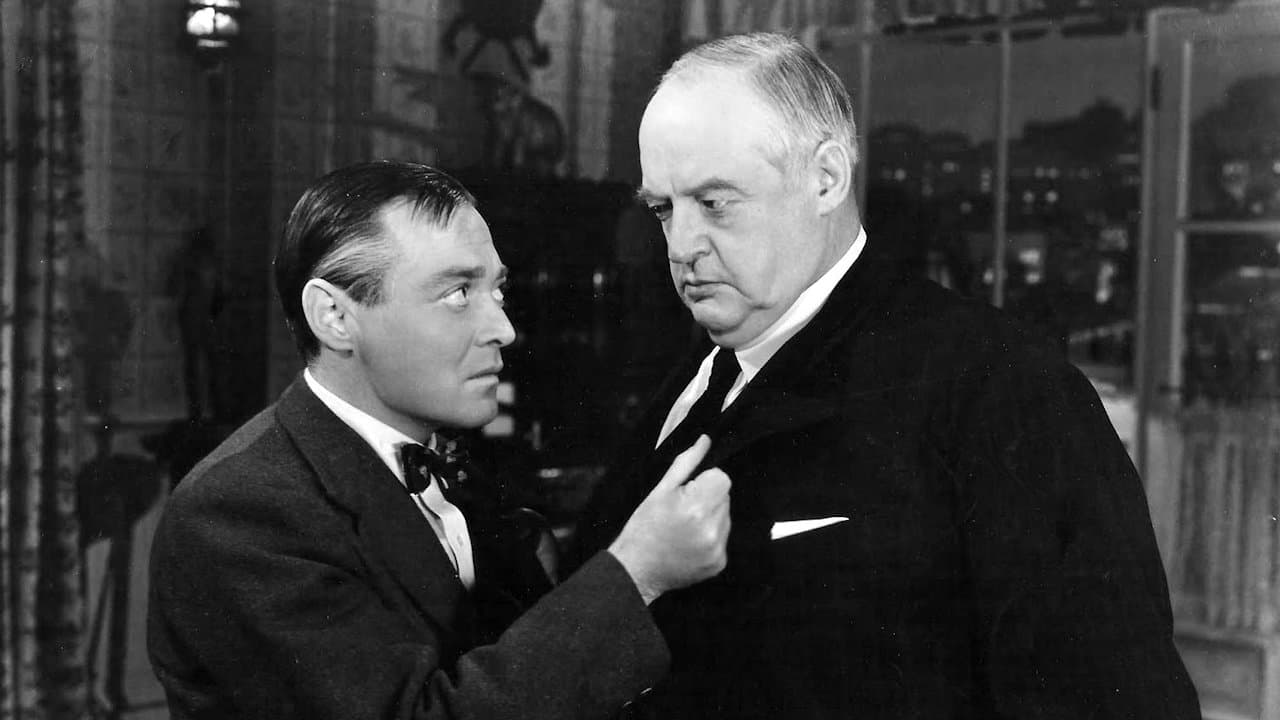
The Mask of Dimitrios arrives at an interesting angle in the Warner Bros. noir cycle: it is a film about retrospection, built almost entirely from flashback testimony, and it refuses to glamorize the criminal at its center even as it structures the entire narrative around him. Zachary Scott's Dimitrios is glimpsed in fragments – opportunist, seducer, assassin – never allowed sufficient screen time to become mythic. That restraint is the film's shrewdest move. What carries the picture is the pairing of Peter Lorre and Sydney Greenstreet, reunited from their Maltese Falcon chemistry, and the film earns considerable tension from the slow revelation that Peters is not what he claims to be. Jean Negulesco keeps the pace deliberate, trusting the source material – Eric Ambler's 1939 novel – to supply architecture while Arthur Edeson's photography supplies the moisture and shadow that pass for moral atmosphere. The result is not quite essential noir but it is serious and controlled work, an early example of the genre's capacity to use displaced European geography as a container for anxieties the American present could not yet name directly.
– Classic Noir
Edeson lights the Paris apartment scene with a single strong source from screen right, carving deep shadow across the left half of Greenstreet's face so that Peters's customary amiability becomes physically divided – half social performance, half something else entirely. The camera holds on a medium two-shot for longer than comfort allows, forcing the viewer to read Lorre's Leyden registering the shift in the room's equilibrium. When Peters finally steps forward, the frame tightens and the shadow falls more evenly across both men, a small compositional argument that Leyden has crossed into Peters's territory.
The scene functions as the film's pivot: Leyden the observer becomes Leyden the participant, and the scholarly distance he has maintained across three countries collapses in a single exchange. Peters's disclosure does not rescue Leyden – it implicates him. The scene argues, quietly, that curiosity about evil is never purely intellectual; to investigate a man like Dimitrios is to inherit a portion of his danger.
Arthur Edeson had already shot The Maltese Falcon for Huston when he came to The Mask of Dimitrios, and Negulesco clearly draws on that collaboration's visual grammar while pushing it toward a damper, more itinerant atmosphere. Working entirely on studio sets dressed to suggest Istanbul, Sofia, Athens, and Paris, Edeson uses deep-focus compositions to give the artificial interiors a credible sense of depth and occupation. His lighting favors practical-source motivation – a lamp here, a window there – but the falloff is always steeper than naturalism would require, so shadows arrive at edges of the frame without apparent cause. For the flashback sequences, the contrast is pulled slightly harder, as if memory itself were higher-contrast than the present. Lens choices stay conservative, close to a normal field of view, which keeps Greenstreet's physical scale from distorting into caricature and allows Lorre's smaller frame to read as precise rather than diminished. The overall effect is of a world where light is rationed and the spaces between men are always darker than they should be.
TCM remains the most reliable broadcaster for this title and airs it periodically as part of its classic Warner Bros. programming; the Max bundle includes TCM content and may offer on-demand access depending on your region.
Archive.orgFreeA public domain print circulates on Archive.org and is watchable at no cost, though transfer quality varies and a broadcast source is preferable for serious viewing.
TubiFreeTubi has carried this title in its classic noir rotation; availability shifts, so confirm before seeking it out.