Films People Pull a Fast One Night Beat Reading Room On TV Shop
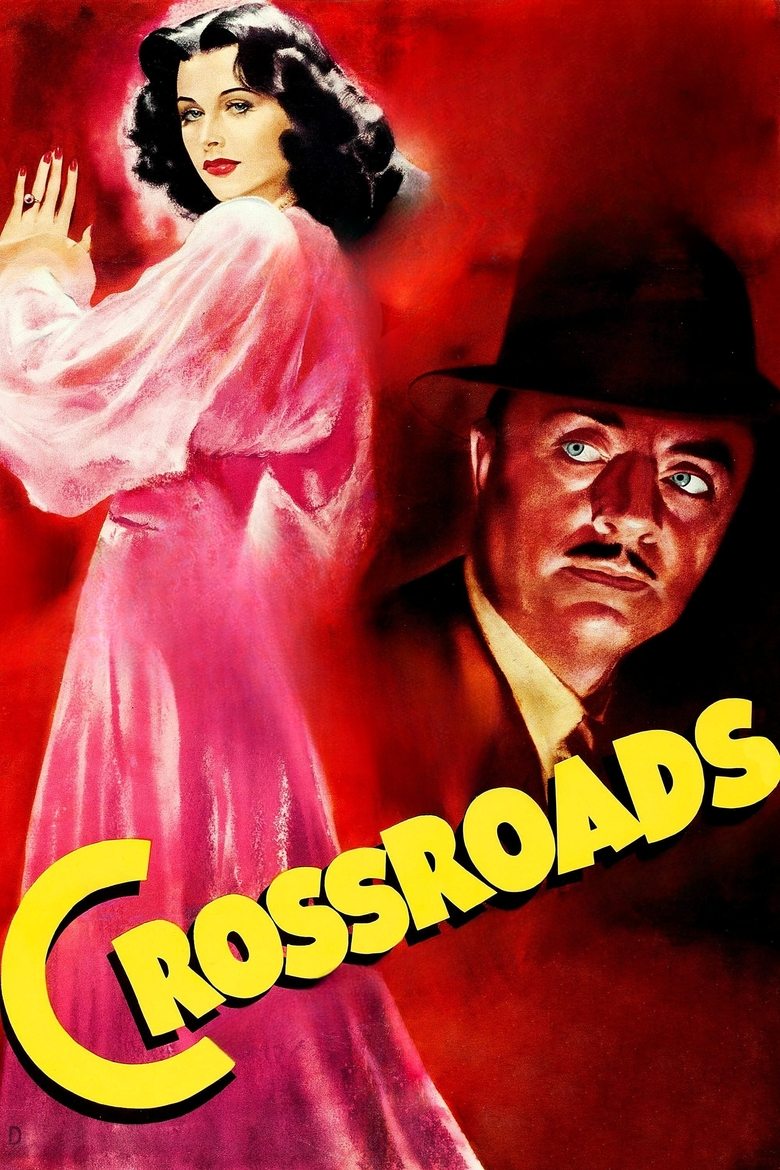
Crossroads 1942
1942 Metro-Goldwyn-Mayer
★★★☆☆ Notable
Film Noir · 83 minutes · Black & White

Crossroads

Directed by Jack Conway
Year 1942
Runtime 83 min
Studio Metro-Goldwyn-Mayer
TMDB 5.9 / 10
"A man without a past makes an easy target for those who claim to remember it."

Paris, the late 1930s. David Talbot is a respected French diplomat engaged to the elegant Lucienne, his life apparently ordered and secure. That order fractures when a blackmailer named Henri Sarrou appears in court to accuse Talbot of being Jean Pelletier, a convicted criminal whose sentence was commuted years earlier on grounds of amnesia. Talbot has no memory of any such past, and the charge seems impossible – yet Sarrou presses it with a confidence that suggests he knows more than the record shows.

The trial exposes the fragility of identity when it rests entirely on memory. A second figure from the alleged past, the cool and calculating Michelle Allaine, emerges to corroborate Sarrou's claims, while Lucienne stands by her husband even as doubt accumulates. Dr. Tessier, who treated Pelletier originally, offers what evidence he can, but the medical record cuts both ways. Sarrou's real motive – extortion, not justice – gradually surfaces, though the machinery he has set in motion proves difficult to stop.

Crossroads occupies an unusual position in the MGM noir-adjacent productions of the early 1940s, deploying the genre's standard instruments – blackmail, false identity, a predatory underworld – within a glossy studio frame that softens but does not entirely neutralise their bite. The film belongs to a cycle of amnesia thrillers that used memory loss as both plot mechanism and moral question: if a man cannot remember who he was, is he still accountable for what that earlier self did?
Classic Noir

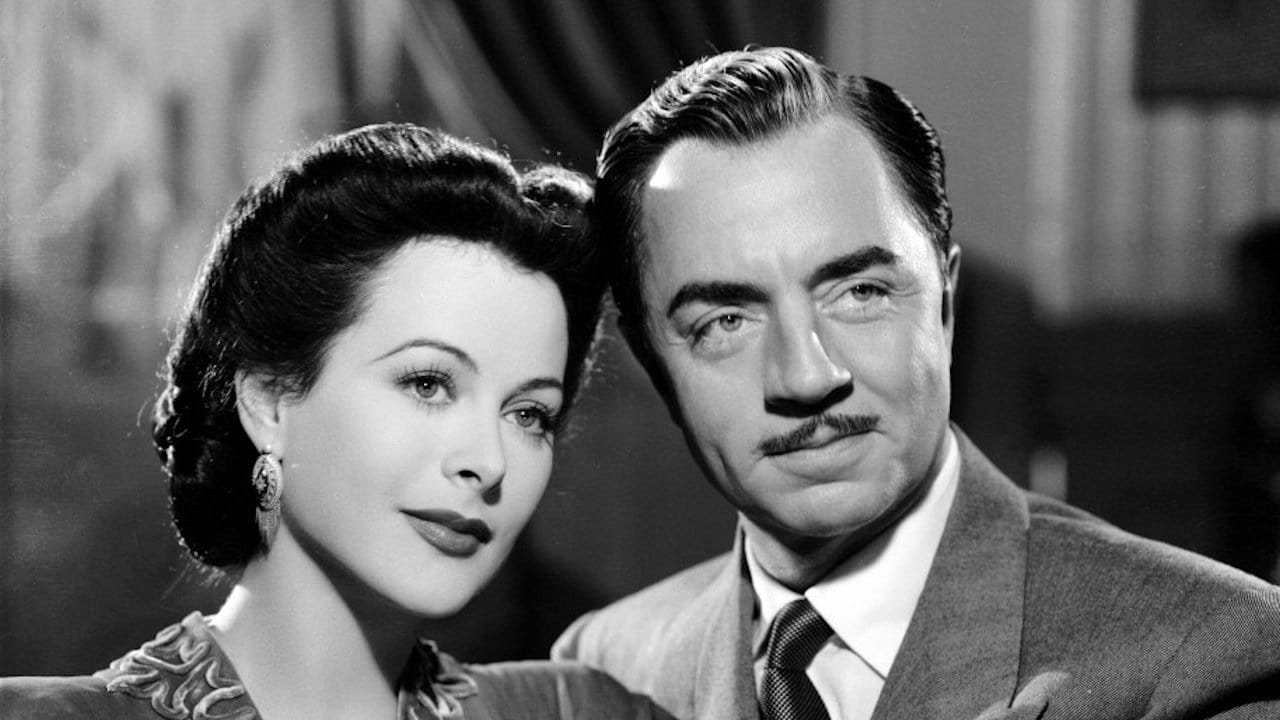
Crossroads arrives at the precise moment when Hollywood was beginning to import European fatalism into the domestic thriller, and its Parisian setting gives it cover to be darker in implication than MGM's house style normally permitted. Jack Conway directs with professional efficiency rather than personal vision, but the film is carried by the tension between William Powell's characteristic urbanity and the genuine instability of a man who cannot trust his own history. Powell's performance is quietly unsettling precisely because he refuses to play hysteria; his Talbot is a man who reasons his way toward a truth that reason alone cannot reach. Basil Rathbone, given licence to be nakedly predatory, provides real menace, and Claire Trevor's Michelle – morally compromised, not wholly villainous – anticipates the more ambiguous femmes of the classic cycle still to come. Joseph Ruttenberg's photography keeps the Paris of the film in a state of permanent late evening, which serves the story's argument that respectability is always closer to darkness than it appears. As a genre entry the film is secondary; as a document of the noir sensibility taking root within studio constraint, it repays attention.

– Classic Noir
3 ★★★☆☆ Notable
Credits

The Crew

DirectorJack Conway
ScreenplayJohn H. Kafka
CinematographyJoseph Ruttenberg
MusicBronislau Kaper
EditingGeorge Boemler
ProducerEdwin H. Knopf
Performances

The Cast

Close Reading

The Signature Scene

Crossroads – scene
The Courtroom Confrontation Sarrou Names the Man

Ruttenberg frames the courtroom with a shallow depth that keeps the background architecture present but soft, concentrating the viewer's eye on the witness box and the dock. When Sarrou rises to speak, the camera holds on a medium close-up that places him slightly low in the frame, giving him an authority the content of his testimony has not yet earned. Light falls hard on Powell's face across the room, the shadows under his eyes deepened by a key source angled from slightly above and to the left – a setup that reads as exposure rather than illumination, as though the courtroom itself is performing an autopsy on the man's past.

The scene establishes the film's central proposition: that identity, in the absence of memory, is whatever the most persuasive voice in the room declares it to be. Talbot cannot counter Sarrou's accusation with fact; he can only counter it with demeanour. The camera registers this disparity by cutting between Rathbone's controlled certainty and Powell's careful blankness, two performances of selfhood in open competition, and the unresolved question of which one is true gives the scene a tension that the surrounding gloss cannot entirely dissolve.

Visual Language

The Cinematography

🎞️
Joseph Ruttenberg – Director of Photography

Joseph Ruttenberg, working within MGM's well-resourced but control-heavy studio infrastructure, brings a restrained European influence to Crossroads that suits the film's Parisian setting without tipping into pastiche. Shooting almost entirely on studio-built sets, Ruttenberg uses controlled practical sources – practicals embedded in set dressing, bounce light off ceilings to simulate the diffuse grey of Paris interiors – to create an ambience that reads as authentic without the grain of location work. His shadow work is deliberate rather than expressionistic: darkness accumulates at the edges of interiors, suggesting a world that extends beyond what the frame reveals, but he avoids the hard German-angle chiaroscuro that would arrive more fully in noir productions later in the decade. Lens choices favour moderate telephoto compression in dialogue scenes, keeping characters at a slight remove that underscores the film's interest in surfaces and concealment. The visual language ultimately serves the story's moral argument: everything in the frame looks correct, composed, civilised – and the threat, when it comes, emerges from within that composure rather than against it.

In the Catalogue

Themes & Motifs

Availability

Where to Watch

Also in the Directory

See Also