Films People Pull a Fast One Night Beat Reading Room On TV Shop
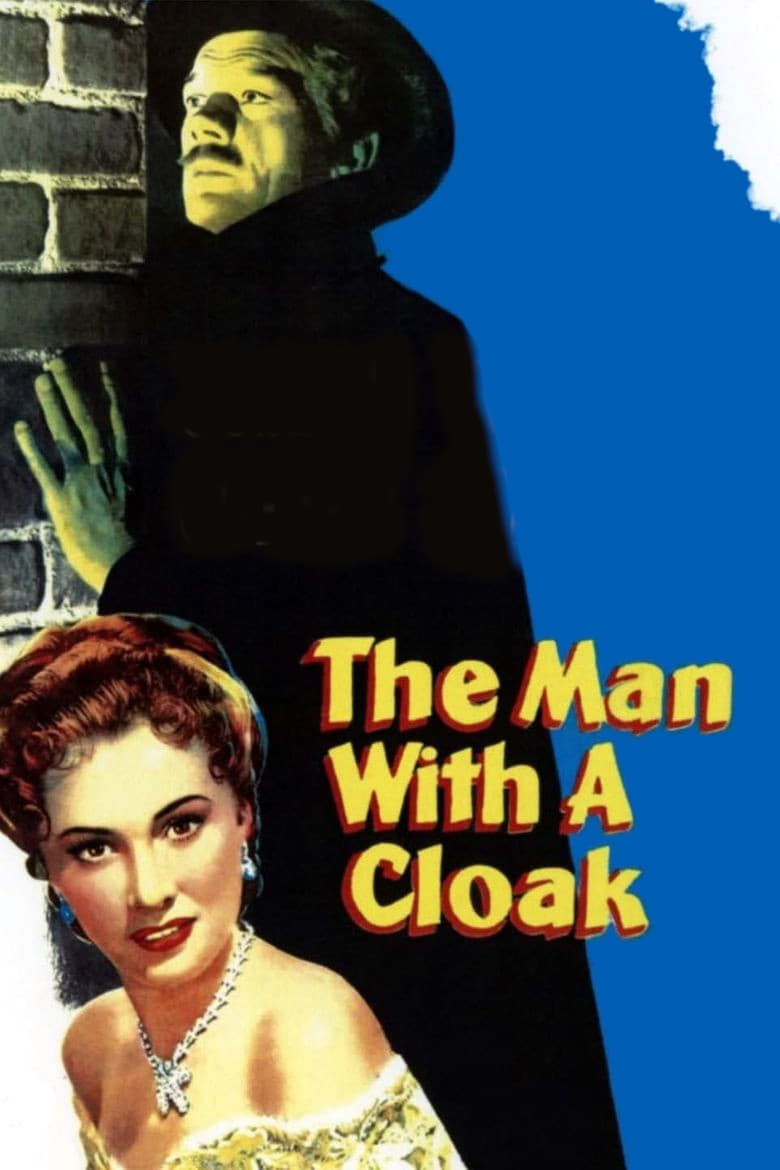
Man with a Cloak 1951
1951 Metro-Goldwyn-Mayer
★★★☆☆ Notable
Film Noir · 84 minutes · Black & White

Man with a Cloak

Directed by Fletcher Markle
Year 1951
Runtime 84 min
Studio Metro-Goldwyn-Mayer
TMDB 6.8 / 10
"A stranger named Dupin drinks in the shadows while a woman plots inheritance and death."

New York, 1848. Madeline Minot, a young French emigrant, arrives at the decaying mansion of Charles Theverner, her ailing grandfather, carrying little more than hope and a letter. Theverner, a wealthy but broken man attended by a scheming housekeeper, Mrs. Flynn, and a wary butler named Martin, is being systematically manipulated by Lorna Bounty, his sharp-eyed, calculating companion who has positioned herself to inherit his estate. Madeline's arrival threatens that arrangement, and Lorna moves quickly to consolidate her hold over the household.

Into this closed world drifts a mysterious, hard-drinking stranger who gives his name only as Dupin. He attaches himself to Madeline's cause with a gallantry that seems to cost him something, and his wit and evasiveness suggest a man running from a private ruin. As Theverner weakens and the pressure on Madeline intensifies, Dupin and Lorna conduct a quiet war of wills across candlelit rooms. Allegiances among the servants shift; a will is altered; and the question of who will survive the night becomes genuinely uncertain.

Man with a Cloak situates its noir mechanics inside a Gothic period frame, foregrounding poison, inheritance, and moral compromise rather than guns and wet streets. The film belongs to a strand of 1950s noir that tests the genre's fatalism against characters who choose, however belatedly, to act with conscience – and it does so with a cast whose collective weight gives the material more gravity than its modest premise might otherwise support.
Classic Noir

Fletcher Markle's film occupies an unusual position in the MGM output of the early 1950s: a period noir set in mid-nineteenth-century New York, it uses the Gothic house as a substitute for the city's rain-slicked avenues, and inheritance intrigue as a stand-in for the rackets and double-crosses that drive more conventional entries in the genre. The casting of Barbara Stanwyck as Lorna Bounty is the film's central calculation. By 1951 Stanwyck had already defined the femme fatale in Double Indemnity, and Markle exploits that history deliberately – the audience's suspicion of Lorna is pre-loaded. What the film earns in return is the chance to examine that archetype under different pressure. Joseph Cotten's Dupin, revealed in the film's final gesture to be Edgar Allan Poe himself, gives the picture its strangest and most resonant dimension: a self-destroying genius who salvages one life while losing his own. The conceit is sentimental but not dishonest, and it crystallises something the postwar cycle understood intuitively – that the noir hero is always, at some level, already lost.

– Classic Noir
3 ★★★☆☆ Notable
Credits

The Crew

DirectorFletcher Markle
ScreenplayFrank Fenton
CinematographyGeorge J. Folsey
MusicDavid Raksin
EditingNewell P. Kimlin
CostumesWalter Plunkett
ProducerStephen Ames
Performances

The Cast

Close Reading

The Signature Scene

Man with a Cloak – scene
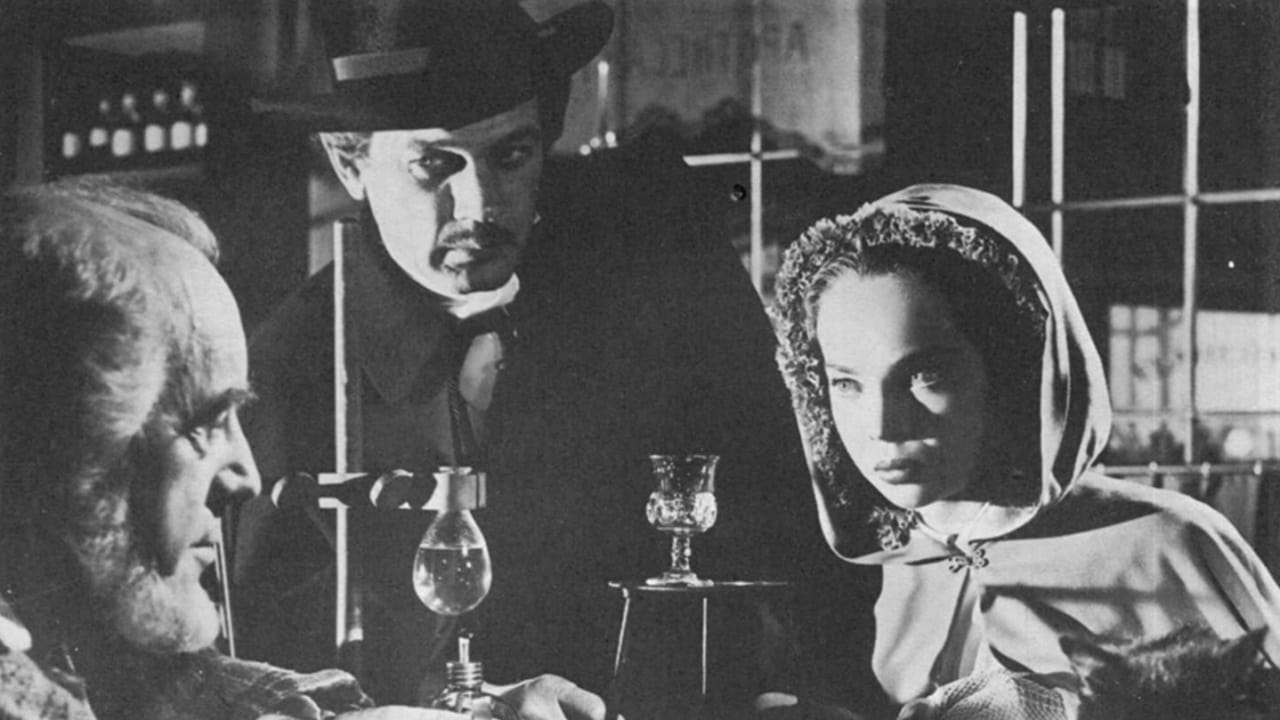
The Drawing Room, Late Night Dupin Deals the Cards

George J. Folsey lights the scene with a single dominant source – a candelabra placed low and to the right of frame – so that Cotten's face is half-consumed by shadow while Stanwyck's remains fully visible, her expression readable and therefore all the more controlled. The camera holds in a tight two-shot long enough for the viewer to register that neither character moves unnecessarily. When Cotten finally reaches for his glass, the gesture carries the weight of a confession. The period setting allows Folsey to suppress every ambient light source, and the result is a blackness around the frame's edges that the studio era rarely permitted itself.

The scene argues that the film's central contest is not between good and evil but between two forms of lucidity: Lorna's cold understanding of what money requires, and Dupin's equally clear understanding of what he has already forfeited. Neither character pretends to innocence. What separates them is purpose – and in this moment, watching each other across a table, both seem to know exactly which of them still has one.

Visual Language

The Cinematography

🎞️
George J. Folsey – Director of Photography

George J. Folsey, whose career extended back through the studio system's silent era, brings to Man with a Cloak a disciplined chiaroscuro that suits the film's Gothic-noir hybrid without tipping into pastiche. Working entirely on MGM's studio stages, Folsey constructs Theverner's mansion as a labyrinth of archways and staircases where the camera rarely achieves a clean sightline. Deep-focus compositions keep both foreground intrigue and background movement in play, so that a servant passing at the rear of a corridor registers as a potential threat. The film's dominant lighting strategy withholds fill light with unusual austerity for an MGM production of this period, allowing shadow to occupy positive space rather than serve merely as atmosphere. Folsey reserves his harshest, most directional light for Stanwyck – an ironic choice that makes her the most visible and yet the most opaque figure in any room she enters. The cinematography's moral logic is consistent: clarity of image corresponds to clarity of motive, and the darkest frames belong to the moments of greatest ambiguity.

In the Catalogue

Themes & Motifs

Availability

Where to Watch

Also in the Directory

See Also