In the closing weeks of World War II, Victoria Kowelska survives the Belsen concentration camp by assuming the identity of her deceased friend, Karin DeVereaux, an American citizen. Arriving in San Francisco under that borrowed name, she is received by Karin's young son Christopher and the boy's guardian, Major Marc Bennett, a U.S. Army officer who oversees the DeVereaux estate – a grand house on Telegraph Hill overlooking the bay. Victoria, carrying the weight of her deception and her own wartime losses, attempts to build a new life within the contours of another woman's past.
Victoria and Bennett marry quickly, but the domestic arrangement grows uneasy. The house itself becomes a source of dread: near-fatal accidents accumulate with quiet persistence, and Victoria begins to suspect that someone within her immediate circle is attempting to kill her. Her suspicions fall on Bennett, on the housekeeper Margaret, and on the estate's legal custodians – yet each relationship carries its own coil of concealment. The child Christopher remains loyal to Victoria while the adults around her pursue interests she cannot fully read, and the fortune tied to the DeVereaux estate gives motive a material shape.
House on Telegraph Hill operates as a domestic suspense picture built on a noir foundation – the displacement of identity, the predatory logic of inheritance, and the particular vulnerability of a woman who cannot claim legal personhood without confessing her fraud. It belongs to a postwar cluster of films in which European trauma is transplanted into American prosperity and finds no peace there, the safety of the New World revealed as another form of trap.
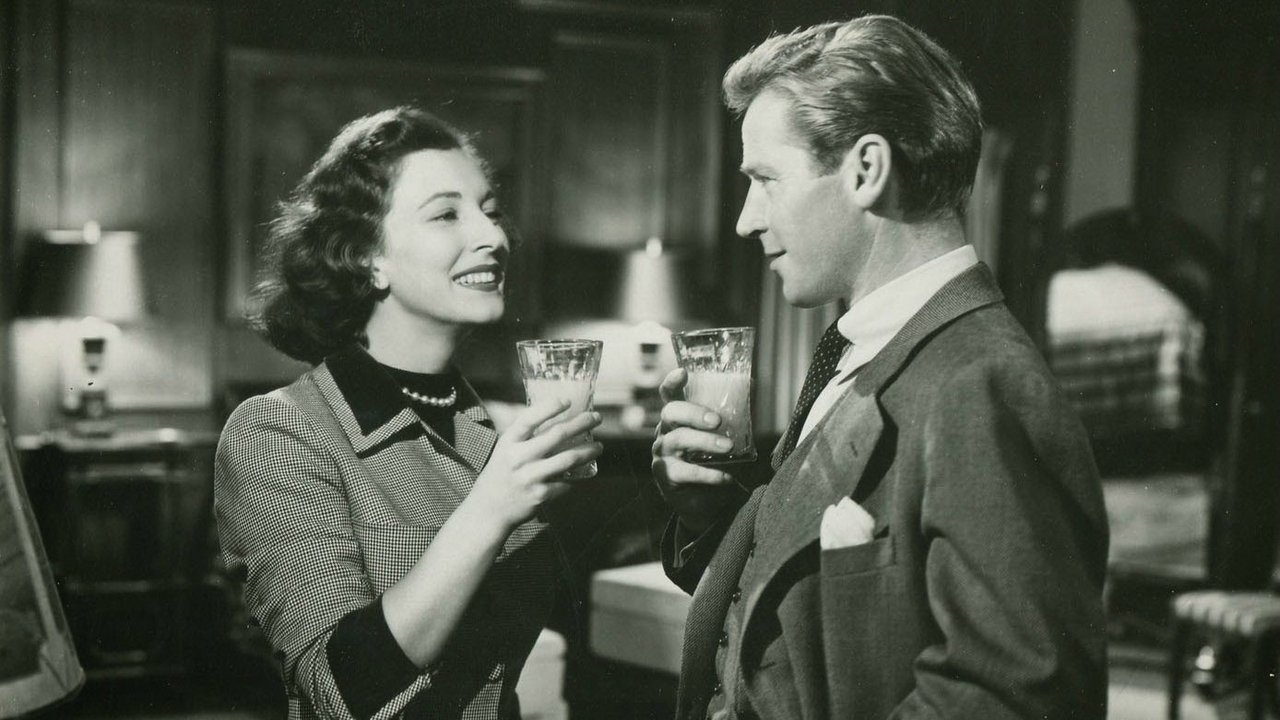
Robert Wise, working at 20th Century Fox on a modest budget, constructs a film that earns its tension through accumulation rather than spectacle. House on Telegraph Hill is less celebrated than the director's later work, yet it demonstrates his characteristic precision: scenes are staged for maximum spatial unease, and the San Francisco locations are used not as atmosphere but as moral geography – the hill itself a position of false elevation. Valentina Cortese carries the film with an internalized performance that resists easy sympathy; her Victoria is neither innocent victim nor calculating schemer but something more uncomfortable, a woman whose survival depended on erasure and who now pays the ongoing cost of that erasure. The film's engagement with postwar displacement is serious without being didactic, and its portrayal of marriage as a site of potential violence connects it to a broader cycle of Gothic-inflected noir in which the domestic sphere is precisely where danger concentrates. Lucien Ballard's cinematography enforces this unease throughout.
– Classic Noir
Victoria and Christopher descend Telegraph Hill in a horse-drawn carriage when the brakes fail and the vehicle accelerates toward the bay. Ballard shoots the sequence with a close-quarters immediacy that removes spectacle and replaces it with physical helplessness: the frame tightens on Cortese's hands working uselessly at the reins, then cuts to the child's face – not screaming but watchful, which is more unsettling. The San Francisco streets, shot on location, give the scene an unglamorous documentary texture, the city indifferent to the crisis moving through it.
The sequence crystallizes the film's central argument. Victoria has survived genuine atrocity through will and improvisation, yet here she is reduced to passivity inside the comfortable machinery of American bourgeois life – a carriage, an estate, a respectable marriage. The accident may or may not be arranged; that ambiguity is the point. The film insists that the line between accident and murder is exactly as thin as the line between a borrowed identity and a real one, and that Victoria's position makes it impossible to know which side of either line she stands on.
Lucien Ballard shoots House on Telegraph Hill with a restraint that suits the film's atmosphere of suppressed menace. Working largely on studio sets dressed to suggest the DeVereaux mansion's oppressive grandeur, Ballard uses deep-focus compositions to populate backgrounds with ambiguous figures and half-lit corridors, sustaining the sense that the domestic space conceals more than it reveals. His lighting on Cortese is notably unromantic: shadows fall across her face in ways that obscure rather than glamorize, reinforcing her character's fundamental illegibility. The San Francisco location footage is cut against studio interiors with enough care that the seams rarely show, and when Ballard does use the actual city – the hill, the bay, the fog – it functions as spatial argument rather than pictorial backdrop. The fog, particularly, returns as a consistent visual motif, diffusing certainty and softening the edges of what might otherwise be clear evidence. The lens choices favor modest focal lengths that keep the viewer at a middle distance, close enough to read faces but not close enough to feel certain of what they express.
The most reliably curated source for this title, likely presented in a clean transfer as part of broader Fox noir or Robert Wise programming.
TubiFreeTubi has carried Fox catalog noir titles in the past; availability may rotate, but it represents the most accessible free option if present.
Archive.orgFreePublic domain status is unconfirmed for this title, but Archive.org is worth checking for legacy Fox studio films of this period.