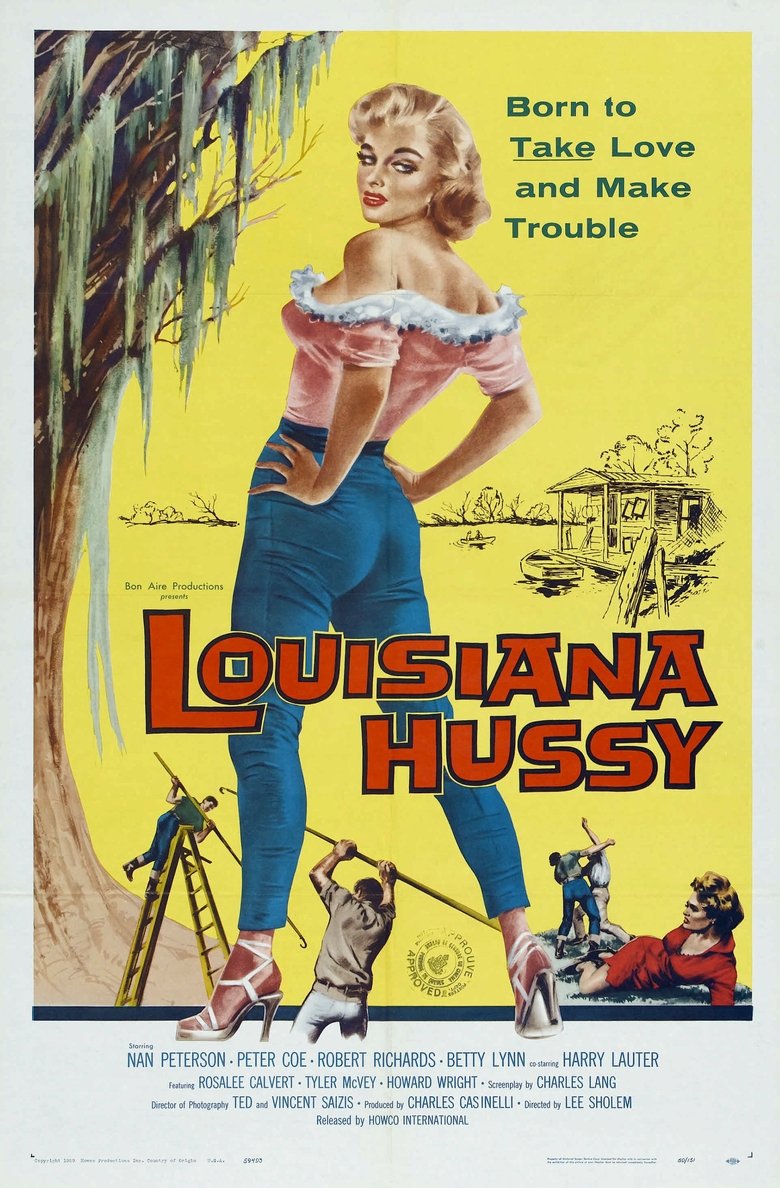
In the bayou country of Louisiana, a young woman named Nina Duprez arrives in a tight-knit Cajun community using the identity of Minette Lanier, a local girl whose fate remains unclear. She is taken in by the Guillot family – patriarch Pierre, his son Jacques, and Jacques's wife Lili – whose household carries its own unspoken tensions beneath a surface of provincial hospitality. The swamp and its isolation press in from every direction, making escape as much a psychological condition as a geographic one.
Nina's false identity begins to fracture when the real Minette Lanier surfaces, and the man Nina is apparently running from – Clay Lanier, who shares the dead woman's surname – closes in on the Guillot property. Jacques finds himself drawn to Nina in ways that threaten his marriage, while Lili watches with a quiet jealousy that has nowhere clean to go. The community's loyalties divide along lines of desire, self-interest, and old grievance, and the local doctor, J. B. Opie, occupies the uneasy position of someone who knows more than he chooses to say.
Louisiana Hussy belongs to the late-cycle rural noir that emerged in the late 1950s, when the genre had migrated from city streets to back roads and river deltas, transposing its essential anxieties onto regional American landscapes. The film's concern with false identity, sexual competition within a confined domestic space, and violence pressing inward from the margins places it in company with a strand of Southern gothic noir that treats geography itself as a form of moral entrapment.
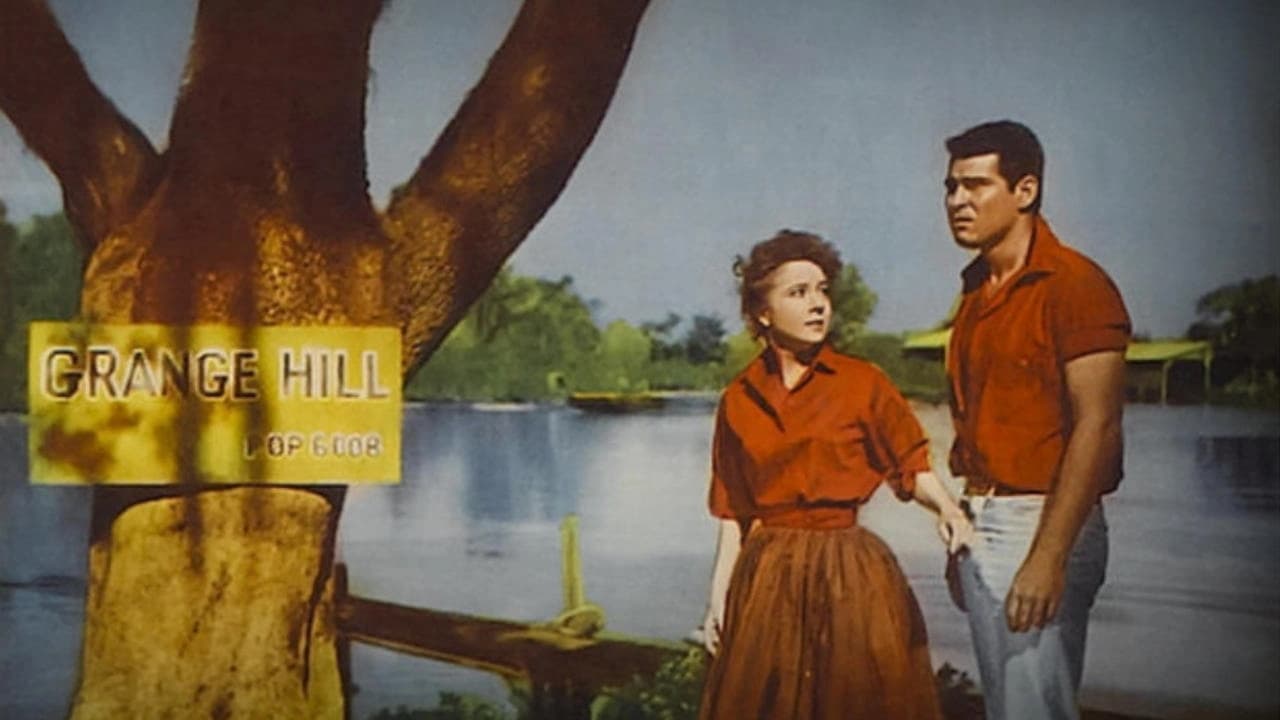
Louisiana Hussy is a modest production from Bon Aire, shot on the margins of the industry at a moment when independent noir had largely abandoned the expressionist city for cheaper, sunlit locations that carried their own atmospheric weight. Lee Sholem, a director whose career moved fluidly between television and low-budget features, keeps the film functional rather than distinctive, but the script's premise – a woman inhabiting a dead identity in a house already full of suppressed resentments – carries genuine noir logic. Nan Peterson holds the center with a performance that stays legible without becoming transparent: Nina is calculating and frightened in roughly equal measure, and the film does not fully resolve which quality drives her. The Cajun setting is only superficially rendered, yet the bayou's physical remoteness does useful thematic work, reinforcing the sense of a community sealed off from legal or social remedy. As a document of genre at the edge of its commercial life, the film reveals how durable the core noir architecture remained even when stripped of production resources.
– Classic Noir
The sequence is staged in the interior of the Guillot house, where the light source is narrowed to a single practical lamp that leaves the room's perimeter in functional shadow. The camera holds a medium two-shot as Nina and the real Minette Lanier occupy the same frame, the composition making the visual argument before any dialogue arrives: two women, one identity, insufficient space for both. The blocking keeps them at a fixed distance that neither closes nor widens, and Sholem cuts to close-ups with enough restraint that the faces register the scene's stakes without melodramatic inflation.
What the scene establishes is the film's central proposition about identity as a resource that can be stolen, contested, and exhausted. Nina's assumed name was always a temporary shelter, and the arrival of its rightful owner collapses the fiction that she had constructed a viable future. The confrontation externalizes what had been an abstract danger and locates it in another woman's body – a structural displacement that gives the film its most concentrated dramatic pressure and clarifies the degree to which Nina's survival depends on the Guillots' willingness to choose her over the truth.
The cinematographer on Louisiana Hussy is not identified in surviving production records, a common condition for low-budget independent productions of the period that cycled through uncredited or informally contracted crew. What the film's visual record suggests is a pragmatic approach to available light and location interiors, with shadow deployed selectively rather than systematically – closer to the spare, functional noir grammar of television crime drama than to the high-contrast chiaroscuro of classical studio noir. Exterior bayou footage provides genuine textural contrast to the cramped interior compositions, and the filmmakers appear to have understood that natural swamp light – diffuse, slightly flattened, carrying no clear source direction – creates its own atmosphere of moral indistinction. Lens choices lean toward medium focal lengths that neither glamorize nor distort the faces, keeping the performances available while limiting the visual expressiveness that a more ambitious production might have pursued. The cinematography serves the story not through invention but through competent economy.
Tubi has carried a number of late-cycle independent noirs of this period and is the most probable free streaming home for this title, though availability should be confirmed before viewing.
Archive.orgFreeArchive.org is worth checking for public domain or freely circulating prints of low-budget 1950s productions from smaller studios like Bon Aire.
Amazon Prime VideoSubscriptionAmazon's rotating catalog of vintage genre films occasionally includes obscure late-noir titles; availability for this film is unconfirmed and should be verified at time of viewing.