Films People Pull a Fast One Night Beat Reading Room On TV Shop
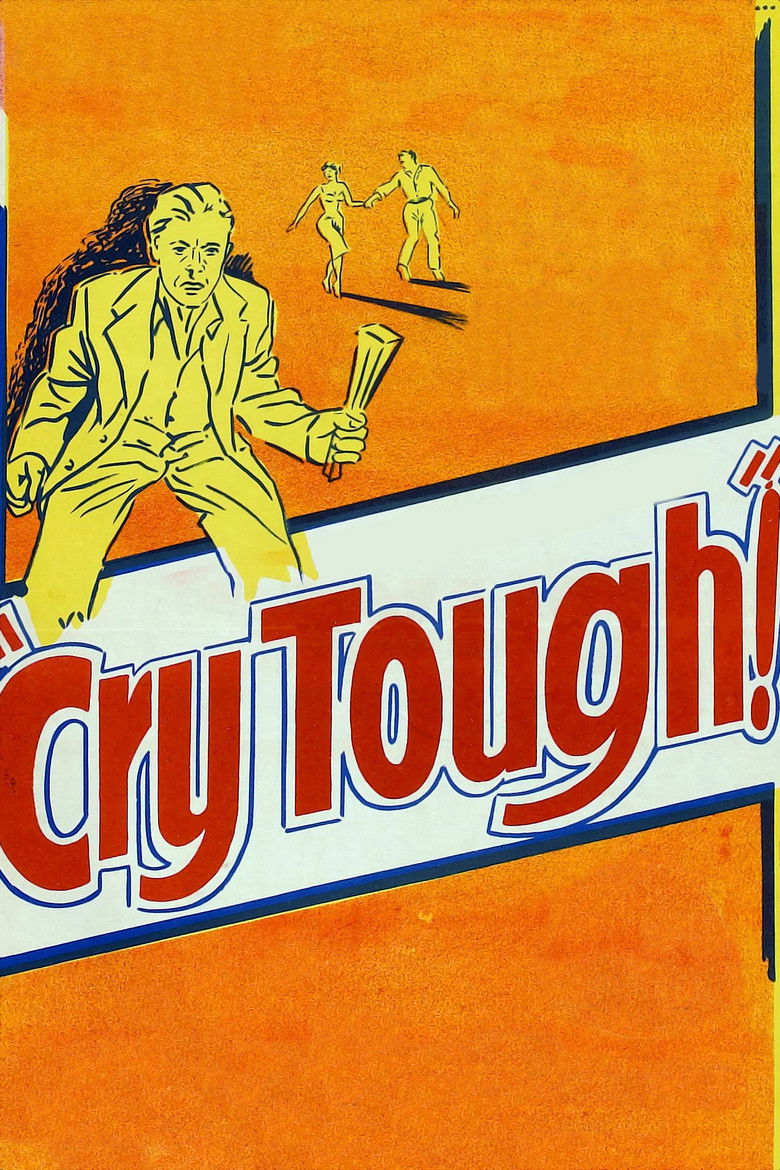
Cry Tough 1959
1959 Canon Productions
★★★☆☆ Notable
Film Noir · 83 minutes · Black & White

Cry Tough

Directed by Paul Stanley
Year 1959
Runtime 83 min
Studio Canon Productions
TMDB 6.1 / 10
"A man tries to walk away from the street, but the street has longer memory."

Miguel Estrada returns to his East Harlem neighborhood after a prison stretch, carrying the intention – if not yet the conviction – to go straight. His father, Sr. Estrada, a man of worn dignity, wants nothing more than to see his son clear of the life that put him away. Miguel's feelings for Sarita, a woman of steadier ambitions, offer the possibility of a different future. The tenement block, the stairwells, the corners – all of it is familiar, and familiarity is precisely the trap.

The local syndicate, controlled through men like the calculating Carlos Mendoza, operates on the assumption that a man with Miguel's record and Miguel's debts cannot afford principles. His old associates – Incho, Toro – read loyalty and neighborhood solidarity as obligations that override any private resolve. Sarita sees clearly what Miguel is risking, which places her in the line of tension between the life he came from and the one she represents. The film refuses to let this become a simple contest between good influence and bad company; the pressures are economic and psychological in equal measure.

Cry Tough belongs to the cycle of late-1950s noirs that relocated the genre's moral geography from waterfront warehouses and rain-slicked downtown avenues to the ethnic neighborhoods of the American city, examining how community ties and criminal networks occupy the same social space. The film asks whether a man's past is a condition he can survive or a sentence that simply defers its execution.
Classic Noir

Cry Tough arrives in 1959 as the classical noir cycle is losing internal pressure, and director Paul Stanley works the form with competence rather than innovation. What distinguishes the film is its sociological specificity: the Puerto Rican community of East Harlem is not deployed as exotic backdrop but as a functioning social world with its own codes of honor, shame, and obligation. John Saxon, characteristically intense, carries the film's central ambiguity – Miguel is neither victim nor villain but a man whose choices are genuine, which makes their consequences feel earned rather than schematic. Joseph Calleia's performance as the father is the picture's quiet moral center, embodying the immigrant generation's faith that sacrifice and propriety should count for something in the arithmetic of American life. The film's limitation is structural: it cannot quite decide whether it is a noir fatality study or a social problem picture, and the compromise softens both impulses. Still, within that constraint, Cry Tough offers a document of its cultural moment that most genre films of the period chose not to attempt.

– Classic Noir
3 ★★★☆☆ Notable
Credits

The Crew

DirectorPaul Stanley
ScreenplayHarry Kleiner
CinematographyIrving Glassberg
MusicLaurindo Almeida
EditingFrederic Knudtson
Art DirectionEdward Carrere
ProducerHarry Kleiner
Performances

The Cast

Close Reading

The Signature Scene

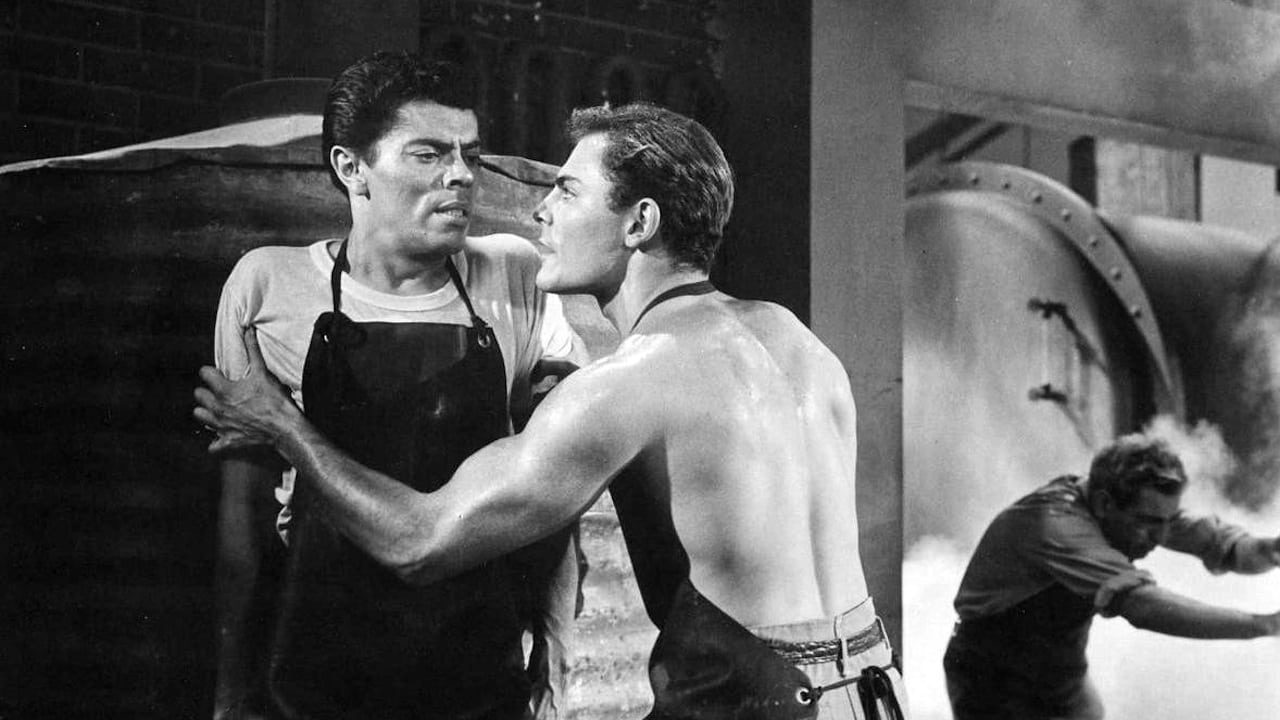
Cry Tough – scene
The Rooftop Confrontation No Roof, No Exit

Irving Glassberg frames the rooftop sequence with the city held at a distance – a smear of lights below, laundry lines cutting diagonally across the background. The camera stays close to the figures rather than opening up to the skyline, a choice that denies any sense of escape. Light sources are low and lateral, throwing the men's faces into relief against the dark sky so that shadow falls across exactly half of each face. There is no spectacular geography here, only the flat tar paper and the edge.

The scene makes the argument that Miguel's world has no elevated vantage point from which to survey his options – the rooftop, traditionally a place of escape or ambush in the urban crime film, functions here as a dead end with a view. What the characters say matters less than the blocking, which places Miguel between the drop and the men who represent the life he cannot fully renounce. The film's central thesis – that the street's claim is spatial as much as social – is stated here more plainly than anywhere else.

Visual Language

The Cinematography

🎞️
Irving Glassberg – Director of Photography

Irving Glassberg, whose studio work at Universal through the 1950s covered a wide range of assignments, brings to Cry Tough a location-inflected approach that suits the material's documentary impulse. The East Harlem settings give him vertical compositions unavailable on a studio lot – fire escapes, stairwells, and narrow street canyons that allow him to fragment the frame and isolate characters within the architecture of the neighborhood. He uses available-light logic even when the setups are clearly controlled, avoiding the high-contrast chiaroscuro of classical noir in favor of a flatter, grayer palette that registers as sociological rather than expressionist. Shadow work is present but functional: it marks danger and moral compromise without the operatic excess that the genre occasionally indulged. The effect is a visual language that insists on the everyday texture of the world Miguel inhabits, making his predicament feel like a condition of the place rather than the projection of a stylized inner state.

In the Catalogue

Themes & Motifs

Availability

Where to Watch

Also in the Directory

See Also