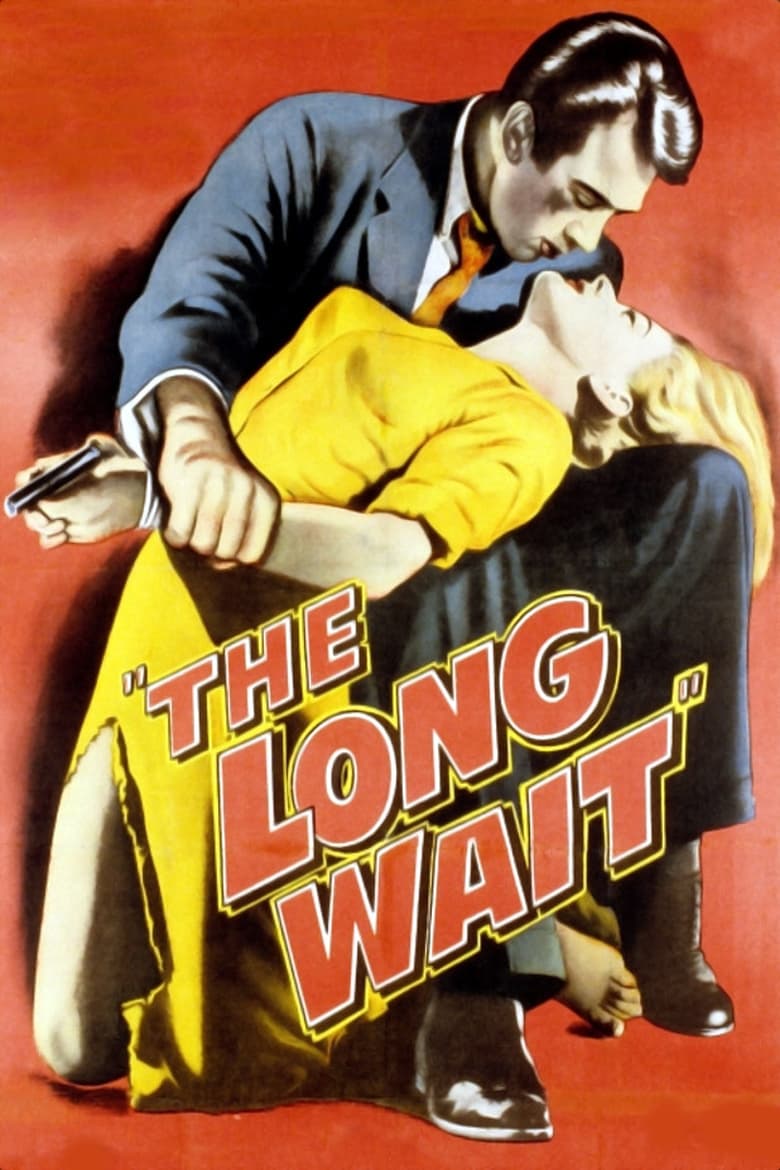
Johnny McBride returns to his hometown with no memory of who he is or what he did there. A car accident years earlier wiped his past clean, and the identity he once held has dissolved into rumor, accusation, and the cold certainty of others. The law, in the person of the brutish Tucker, wants him for a murder he cannot remember committing. The powerful local fixer Gardiner, a man of courtly manners and hidden machinery, watches McBride's return with the particular interest of someone who has arranged things to his advantage.
To clear his name, McBride must reconstruct a past he cannot access from the inside. Four women enter his orbit, each carrying a fragment of who he was: Venus, a nightclub fixture with loyalties that shift like smoke; Wendy Miller, who insists she knew him; Carol Shay, whose fear seems genuine and whose connection to the murder runs deep; and Troy Avalon, who may know more than anyone. The syndicate enforcer Servo operates between these figures, enforcing Gardiner's interests with a blunt efficiency that narrows McBride's options at every turn.
The Long Wait adapts Mickey Spillane's novel and shares his preoccupation with masculine identity under siege, a man forced to become himself through violence and confrontation rather than recollection. It belongs to the postwar cycle of amnesia noirs in which the past is not merely forgotten but weaponized, and the protagonist's innocence or guilt remains genuinely uncertain long into the film. The resolution arrives through confrontation rather than revelation, which is consistent with the Spillane worldview if not always with the conventions of classical detective procedure.
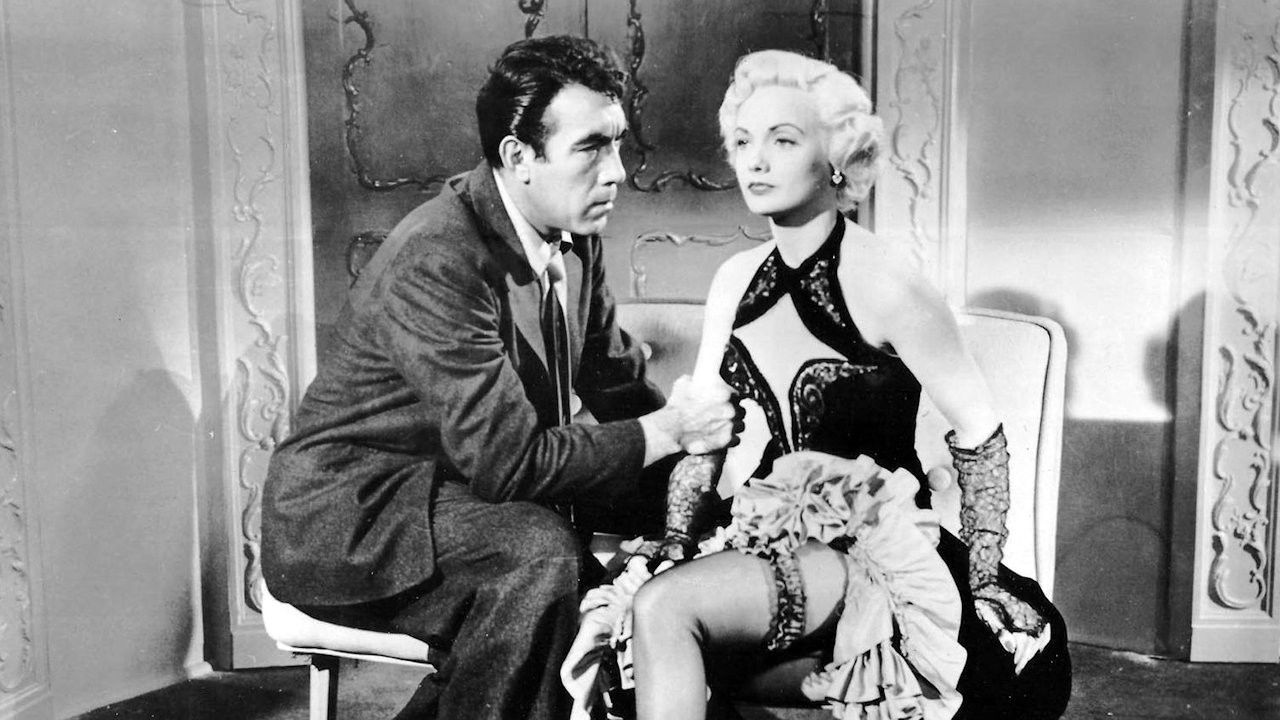
The Long Wait occupies a specific and underexamined position within the Spillane adaptations of the 1950s. Where Kiss Me Deadly the following year would push the author's moral universe toward abstraction and near-apocalypse, Victor Saville's film stays closer to the procedural surface, letting its amnesiac premise carry the existential weight. Anthony Quinn, rarely deployed in leads of this kind, brings a physicality that serves the film's argument: identity here is not recovered through memory but through the body's instinct for survival and aggression. Charles Coburn's Gardiner is one of the period's more interesting villain constructions, a man whose corruption is expressed through cultivated ease rather than menace. The film is a product of its independent production context – Parklane Pictures working outside the major studio system – and that relative freedom shows in its willingness to let the mystery stay genuinely unresolved past the point where a more conventional studio picture would have tidied things up. As a document of mid-decade noir's engagement with masculine anxiety and institutional corruption, it repays close attention.
– Classic Noir
Franz Planer frames the exchange between McBride and Gardiner in a shallow depth of field that keeps the background of the office – its books, its surfaces of respectability – slightly soft, as though the environment itself refuses to come fully into focus. Gardiner is lit from a practical source above and to his left, which flatters him in a way the scene's content does not. McBride stands at a slight remove, his face catching the harder, more direct light of a window source, every plane of Quinn's heavy features articulated with an almost sculptural clarity. The composition places power with Gardiner and exposure with McBride, even as the dialogue works in the opposite direction.
What the scene reveals is the film's central argument: that knowledge, not violence, is the primary instrument of control. Gardiner does not threaten McBride directly. He simply demonstrates how completely he understands a man who does not understand himself, and in doing so establishes that McBride's amnesia is not a protection but a vulnerability. The scene positions the entire film as a contest between one man's recovered selfhood and another man's long-held institutional power.
Franz Planer, who shot Letter from an Unknown Woman and later work across multiple continents, brings a European precision to the visual grammar of The Long Wait that distinguishes it from contemporaneous studio noir. Working on a constrained independent budget, Planer compensates with rigorous compositional control: interiors are built around single dominant light sources that isolate figures against murk, creating a world in which legibility – of faces, of intentions – is always provisional. His lens choices favor a moderate focal length that flattens depth just enough to make backgrounds feel like pressure rather than context. Location shooting, where it occurs, is integrated without the documentary looseness that marks some postwar location work; the streets feel observed but also constructed, which mirrors the film's concern with a reality that has been arranged by others. Shadow work throughout the film is calibrated to moral ambiguity rather than simple menace: Gardiner, the most dangerous figure in the film, is consistently the best lit.
Tubi has carried several Spillane adaptations and independent noir titles from this period; availability shifts but it is the most likely free streaming home for this title.
Archive.orgFreeAs an independent production with an uncertain rights history, The Long Wait may surface on Archive.org; verify current availability before visiting.
Amazon Prime VideoRentalDigital rental through Amazon offers a reliable fallback if free streaming options are unavailable, typically at standard definition quality for titles of this vintage.