Mike Hammer, the blunt and self-directed private investigator created by Mickey Spillane, encounters a young woman named Nancy Williams in a late-night diner – a chance meeting that ends with her murder before morning. Hammer takes the killing personally, as he tends to do, and begins working the streets of Los Angeles to understand who Nancy was, why she died, and who gave the order. His investigation pulls in Velda, his capable secretary, and brings him into uneasy contact with Captain Pat Chambers, the police liaison whose tolerance for Hammer's methods is perpetually strained.
The trail leads toward a ring of stolen jewels with a wartime history and toward Colonel Holloway, a figure of apparent respectability whose connections run deeper and darker than his public standing suggests. Ludwig Teller, a jeweler with something to hide, and a woman named Maria complicate the picture further, and the loyalties of Louis – a man who surfaces at several wrong moments – prove difficult to read. Hammer moves through this network with characteristic force, accumulating danger as the value of the jewels and the number of people willing to kill for them become clearer.
My Gun Is Quick belongs to the cycle of Spillane adaptations that arrived in the mid-1950s, following the success of I, the Jury and Kiss Me Deadly, each attempting to translate Hammer's confrontational moral code to the screen with varying degrees of fidelity. This entry leans into procedural momentum over psychological texture, placing Hammer in a world of postwar grievance and mercenary impulse where the line between justice and vendetta remains, as always in his orbit, deliberately blurred.
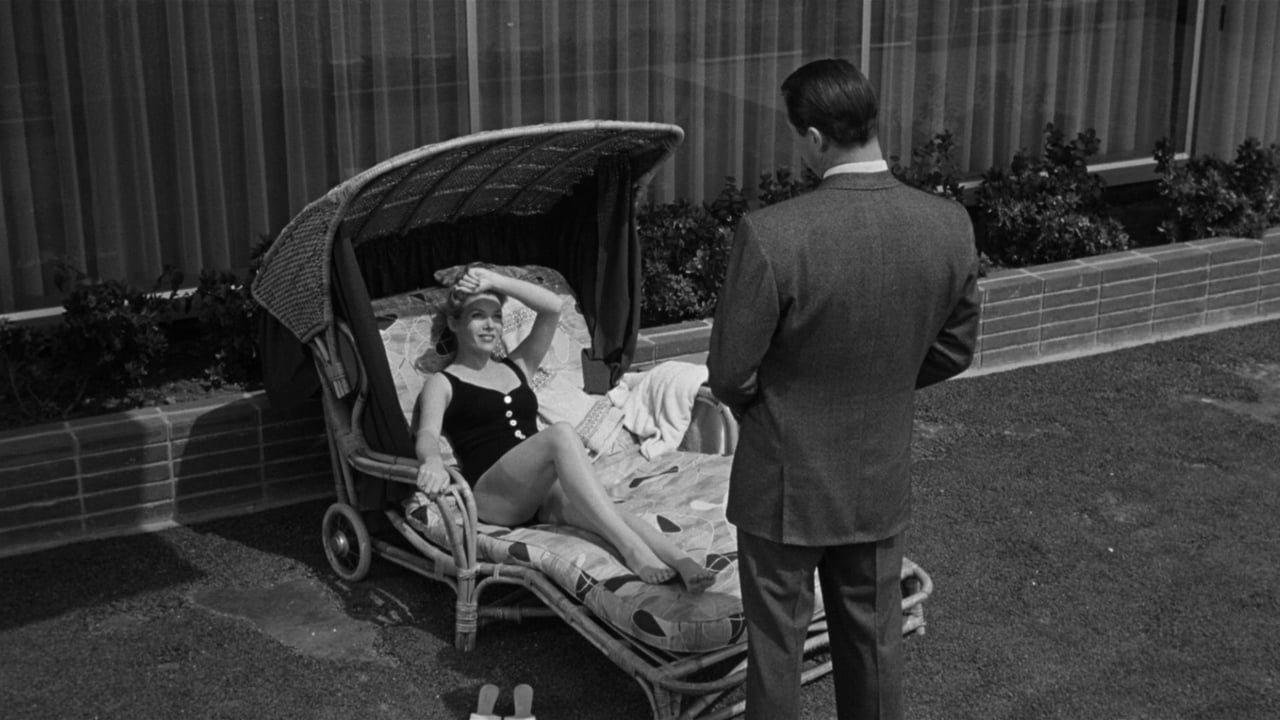
My Gun Is Quick occupies a secondary but instructive position in the Spillane screen cycle. Robert Bray's Hammer is a leaner, less theatrical figure than Ralph Meeker's in Robert Aldrich's Kiss Me Deadly two years prior – less expressionist, more functional – and the film around him reflects that register. Director George White keeps the pacing efficient and the moral atmosphere appropriately sour without pressing toward the stylistic extremes that made Aldrich's version a landmark. What the film does well is sustain a mood of urban transience: the diner, the streets, the furnished rooms of people with no permanent address. These are the spaces Spillane's fiction inhabits, and the production, modest as it is, respects them. The jewel-theft plot connecting wartime theft to postwar criminal enterprise was a common framework in 1950s noir, and White handles it without pretension. The film's value lies partly in what it documents: a cultural moment when Spillane's violent populism was still a commercially viable screen proposition and when the private detective remained a figure audiences trusted to deliver a verdict the courts could not.
– Classic Noir
Harry Neumann positions the camera low and slightly off-axis as Hammer confronts Ludwig Teller in a cramped back room behind the jewelry counter. Venetian blind light falls in horizontal bars across Teller's face, cutting him into segments of brightness and shadow that shift as he moves. The room's clutter – display cases, velvet trays, a desk stacked with ledgers – compresses the frame and denies either man an easy exit. Neumann holds the two-shot long enough that the geometry of entrapment becomes explicit.
The scene distills the film's central argument about knowledge as liability. Teller knows something he would prefer not to know, and Hammer's presence converts that passive guilt into active danger. The physical constriction of the frame mirrors the character's situation: there is no neutral space left in the room or in the story, and the bars of light falling across Teller's face function as an informal verdict rendered before any confession is made.
Harry Neumann, a veteran of low-budget productions whose career extended back to the silent era, shoots My Gun Is Quick with the economy of a craftsman who understands that modest resources demand disciplined choices. His lighting favors hard sources – practical lamps, exterior neon bleeding through windows, the occasional bare bulb – that generate the shadow geometry noir requires without the elaborate rigging of larger productions. The film was shot predominantly on Los Angeles locations, and Neumann uses that environment shrewdly: the actual geography of the city, its diners and side streets and commercial interiors, provides a documentary texture that studio sets rarely achieve. Close and medium lenses keep the frame tight around faces during interrogation scenes, creating pressure without camera movement. The moral logic of Spillane's world – that guilt is visible in the body, that the corrupt betray themselves under sustained scrutiny – finds its visual equivalent in Neumann's tendency to hold on faces a beat longer than comfort permits, letting the light do the accusing.
Tubi has carried public domain and low-rights classic noir titles from this era with some regularity; availability should be confirmed before viewing.
Archive.orgFreeAs a Parklane Pictures release that has circulated in the public domain, this title may be available on Archive.org, though print quality varies by upload.
Amazon Prime VideoSubscriptionAmazon's catalog of mid-tier 1950s noir has included Spillane adaptations; availability is subject to licensing rotation and should be verified.