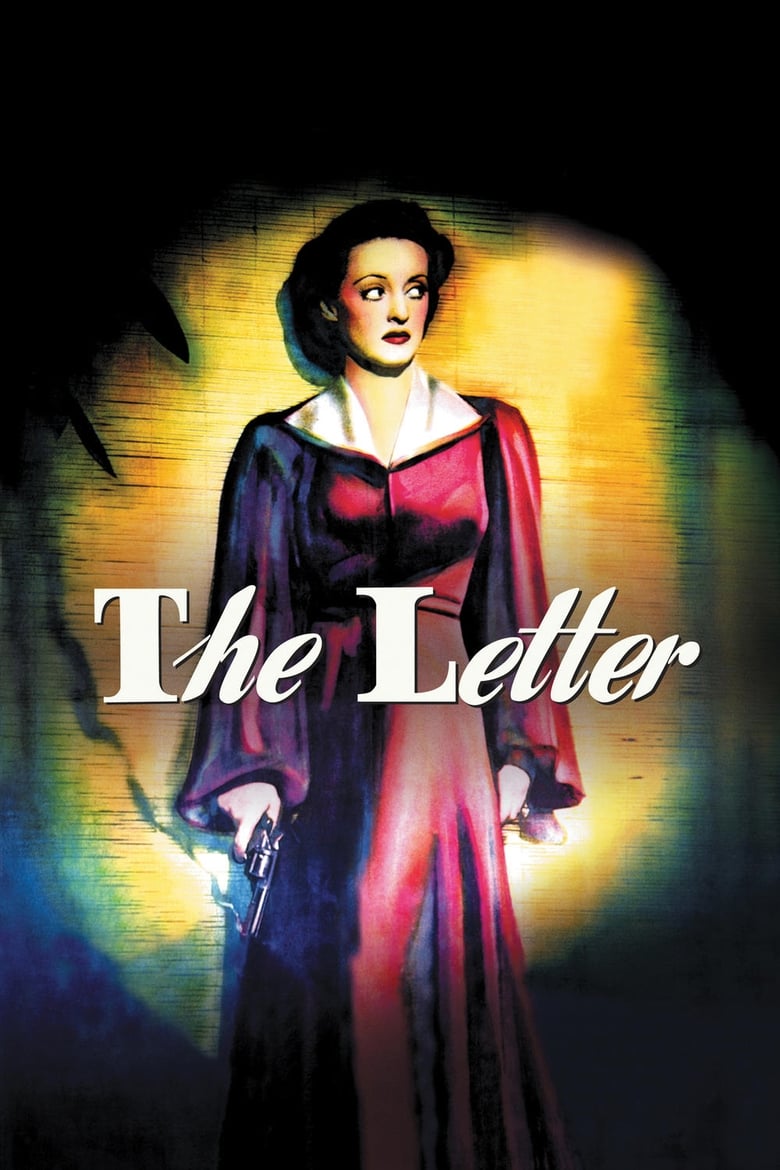
On a rubber plantation in British Malaya, Leslie Crosbie (Bette Davis) shoots Geoffrey Hammond six times on the veranda of her home, then calmly tells her husband Robert (Herbert Marshall) and the colonial authorities that she acted in self-defense against a man who had forced his way in with violent intentions. The local legal community, anchored in the insular world of expatriate British society, moves quickly to support one of its own, and family solicitor Howard Joyce (James Stephenson) takes the case.
Joyce soon discovers that a letter exists – written in Leslie's hand to Hammond on the night of the shooting – that contradicts her account entirely and establishes prior arrangement rather than uninvited assault. The letter is in the possession of Hammond's Eurasian wife (Gale Sondergaard), who will surrender it only for a price and on her own terms. Joyce is forced to weigh his professional ethics, his loyalty to Robert Crosbie, and the knowledge that the truth, if surfaced, will destroy everyone around him.
The Letter belongs to the cycle of Hollywood films that used exotic colonial settings and the murder trial as instruments for examining the psychic violence that polite society prefers to leave unspoken. Adapted from W. Somerset Maugham's 1927 story and staged once before with Jeanne Eagels, William Wyler's version presses hardest on the interior life of a woman whose guilt is established in the film's first moments, making the courtroom procedural secondary to the moral unraveling that follows it.
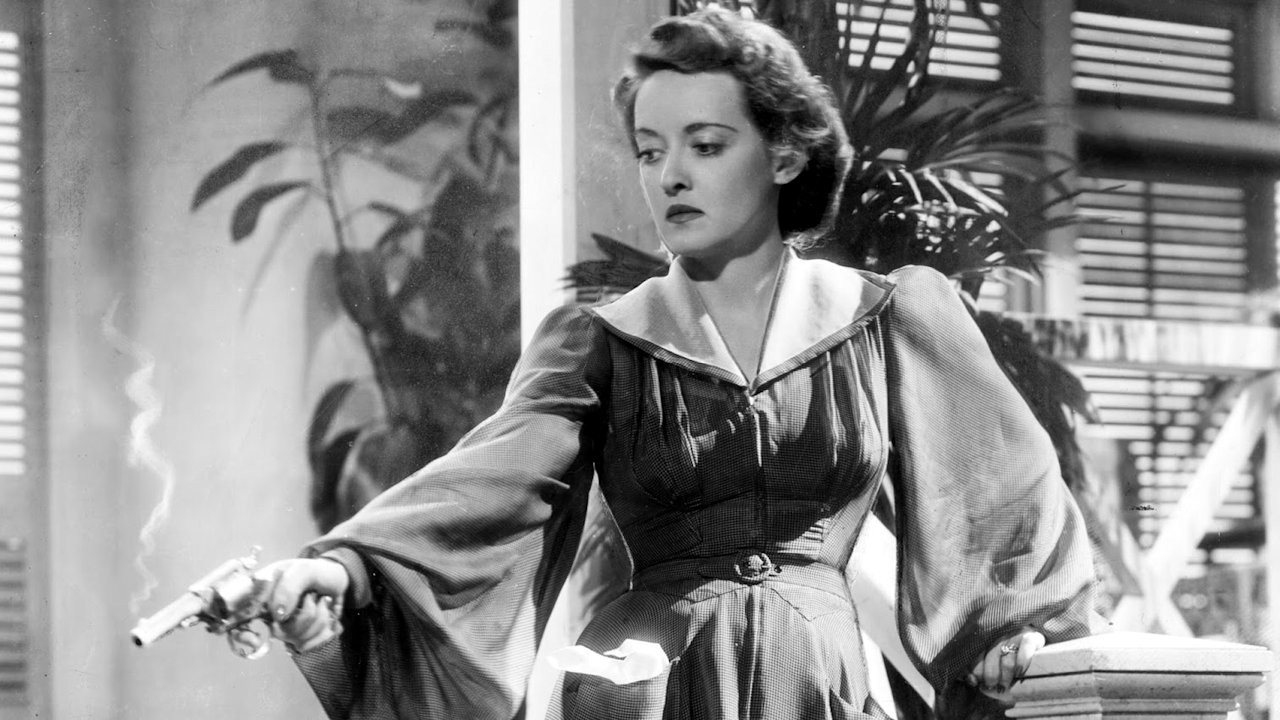
The Letter is unusual among studio noirs for granting its audience no useful uncertainty: the crime is witnessed, not merely alleged. What Wyler constructs in the remaining eighty-odd minutes is a study in the mechanisms by which guilt is managed, displaced, and domesticated. Davis gives a performance of extraordinary containment – Leslie Crosbie's composure is itself the subject, a performance-within-the-performance that the film watches with cold attention. The colonial setting is not decorative. Maugham's story and Wyler's treatment use British Malaya to isolate a community that enforces its own codes of silence, codes that ultimately protect Leslie not because she is innocent but because the alternative is too disruptive to entertain. Tony Gaudio's cinematography and Max Steiner's score both lean into unease without resolving it into comfort. The film belongs to a strain of noir more interested in psychological stasis than in action – closer to Preminger's Fallen Angel in temperament than to the harder urban crime films of the same decade.
– Classic Noir
Wyler and Gaudio open on the plantation at night, the camera drifting through shadow and diffused tropical light before arriving at the veranda just as the first shot is fired. The frame is wide enough to register the architecture of colonial domesticity – the rattan furniture, the orderly geometry of the house – and then Leslie advances into the moonlight, firing repeatedly into a man who is already falling. The camera does not cut away. The moon above is full and conspicuous, and Gaudio uses its reflected light to bleach the scene of the warm tones one might associate with a domestic setting, leaving instead a high-contrast image in which Leslie's white dress glows against deep shadow.
The sequence establishes the film's central argument before a word of dialogue is spoken: there is no ambiguity about the act, only about its meaning. Leslie's advance into the light as she fires is choreographed as assertion rather than panic, and that distinction – between a woman defending herself and a woman finishing something she intended to finish – is what the rest of the film circles without ever fully resolving in comfortable terms.
Tony Gaudio's cinematography for The Letter operates in the tradition of Warner Bros. studio craft at its most disciplined – controlled, low-key, without the expressionist excess that could tip such material toward melodrama. Gaudio favors deep shadows within domestic interiors, using the plantation house and later the Singapore settings to build frames in which light enters selectively: through louvered shutters, across a desk, along the edge of a face. The famous moonlit opening is not an aberration but a statement of intent, repeated in modified form at the film's close, when the tropical night again serves as the environment in which Leslie must account for herself. Studio construction allowed Gaudio precision over every shadow and reflection, and he uses that control to articulate moral states rather than to simply illustrate them. The net curtains that appear at key moments – both literally and as filtered light across faces – suggest a world seen through obstruction, a society in which clarity is perpetually deferred.
The Letter is part of the Warner Bros. library available on Max, making it the most widely accessible streaming option for subscribers in the United States.
TCMBroadcast/StreamingTCM airs The Letter periodically as part of its classic Hollywood programming and may offer temporary on-demand access via the TCM app; check the schedule for upcoming broadcasts.
KanopySubscriptionKanopy, available free through many public library systems, has carried Warner Bros. classics including The Letter – confirm availability through your local library account.