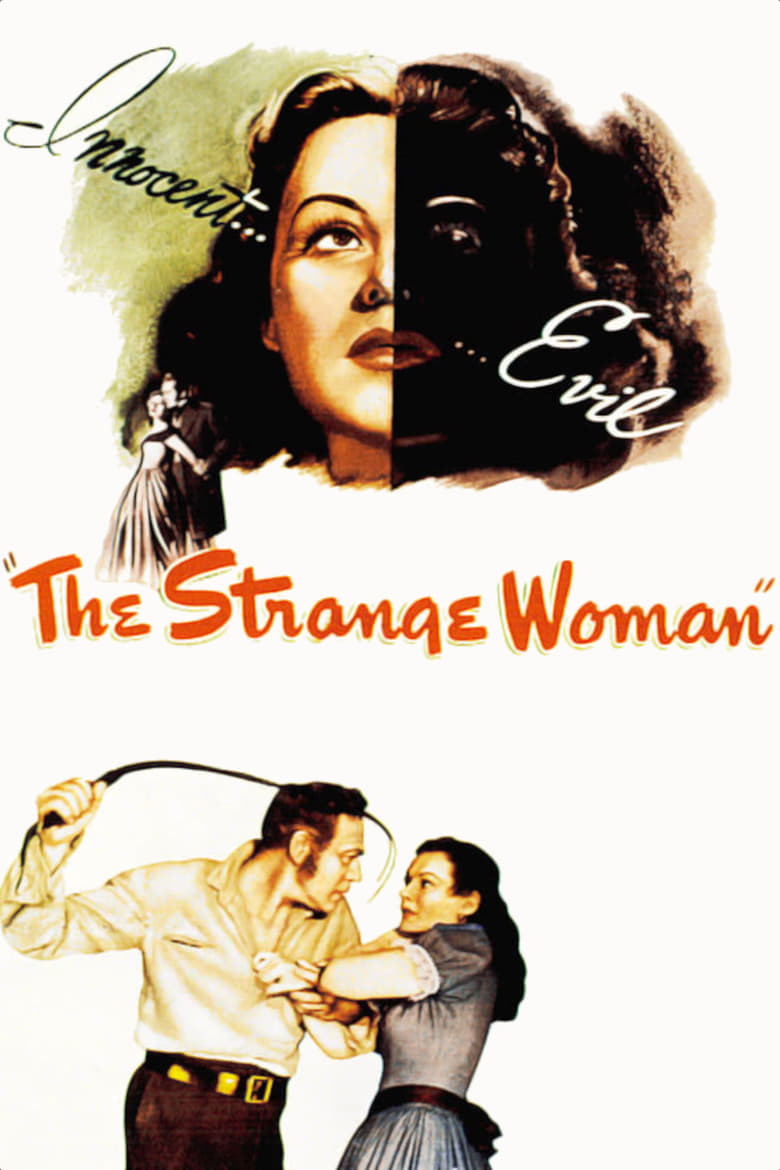
In the frontier town of Bangor, Maine, during the early nineteenth century, Jenny Hager rises from a violent, impoverished childhood into the household of the prosperous merchant Isaiah Poster. Calculating from adolescence onward, Jenny understands that beauty is a form of capital, and she spends it deliberately. She maneuvers Isaiah into marriage, securing wealth and respectability while quietly despising the life she has acquired. Hedy Lamarr plays Jenny not as a simple predator but as a woman whose intelligence has no sanctioned outlet in a society that rewards female compliance above all else.
When Isaiah's son Ephraim returns from college, Jenny draws him into an affair, then redirects her attention toward John Evered, a man of finer feeling who represents something closer to genuine desire. The film accumulates competing loyalties and suppressed violence as Jenny engineers outcomes that serve her immediate ambitions while eroding the moral ground beneath everyone around her. Gene Lockhart's Isaiah is no mere victim; his willful blindness implicates him in the damage Jenny causes. George Sanders brings his characteristic dry remove to Evered, a man who recognizes the trap but cannot step clear of it.
Strange Woman occupies an unusual position in the noir landscape: its period setting distances the story from the postwar urban milieu, yet its psychological architecture is thoroughly contemporary with 1946. The film belongs to that subset of noir in which the femme fatale operates not through criminal conspiracy but through the manipulation of men's desires and social conventions. The ending does not deliver the genre's standard punishment with any sense of satisfaction, leaving a residue of unease that the narrative's surface resolution cannot quite contain.
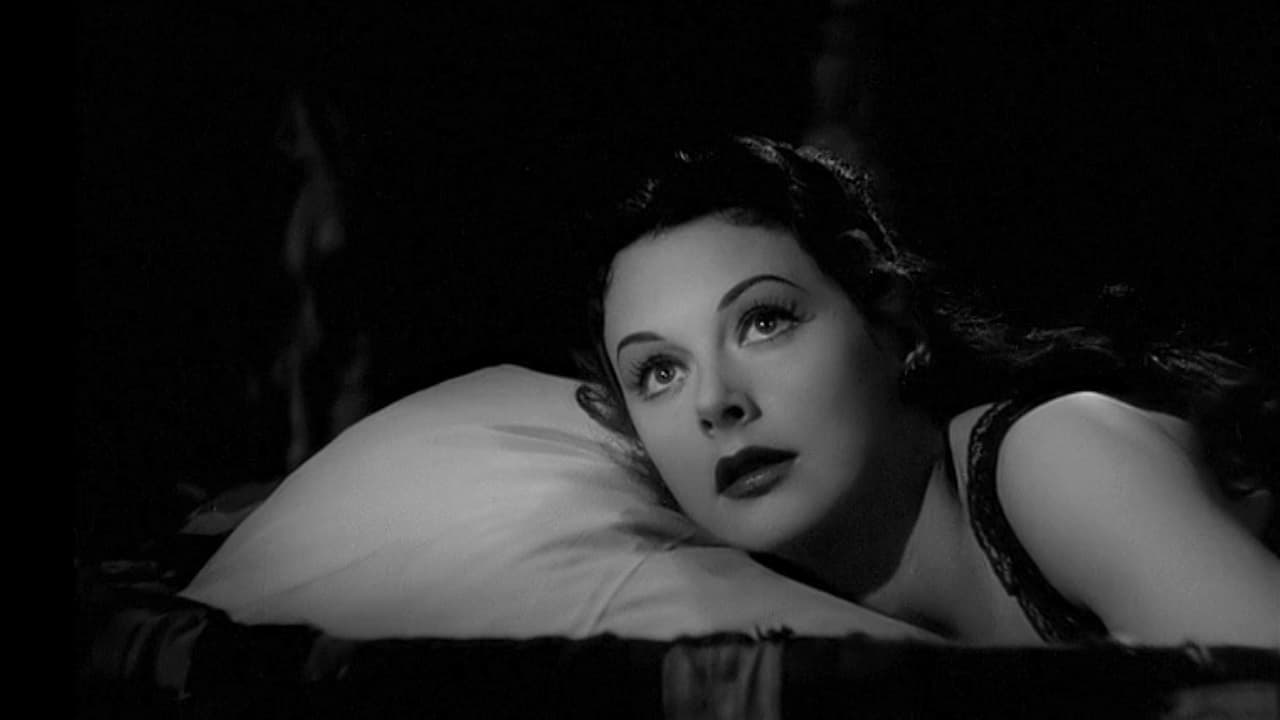
Edgar G. Ulmer was a director who worked consistently at the margins of the studio system, and Strange Woman is one of the few occasions on which he was given a reasonable budget and a genuine star. The result is imperfect but revealing. Hedy Lamarr, often underestimated as a performer, finds in Jenny Hager a role that rewards her particular quality of cool opacity: the character's inner life remains illegible even as her tactics are transparent, and that gap between surface and motive is precisely what the film is about. Ulmer never quite resolves the tension between the period melodrama the material demands and the noir psychology he is drawn toward, but the tension itself is productive. The film reflects a postwar anxiety about female ambition that runs through much of the era's popular culture: Jenny's crime is not merely murder or manipulation but desire – specifically, the desire to choose her own life in a world that has no legitimate structure for that. Hunt Stromberg's independent production context allowed Ulmer more latitude than a major studio would have permitted, and the film is the better for it.
– Classic Noir
Ulmer and cinematographer Lucien N. Andriot frame the sequence at the water's edge with Jenny positioned slightly above the boy in the composition, her stillness contrasted against the movement of the current below. The light is flat and naturalistic, refusing the expressionist shadow work the film employs elsewhere, which has the effect of making the scene feel more, not less, disturbing. There is no cutaway that permits moral ambiguity about what Jenny is doing; the camera holds on her face while the action proceeds at the edge of the frame, and Andriot's choice to keep her in sharp focus throughout denies the viewer any softening distance.
The scene establishes the film's central argument in its first act: Jenny is not a woman who snaps under pressure or is corrupted by circumstance – she arrives at adulthood already formed, already capable of allowing harm when harm serves her. This is not presented as monstrous in a gothic sense but as a rational calculation made by someone who has absorbed the lesson of her own childhood, which is that powerlessness kills. The scene's stillness makes it the moral key to everything that follows.
Lucien N. Andriot, whose career stretched back to the silent era, brings to Strange Woman a cinematographic approach that is more restrained than the period and genre might suggest. Shooting primarily on studio sets designed to evoke early nineteenth-century Maine, Andriot uses relatively shallow depth of field in the interior scenes to isolate Jenny from the social world she is navigating, placing supporting characters in soft focus while her face retains sharp definition – a visual grammar that externalizes her psychological separation from everyone around her. The shadow work is selective rather than pervasive: Ulmer and Andriot reserve high-contrast noir lighting for moments of explicit moral collapse, allowing the domestic scenes to carry a false warmth that the narrative progressively strips away. Exterior sequences, including the river scenes, use available-quality naturalistic light that sits in deliberate contrast with the studied studio compositions, giving Jenny's moments of open violence a different texture from her drawing-room calculations. The overall visual strategy serves the film's argument that domesticity and destruction occupy the same space.
As a Hunt Stromberg independent production that entered the public domain, Strange Woman has circulated in varying print quality, and Tubi's version is among the more accessible free options currently available – verify current listing before viewing.
Archive.orgFreeThe Internet Archive hosts the film in its public domain collection; print quality varies by upload, but multiple versions are available for streaming or download at no cost.
Amazon Prime VideoSubscriptionAvailability as a Prime inclusion title fluctuates; check current catalogue, as the film appears periodically through third-party classic film channels on the platform.