Films People Pull a Fast One Night Beat Reading Room On TV Shop
Secret Fury 1950
1950 RKO Radio Pictures
★★★☆☆ Notable
Film Noir · 85 minutes · Black & White

Secret Fury

Directed by Mel Ferrer
Year 1950
Runtime 85 min
Studio RKO Radio Pictures
TMDB 5.5 / 10
"A woman's past is invented for her, and the truth may be worse than the lie."

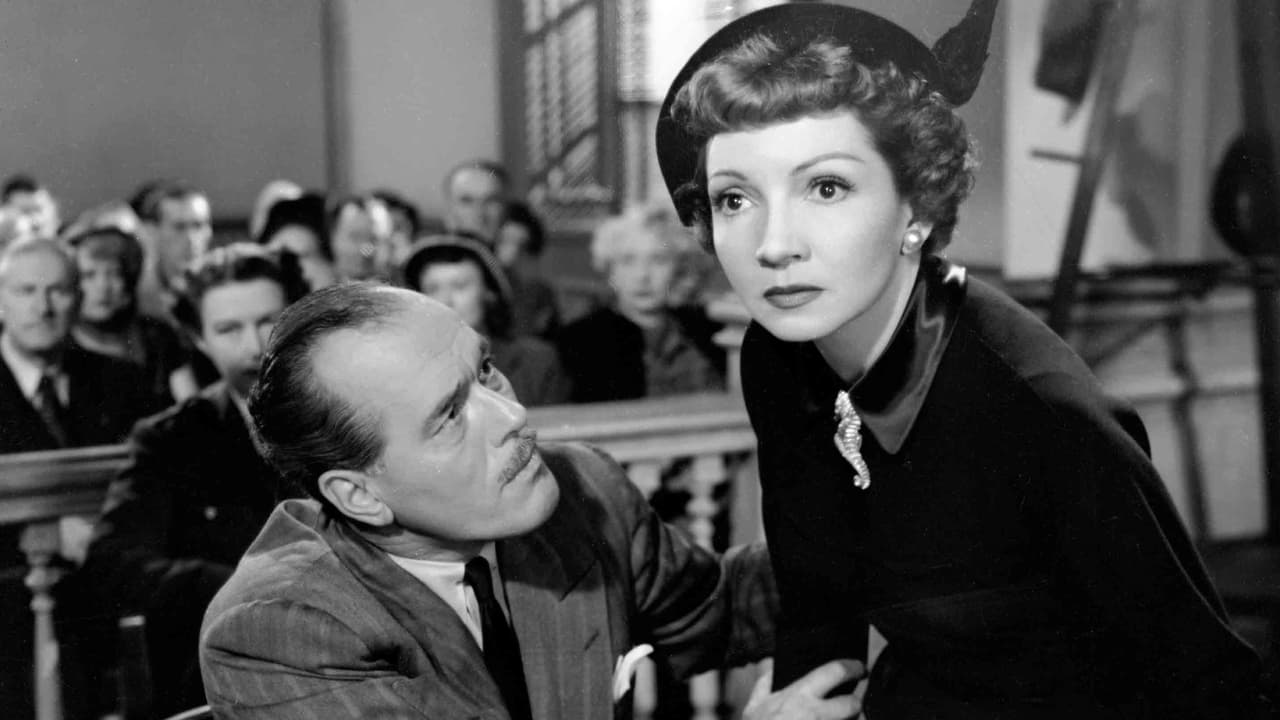
Ellen Ewing, a concert pianist of composure and means, is on the verge of marrying David McLean when their ceremony is abruptly halted. A stranger produces evidence that Ellen is already married – to a man named Lucian Randall. Ellen has no memory of the event, no record she can trace, and no explanation to offer David or her protective aunt Clara. What should be a private humiliation becomes something more sinister when witnesses and documents surface with unsettling coherence, as though a case against her has been assembled in advance.

David, torn between loyalty and doubt, begins an investigation of his own while Ellen's mental stability is quietly called into question by those around her. A prior institutionalization is alleged. A woman named Pearl Collins claims intimate knowledge of Ellen's secret life. The conspiracy, if it is one, operates with bureaucratic patience – forged records, rehearsed testimony, and the slow erosion of a woman's credibility until she can no longer fully trust her own account of herself.

Secret Fury belongs to a cycle of postwar films in which the domestic sphere becomes a site of psychological siege, and the mechanisms of law and medicine are turned against the very people they claim to protect. The film takes seriously the question of how a woman's sanity is defined and by whom, and it sustains that question long enough to give it genuine weight, even as it works within the conventions of the Hollywood thriller.
Classic Noir

Secret Fury arrives at a moment when RKO was willing to let the woman-in-jeopardy thriller carry real procedural weight. Mel Ferrer, in only his second directorial effort, keeps the film cooler than its premise warrants, and that restraint serves it. Claudette Colbert, past the peak of her commercial prominence, brings to Ellen Ewing a quality of controlled disbelief that the role demands – not hysteria, but the measured alarm of someone watching the architecture of her own life disassemble. Robert Ryan, characteristically, registers as a man whose decency is genuine but insufficient. What the film diagnoses, with some precision, is the institutional ease with which a woman's testimony about her own experience can be discounted. The legal and psychiatric machinery invoked against Ellen is not cartoonish villainy; it is mundane and procedural, which makes it more disturbing. Roy Webb's score underscores without overwhelming. The film does not resolve all its tensions gracefully, but it asks the right questions about authority, evidence, and who controls the narrative of a woman's past.

– Classic Noir
3 ★★★☆☆ Notable
Credits

The Crew

DirectorMel Ferrer
ScreenplayJack Leonard
CinematographyLeo Tover
MusicRoy Webb
EditingHarry Marker
Art DirectionAlbert S. D'Agostino
ProducerJack H. Skirball
Performances

The Cast

Close Reading

The Signature Scene

Secret Fury – scene
The Asylum Corridor Light at the End of Nothing

Leo Tover frames the corridor as a recession of diminishing arches, each one throwing a narrower band of institutional light across the floor. Colbert is positioned deep in the shot, small against the geometry of the walls, the camera refusing to move toward her in any reassuring way. The lighting is overhead and flat in the manner of public buildings – it illuminates without warmth, and the shadows it casts fall straight down, offering no romantic chiaroscuro, only the exposure of a space designed for surveillance rather than shelter.

The scene argues visually what the film argues narratively: that the asylum is not an aberration but a logical extension of every other space in which Ellen has been told what she knows and does not know about herself. The camera's distance is not indifference – it is the formal equivalent of institutional authority, observing without engaging. Ellen's isolation in the frame is the condition the film has been building toward, and Tover renders it without sentimentality.

Visual Language

The Cinematography

🎞️
Leo Tover – Director of Photography

Leo Tover's work on Secret Fury operates in the disciplined middle register of RKO noir production – not the expressionist extremity of a Musuraca, but a controlled, purposeful deployment of studio-built interiors against which the film's psychological argument can be made legible. Tover uses deep focus selectively, reserving it for scenes in which Ellen is surrounded by characters whose relationship to the truth is ambiguous, so that spatial depth becomes a correlative for narrative uncertainty. His lighting in domestic interiors is notably colder than the period convention for melodrama, stripping the Ewing household of the warmth that might signal safety. Practical sources – a lamp, a corridor fixture – are used to motivate shadows that fall with bureaucratic bluntness rather than gothic drama. This is a deliberate choice: the film is not about supernatural menace but about the violence of the ordinary and the legal. Tover's lens choices favor a slight compression in two-shots, keeping characters in proximity without allowing the frame to suggest intimacy, which mirrors the film's central argument about trust withheld.

In the Catalogue

Themes & Motifs

Availability

Where to Watch

Also in the Directory

See Also