Films People Pull a Fast One Night Beat Reading Room On TV Shop
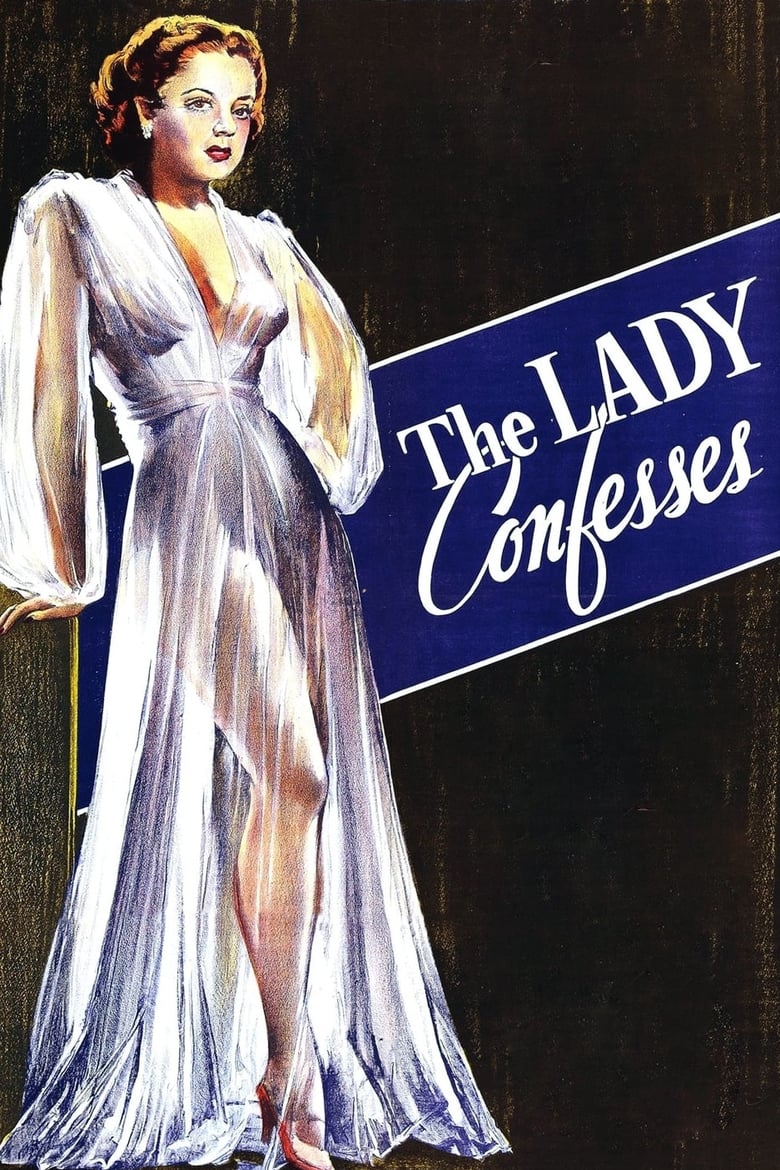
Lady Confesses 1945
1945 Alexander-Stern Productions
★★★☆☆ Notable
Film Noir · 64 minutes · Black & White

Lady Confesses

Directed by Sam Newfield
Year 1945
Runtime 64 min
Studio Alexander-Stern Productions
TMDB 4.5 / 10
"A woman searches for the man who left her – and finds only the wreckage he made of another life."

Vicki McGuire (Mary Beth Hughes) has spent years waiting for Larry Craig (Hugh Beaumont), the man she loves, to come back to her. When he resurfaces, she discovers he has not only moved on but married another woman, Norma Craig (Barbara Slater). Rather than walk away, Vicki resolves to reclaim him – a decision that draws her into the orbit of Lucky Brandon (Edmund MacDonald), a nightclub operator with connections to the city's criminal underworld and an interest in Vicki that goes beyond the social.

When murder enters the picture, suspicion falls on those closest to the victim, and Vicki finds herself navigating a tightening circle of deceit that implicates Larry, Lucky, and Lucille Compton (Claudia Drake), a woman whose loyalties shift with the prevailing danger. Police Captain Brown (Emmett Vogan) and Detective Harmon (Edward Howard) close in methodically, while Steve (Dewey Robinson), Brandon's enforcer, ensures that no one in the nightclub world moves without consequence. Allegiances that seemed fixed prove contingent, and Vicki's pursuit of love becomes something closer to a fight for survival.

Lady Confesses operates in the tradition of the low-budget urban thriller, where confined spaces and limited resources concentrate rather than diminish dramatic pressure. The film belongs to a cycle of mid-1940s programmers in which women occupy the moral and narrative center – neither simply victim nor femme fatale, but agents whose choices, however constrained, carry genuine weight. It is a film less interested in the mechanics of detection than in the emotional cost of wanting something the world has decided you cannot have.
Classic Noir

Lady Confesses is a Poverty Row production in the strict sense – 64 minutes, a small ensemble, studio sets dressed to suggest a city that exists just offscreen – yet it repays attention as a document of how noir conventions were being absorbed and redistributed across the full range of American commercial filmmaking in 1945. Sam Newfield, one of the most prolific directors of the B-picture era, brings no particular stylistic signature but a reliable structural economy: scenes are established quickly, exposition is functional, and the film never mistakes atmosphere for pacing. Mary Beth Hughes carries the picture with a performance calibrated to the register of someone who knows the odds are against her and proceeds anyway. Edmund MacDonald's Lucky Brandon is the more interesting figure – not quite a heavy, not quite a love interest, occupying an ambiguous middle ground that the script, to its credit, does not fully resolve. The film reveals how thoroughly noir had become, by the mid-decade, a shared grammar rather than the property of prestige productions alone.

– Classic Noir
3 ★★★☆☆ Notable
Credits

The Crew

DirectorSam Newfield
ScreenplayHelen Martin
CinematographyJack Greenhalgh
EditingHolbrook N. Todd
Art DirectionPaul Palmentola
CostumesMona Barry
ProducerAlfred Stern
Performances

The Cast

Close Reading

The Signature Scene

Lady Confesses – scene
The Nightclub Back Office Lucky's Offer, Softly Lit

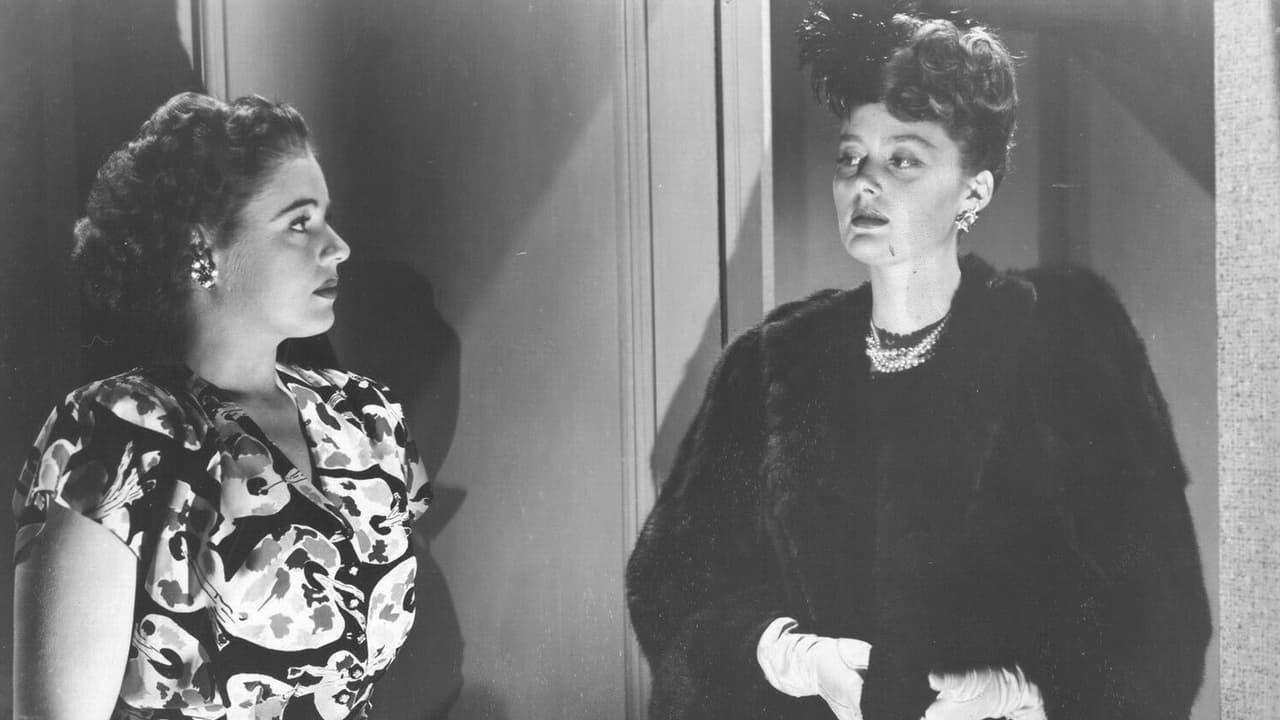
Cinematographer Jack Greenhalgh positions the camera at a slight low angle, making the desk between Lucky Brandon and Vicki McGuire a physical and moral barrier. A single practical lamp throws most of the frame into shadow, leaving Vicki's face half-illuminated – one eye caught in the light, the other lost to darkness. Brandon is composed entirely within the light's reach, a choice that reads as deliberate control: he occupies his world fully; she is only partially present in it.

The scene encodes the film's central argument about power and desire. Vicki has come seeking leverage and finds instead that she is the one being assessed. The careful light placement makes her vulnerability legible without requiring the script to state it, and the low angle grants Brandon an authority the narrative will spend the rest of its runtime systematically dismantling. It is a small scene, but it establishes the terms on which the film's moral accounting will eventually be settled.

Visual Language

The Cinematography

🎞️
Jack Greenhalgh – Director of Photography

Jack Greenhalgh, a veteran of Poverty Row productions at Monogram and PRC, works here within the strict constraints of the Alexander-Stern budget – limited setups, studio interiors built to suggest rather than replicate, and a shooting schedule that precluded elaborate lighting rigs. What Greenhalgh achieves within those constraints is a consistent shadow economy: key light placed to create partial illumination rather than full exposure, backgrounds allowed to fall into ambiguity, and a compositional tendency to use architectural elements – doorframes, desk edges, stair railings – as internal framing devices that contain characters within defined social spaces. The visual grammar never announces itself, which is precisely its function. In a film where moral clarity is perpetually deferred, the refusal of clean, high-key lighting becomes a structural argument. The darkness is not decorative; it is the film's position on the world it describes.

In the Catalogue

Themes & Motifs

Availability

Where to Watch

Also in the Directory

See Also