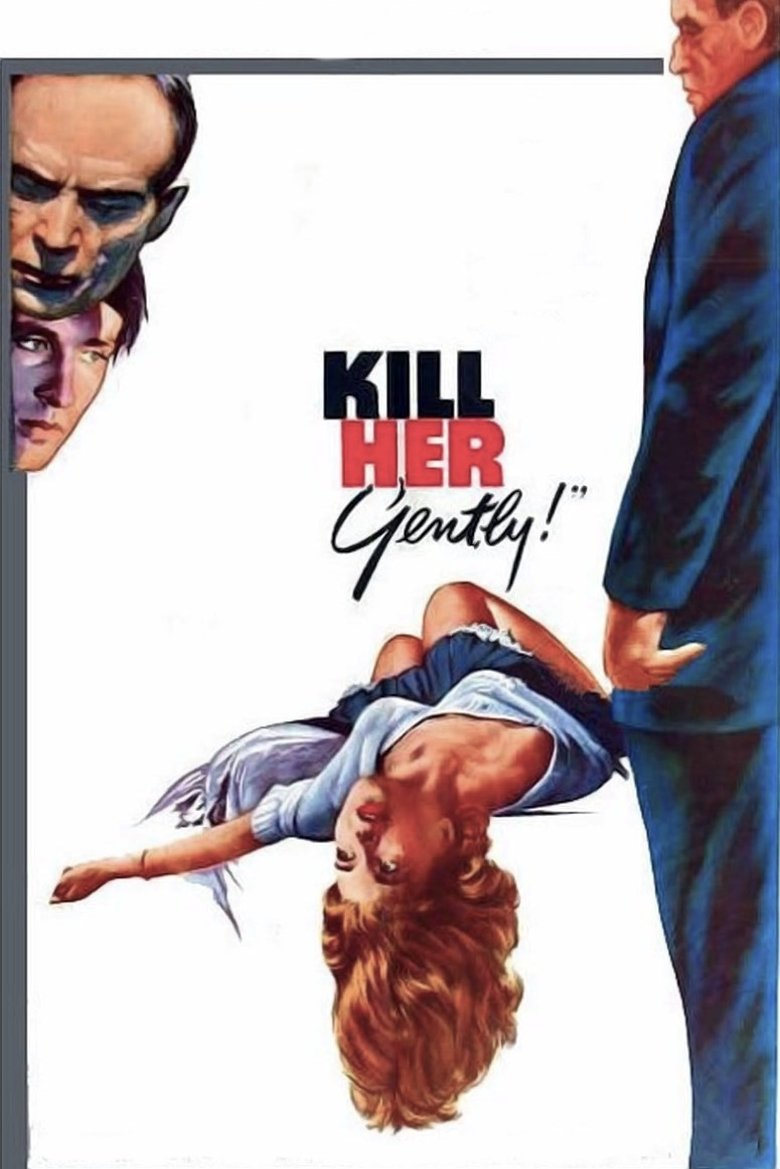
Jeff Martin (Griffith Jones) is a man with debts he cannot pay and a wife, Kay (Maureen Connell), whose inheritance he cannot touch. When two drifters – the calculating William Connors (Marc Lawrence) and the blunt Lars Svenson (George Mikell) – appear at the Martins' isolated country home, it becomes clear that Jeff has made an arrangement with them: Kay is to die, and the money is to follow. The household doctor, Jimmy Landers (Shay Gorman), moves at the periphery of events, attentive in ways that begin to complicate Jeff's timetable.
What Jeff has not calculated is that Connors and Svenson have no particular loyalty to him, and that Kay proves harder to isolate than the plan assumed. The presence of Raina (Marianne Brauns), a woman whose allegiances are difficult to fix, further destabilizes the arrangement. Inspector Raglan (Frank Hawkins) begins to circle, not yet with evidence but with the practiced instinct of a man who recognizes a situation already in motion. Inside the house, alliances shift as each party recalculates what the others are worth alive.
Kill Her Gently belongs to the strain of British noir concerned less with the city than with the domestic interior as a site of concealed violence. The film works within the confined-setting thriller format that British studios developed with modest budgets but considerable efficiency through the 1950s, placing ordinary greed inside a respectable house and watching the walls close in on everyone who entered with a scheme.
Kill Her Gently is a minor but coherent entry in the cycle of low-budget British noir thrillers that Columbia's UK operations produced during the mid-1950s, films that borrowed American genre conventions and refracted them through English settings and a more subdued register of menace. Charles Saunders directs without pretension, keeping the running time tight and the geography of threat clear. Marc Lawrence, a veteran of Hollywood crime pictures, brings a transatlantic credibility to Connors that the film uses well – his presence is a reminder that the noir impulse was never purely American. What the film reveals about its moment is the persistence of the postwar anxiety narrative in British cinema: the respectable household as a fiction maintained over genuine desperation, and money as the solvent that dissolves every other consideration. The screenplay does not sentimentalize its characters, and that restraint gives the film a functional integrity that more ambitious productions of the period occasionally lack.
– Classic Noir
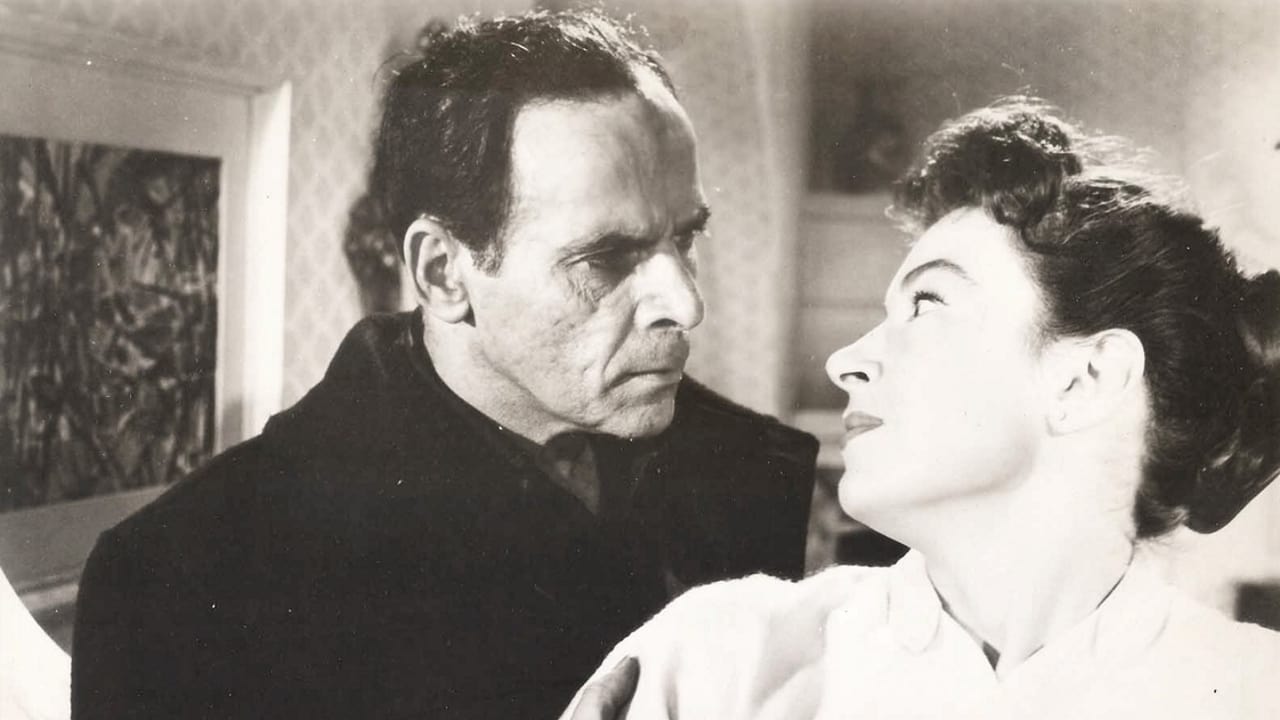
Walter J. Harvey lights the scene with a single strong source from screen left, throwing Connors and Svenson into a relationship of partial shadow that underlines their divided purpose. The camera holds at mid-distance, refusing close-ups, so that both men occupy the frame simultaneously without either commanding it. The doorway behind them is kept dark, an exit that remains theoretical. Harvey uses the room's geometry – a long settee, the hard line of a mantelpiece – to impose a sense of enclosure that the house's apparent respectability does not otherwise suggest.
The scene crystallizes the film's central argument: that the two men hired to act in concert are already, at this early stage, operating on separate calculations. The refusal of reaction shots forces the viewer to read posture and spacing rather than expression, and what the spacing says is that Svenson's bluntness and Connors's patience are not complementary but competitive. The conspiracy has already begun to fracture before the first move is made against Kay.
Walter J. Harvey shoots Kill Her Gently almost entirely within studio interiors, and the discipline that constraint imposes is visible in every composition. Working on a limited budget, Harvey avoids the mistake of flatness by treating the country house set as a series of moral zones – lit corridors contrasted with unlit rooms, windows that admit grey exterior light without relief or escape. His lens choices favor modest focal lengths that preserve spatial relationships between characters rather than isolating them, a decision that keeps the threat collective and the house genuinely claustrophobic. The shadow work is functional rather than expressionist: pools of darkness that indicate concealment rather than announce it. In this Harvey is working within the tradition of British studio noir, where the cinematographic argument tends to be made through compression and withholding rather than through dramatic chiaroscuro. The overall effect is a visual grammar that suits a film whose subject is the ordinary face that serious criminal intention presents to the world.
Tubi has carried a number of Columbia B-pictures from this era and is the most likely free streaming home for this title, though availability should be confirmed before viewing.
Archive.orgFreeArchive.org occasionally hosts British quota productions of the 1950s in the public domain; worth checking for a watchable if unrestored print.
Amazon Prime VideoSubscriptionLow-budget British noir from this period surfaces periodically on Prime Video through third-party classic film channels; availability varies by region.