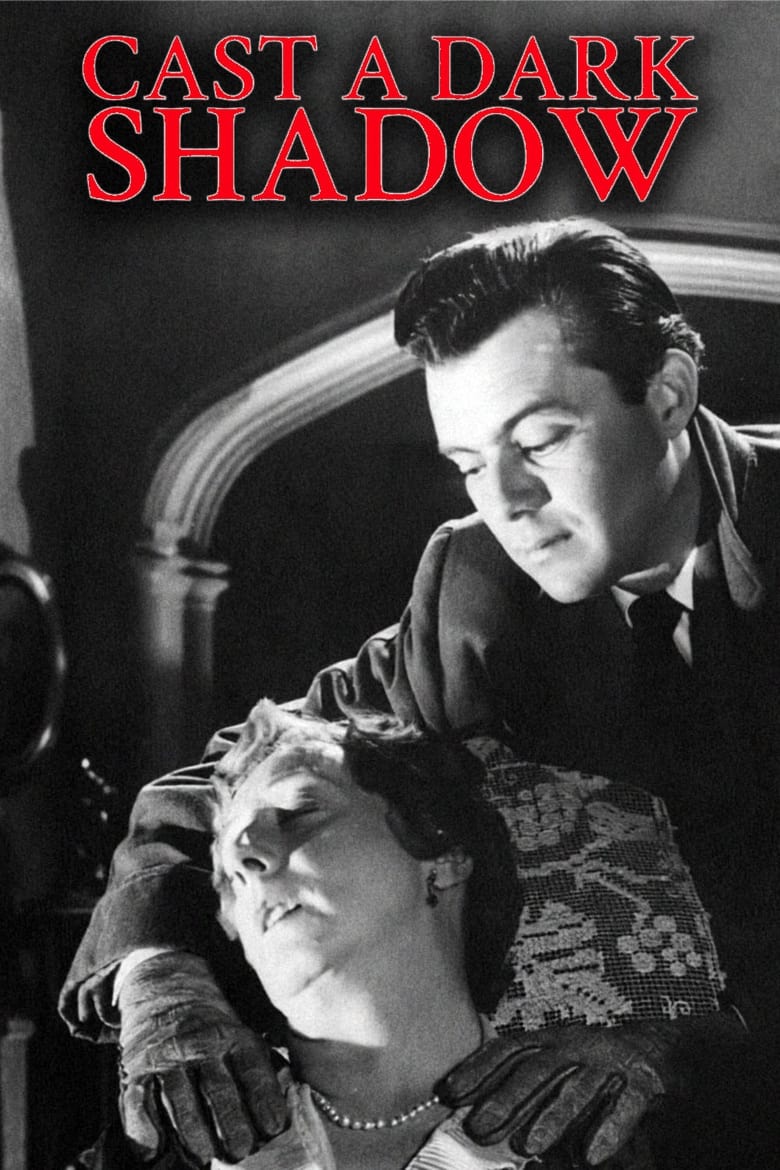
Edward 'Teddy' Bare is a calculating, surface-charming opportunist who has married an older woman, Monica, for her money and her house on the Sussex coast. When Monica dies under circumstances that satisfy the coroner but unsettle the audience, Teddy inherits the property and sets his sights on a second advantageous marriage – this time to Charlotte Young, a blunt, self-made widow with a substantial fortune and no illusions about men who need them.
Charlotte proves a harder quarry than Monica. Where Monica was trusting and affectionate, Charlotte is watchful and sardonic, qualities that both attract and frustrate Teddy's designs. Into this uneasy domestic arrangement steps Freda Jeffries, a brash, worldly woman from Teddy's past whose reappearance threatens his carefully constructed respectability. The triangle that forms is less romantic than tactical: each figure is calculating the others, and the question is not who loves whom but who outmaneuvers whom.
Cast a Dark Shadow belongs to a particular strand of British noir in which the domestic interior replaces the rain-slicked street as the site of danger. The film draws on the Bluebeard tradition while grounding its menace in the postwar English preoccupation with class, inheritance, and the performance of respectability. Dirk Bogarde's portrait of a man whose charm is purely instrumental places the film alongside other mid-decade British explorations of the predatory male behind the well-pressed suit.
Cast a Dark Shadow occupies a precise and undervalued position in the British noir cycle of the mid-1950s. Lewis Gilbert, working from John Cresswell's adaptation of Janet Green's stage play, keeps the film's stage origins largely invisible through confident control of domestic space as psychological territory. Bogarde, still in the process of complicating his matinee image, delivers a performance calibrated to reveal the vacancy behind the smile only gradually – the charm registers first, the calculation second, which is the correct order for this kind of predator. Margaret Lockwood, returning to the morally ambiguous roles that defined her 1940s career, brings a knowing weight to Charlotte that the film genuinely needs: without her skepticism the tension would collapse. What the film reveals about its era is the particular English anxiety about men who use social aspiration as a weapon, the well-dressed, articulate opportunist as a postwar type. Jack Asher's cinematography keeps the visual register tight and domestic, refusing to glamorize the violence latent in the material.
– Classic Noir
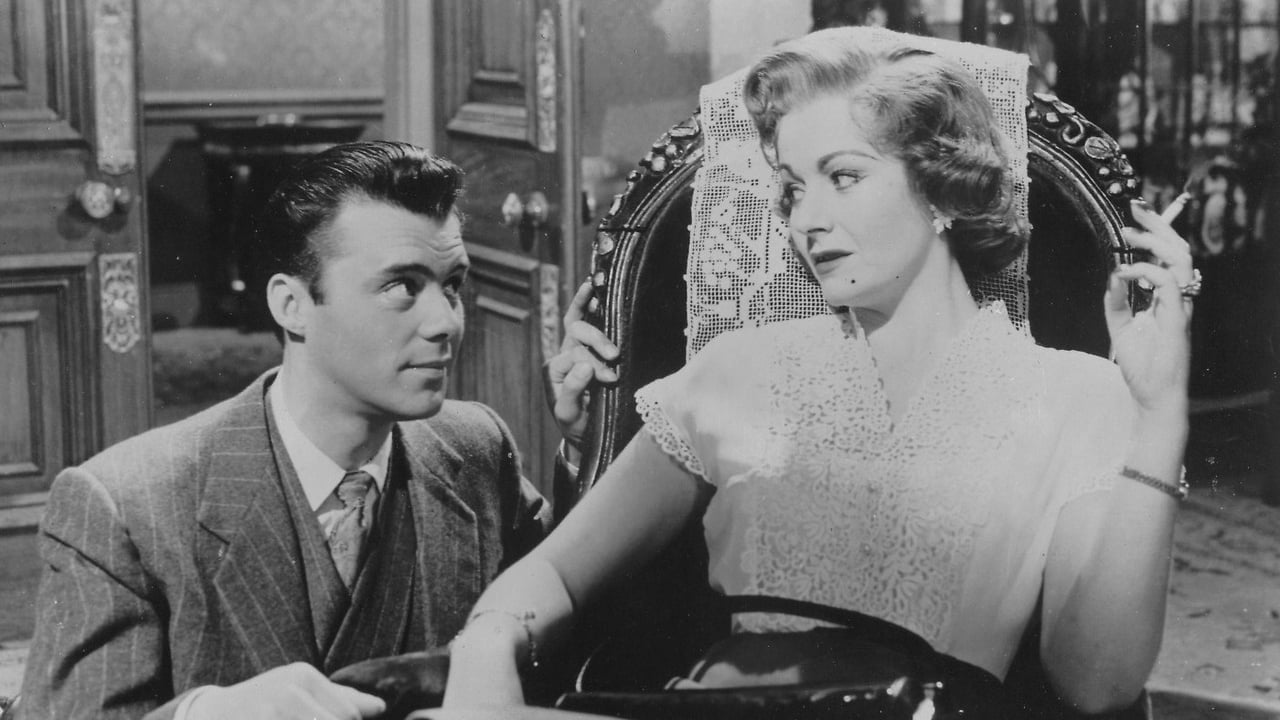
The camera holds Bogarde in a medium shot as he works through a practiced social performance for Charlotte's benefit, the room lit with the flat, slightly overexposed warmth of a domestic interior that Gilbert and Asher use throughout to suggest comfort just slightly off. The light falls on Bogarde's face from a three-quarter angle that flatters without softening, and Lockwood is positioned just outside the lamp's full radius, her expression caught between shadow and illumination. The composition places the two figures at a diagonal rather than in confrontation, which makes the scene feel like a negotiation rather than an argument.
What the scene establishes is that Charlotte has already decided not to be deceived, even before she has evidence of anything to deceive her about. Bogarde's Teddy, accustomed to reading rooms and adjusting his performance accordingly, registers her resistance without fully understanding it – a crack in his confidence that the film will widen. The scene argues that the film's real subject is not murder but the failure of performance against someone who recognizes the performance for what it is.
Jack Asher, who would go on to define the visual grammar of early Hammer horror, works here in a register that is cooler and more disciplined. His approach to Cast a Dark Shadow treats the bourgeois English interior – its fireplaces, its hallways, its staircases with their small landings – as a series of contained arenas in which the moral logic of the narrative is made spatial. Asher uses modest, precise lighting setups that avoid the expressionist excess common to American noir of the same period; shadows fall where they would fall in a real room, but they fall at moments chosen to coincide with revelation or threat. The work is studio-based throughout, which allows Asher to control every light source, and he exploits that control to keep the visual temperature of each scene slightly ambiguous – rooms that read as safe until they do not. Lens choices favor the medium range, keeping characters within their environments rather than isolating them, which reinforces the film's argument that domesticity itself is the trap.
MUBI has carried British noir titles of this period in good transfers; check current availability as the catalogue rotates.
TubiFreeTubi has hosted the film in a serviceable public-domain-adjacent transfer; picture quality is adequate if not archivally pristine.
Archive.orgFreeA digitized print has circulated here; recommended only if no cleaner source is available, as compression artifacts are present.