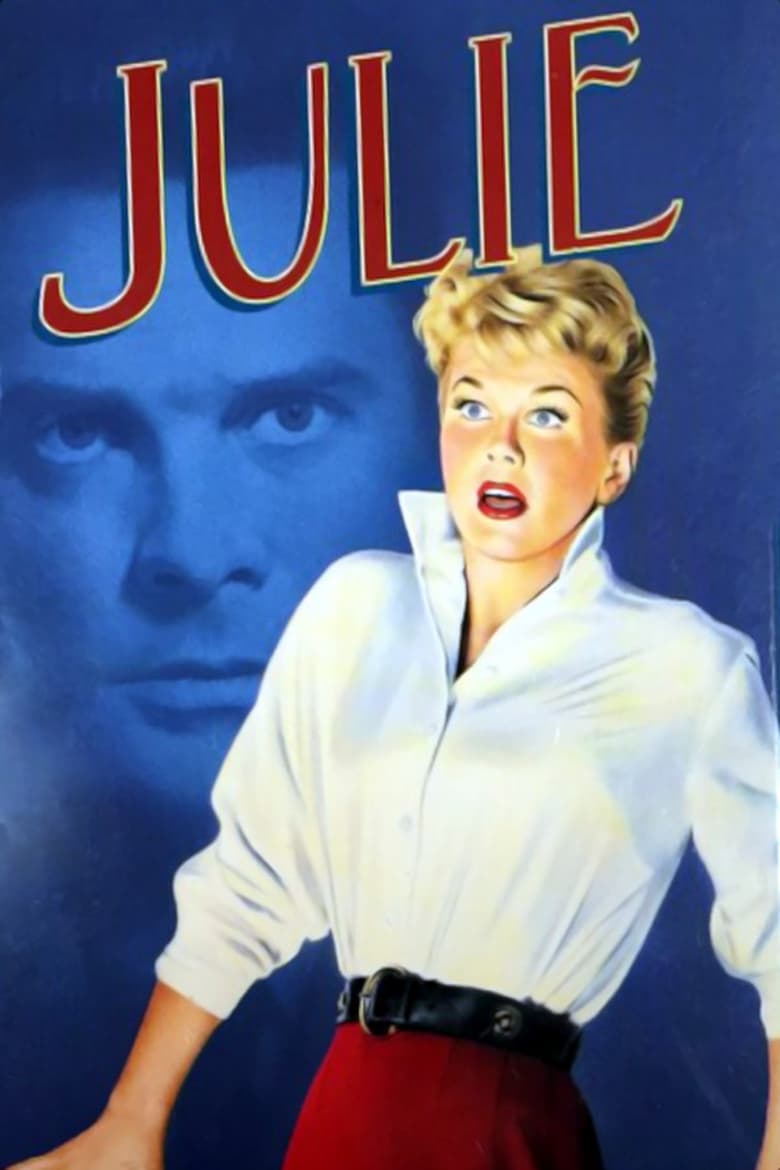
Julie Benton (Doris Day) is a flight attendant living under the shadow of a marriage gone wrong. Her husband Lyle (Louis Jourdan), a charming and possessive musician, has already killed her first husband and now turns his obsession on Julie herself. When she learns the truth about Lyle's past, she flees – but Lyle's capacity for violence follows her across California, from the fog-banked coastal roads to the interior of a commercial airliner.
Cliff Henderson (Barry Sullivan), a former love, attempts to help Julie navigate both Lyle's escalating threats and the bureaucratic caution of Det. Lt. Pringle (Frank Lovejoy), who is constrained by what the law can act upon before a crime is committed. Lyle, meanwhile, moves with the controlled menace of a man who has learned to mask pathology behind surface refinement. Julie is caught between institutional protection that arrives too slowly and personal danger that admits no delay.
Julie belongs to a cycle of 1950s domestic noir in which the home itself – and by extension marriage – becomes the primary site of threat. The film's third act departs from psychological tension into procedural emergency, trading the genre's customary shadowed interiors for something more exposed and vertiginous. It is a film about a woman who must act when every system designed to protect her has run out of time.
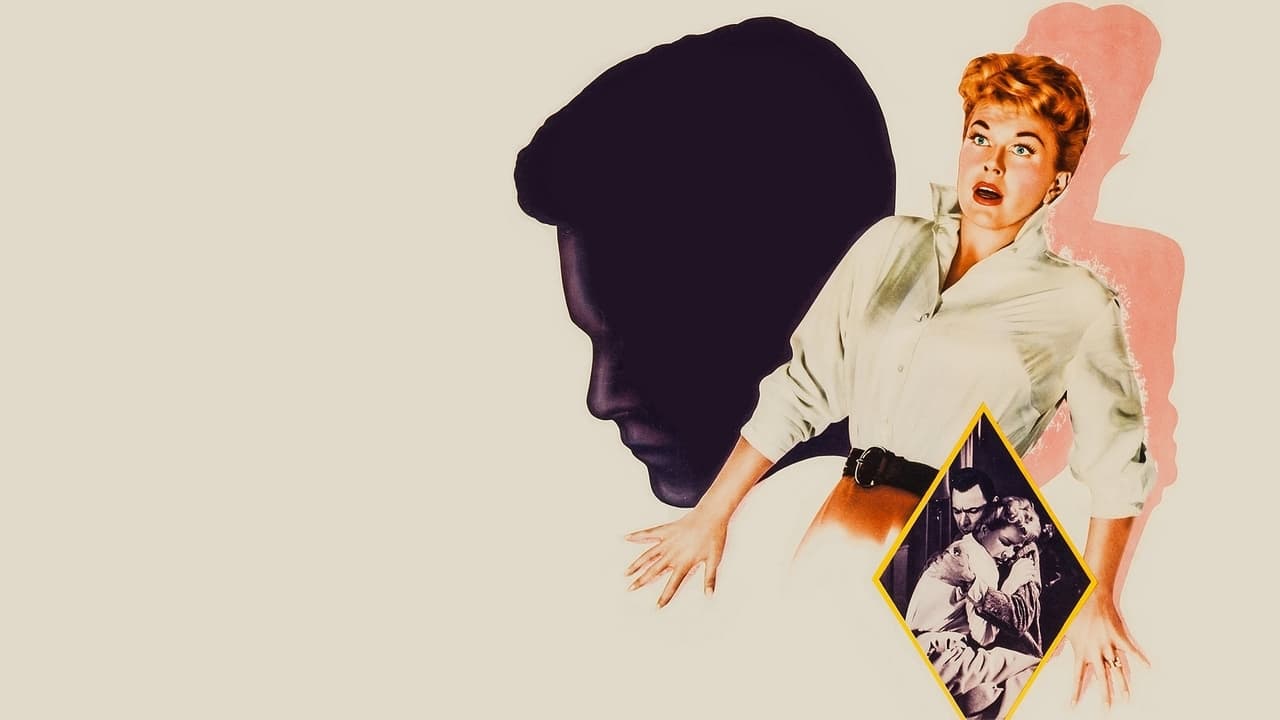
Julie occupies a particular niche within 1950s noir: the domestic menace picture, in which the danger is not a stranger but a spouse. Andrew L. Stone, working here as both director and producer through Arwin Productions, was drawn throughout his career to location shooting and procedural tension, and Julie reflects that temperament. Louis Jourdan's casting is precise – his Continental elegance serves the film's argument that violence conceals itself in cultivation. Doris Day, against the grain of her popular image, carries the film's central register of controlled fear without tipping into hysteria; the performance is more interior than her reputation at the time suggested. The film's escalation into its airborne finale has drawn dismissal as implausible, but read generically, it externalizes what domestic noir usually keeps inside the frame of a house: the trapped woman's terror given literal altitude. It is not a film of the first rank, but it handles its premise with discipline and delivers a climax that the genre rarely attempted.
– Classic Noir
Stone and cinematographer Fred Jackman Jr. compose the night driving sequence with a flat, declarative eye. The frame is dominated by the windshield and the narrow cone of headlights absorbed by coastal fog; the road ahead is barely legible. Jackman keeps the camera close to Day's face, cutting between her eyes reading the mirror and the darkness outside that gives nothing back. The lighting is minimal and cold – available road-light supplemented by practical sources – producing a scene that feels less stylized than simply factual in its threat.
The sequence establishes the film's central argument before the dialogue does: the world Julie moves through has become illegible, its familiar geography turned hostile. The fog is not metaphor so much as condition. She cannot see what is behind her, and the road ahead offers no guarantee of safe passage. In a film about a woman who cannot be believed by the institutions around her, the visual environment confirms her isolation with more economy than the screenplay manages elsewhere.
Fred Jackman Jr.'s work on Julie reflects the practical, location-oriented aesthetic that Stone favored and that distinguishes the film from studio-bound noir of the same period. Jackman shoots the California coastal sequences with a restrained hand – available geography replaces constructed expressionism, and the moral distortion that shadows noir is achieved through framing and proximity rather than high-contrast lighting rigs. Interior scenes carry more conventional shadow work, with lateral light isolating Day's face against domestic backgrounds that have quietly become threatening. The airborne finale presents a compositional challenge – an aircraft cabin offers no depth – and Jackman manages it by keeping the frame tight and refusing the wide establishing shot that would diminish the claustrophobia. His lens choices throughout favor a focal length that preserves spatial relationships without romanticizing them, a choice that serves Stone's procedural instincts. The film is not a showcase for virtuoso cinematography, but Jackman's restraint is itself a form of argument: in Julie, the danger is ordinary, and the images confirm it.
Julie has circulated on Tubi in a serviceable print; the platform's free access makes it the most practical entry point for most viewers.
Archive.orgFreePublic domain prints are available at Archive.org, though transfer quality varies and should be verified before relying on it for close viewing.
Amazon Prime VideoRentalA rental option typically appears on Amazon with a cleaner encode than most free sources; worth the marginal cost for the airborne finale.