Films People Pull a Fast One Night Beat Reading Room On TV Shop
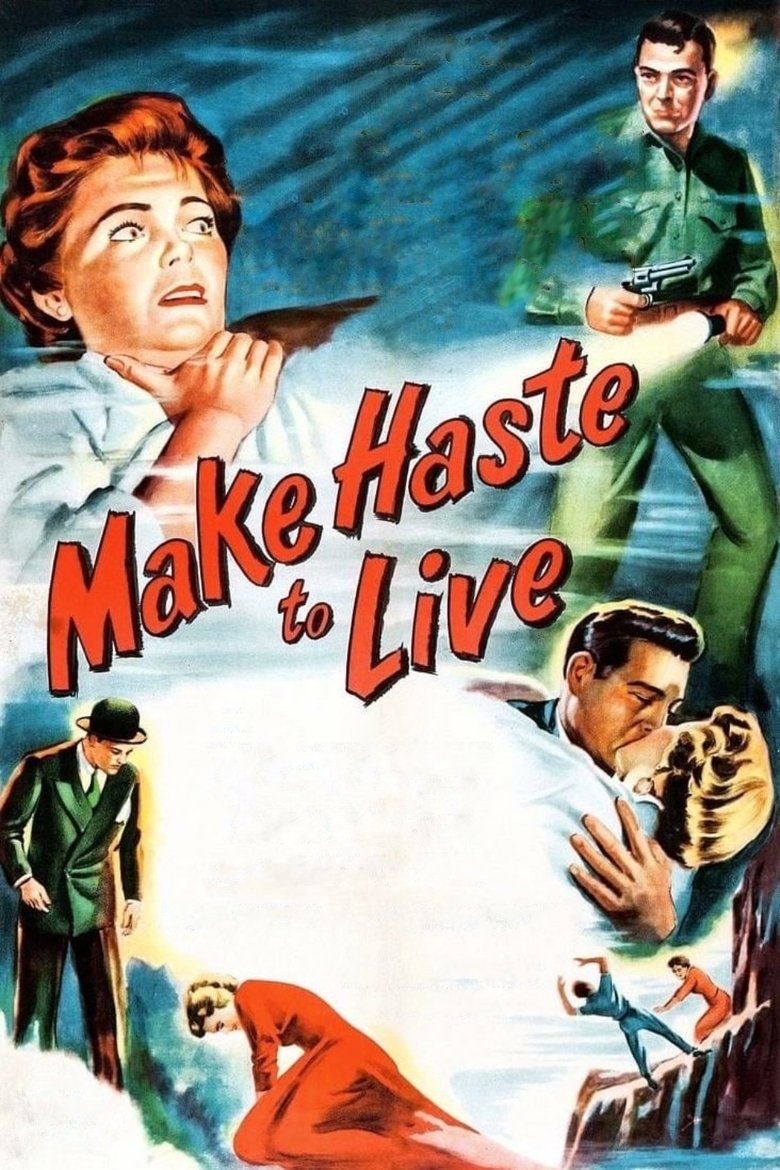
Make Haste to Live 1954
1954 Republic Pictures
★★★☆☆ Notable
Film Noir · 90 minutes · Black & White

Make Haste to Live

Directed by William A. Seiter
Year 1954
Runtime 90 min
Studio Republic Pictures
TMDB 6.0 / 10
"A dead woman's past walks back into town with a knife and a smile."

Crystal Benson runs a small-town Arizona newspaper with her daughter Randy, having spent years constructing a quiet, respectable life under a false identity. What the town does not know is that Crystal once fled a violent marriage to Steve Blackford, a career criminal she believed she had left for dead. Her carefully maintained anonymity begins to fracture when Blackford, recently released from prison, surfaces and makes his way toward the desert community where Crystal has rebuilt herself.

Blackford's arrival forces Crystal into an impossible position: expose her past to protect her daughter, or keep silent and risk everything she has built. Randy, unaware of her mother's history, is drawn toward the danger without understanding it, while the local sheriff and a quietly persistent newspaper colleague move through the story as partial witnesses to a situation they cannot fully read. Blackford, meanwhile, operates with the cold patience of a man who has waited years and intends to collect.

Make Haste to Live situates itself within a recurring noir pattern – the fugitive past that cannot be dissolved by distance or reinvention – and works that pattern through a domestic rather than urban frame. The film is less interested in violence as spectacle than in the particular dread of exposure, the way a fabricated identity becomes its own trap. It is modest in scale but precise about the terror of being known.
Classic Noir

Make Haste to Live occupies a secondary tier of 1950s noir, the kind of film Republic Pictures produced with professional efficiency rather than artistic ambition, yet it earns its place in the genre through Dorothy McGuire's performance and a scenario that takes the threat to domestic identity seriously. William A. Seiter directs without flourish, which proves appropriate: the film's tension depends on ordinariness, on a life that looks stable precisely because it was constructed to. Stephen McNally, a reliable noir antagonist throughout this period, brings a credible menace that avoids caricature. What the film reveals about its era is the particular anxiety around women's autonomy and self-invention – Crystal's crime, in the film's logic, is less her past than her presumption in escaping it. Elmer Bernstein's score, still early in his career, gestures toward unease without overstatement. The film does not transcend its budget, but it does not waste it either.

– Classic Noir
3 ★★★☆☆ Notable
Credits

The Crew

DirectorWilliam A. Seiter
ScreenplayWarren Duff
CinematographyJohn L. Russell
MusicElmer Bernstein
EditingFred Allen
Art DirectionFrank Hotaling
CostumesAdele Palmer
Performances

The Cast

Close Reading

The Signature Scene

Make Haste to Live – scene
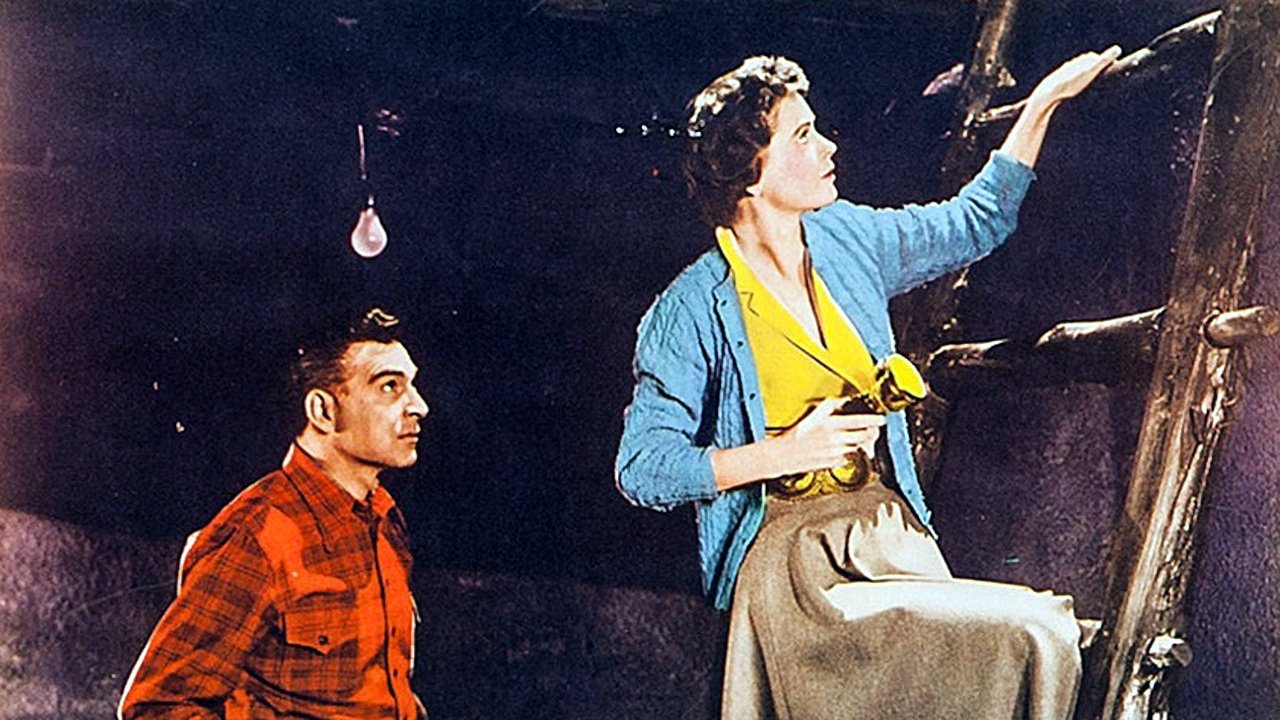
The Newspaper Office, After Hours Light Through the Press Room

John L. Russell frames Crystal alone at her desk, the printing machinery looming as dark geometry behind her. Available light sources are reduced to a single desk lamp that catches the left side of McGuire's face and leaves the right in a shadow that the camera does not chase away. The composition places her at the edge of the frame rather than its center, the surrounding negative space suggesting occupation rather than security.

The scene argues that Crystal's professional identity – editor, proprietor, woman of standing – is a surface that the darkness around her is already in the process of reclaiming. Her stillness reads not as control but as suspension, a woman who has stopped moving for a moment and is listening for the sound that will confirm her past has arrived. The frame makes the argument before any dialogue does.

Visual Language

The Cinematography

🎞️
John L. Russell – Director of Photography

John L. Russell, who would later do his most recognized work on Hitchcock's Psycho, brings to Make Haste to Live a practical economy that suits both the Republic budget and the story's moral terrain. Shooting largely on studio sets with limited location work, Russell uses low-key lighting setups that favor hard shadows over the more expressionistic chiaroscuro of urban noir, calibrating the darkness to the Southwest setting – flat, sun-bleached exteriors that make the nocturnal interiors feel more enclosed by contrast. His lens choices tend toward mid-range focal lengths that flatten the distance between Crystal and whatever threatens her, denying the frame any escape room. Shadow work in the interiors is architectural rather than decorative, falling along walls and doorframes to suggest that domesticity itself has become a kind of cell. The visual language consistently serves the film's central proposition: that there is no geography remote enough to constitute genuine safety.

In the Catalogue

Themes & Motifs

Availability

Where to Watch

Also in the Directory

See Also