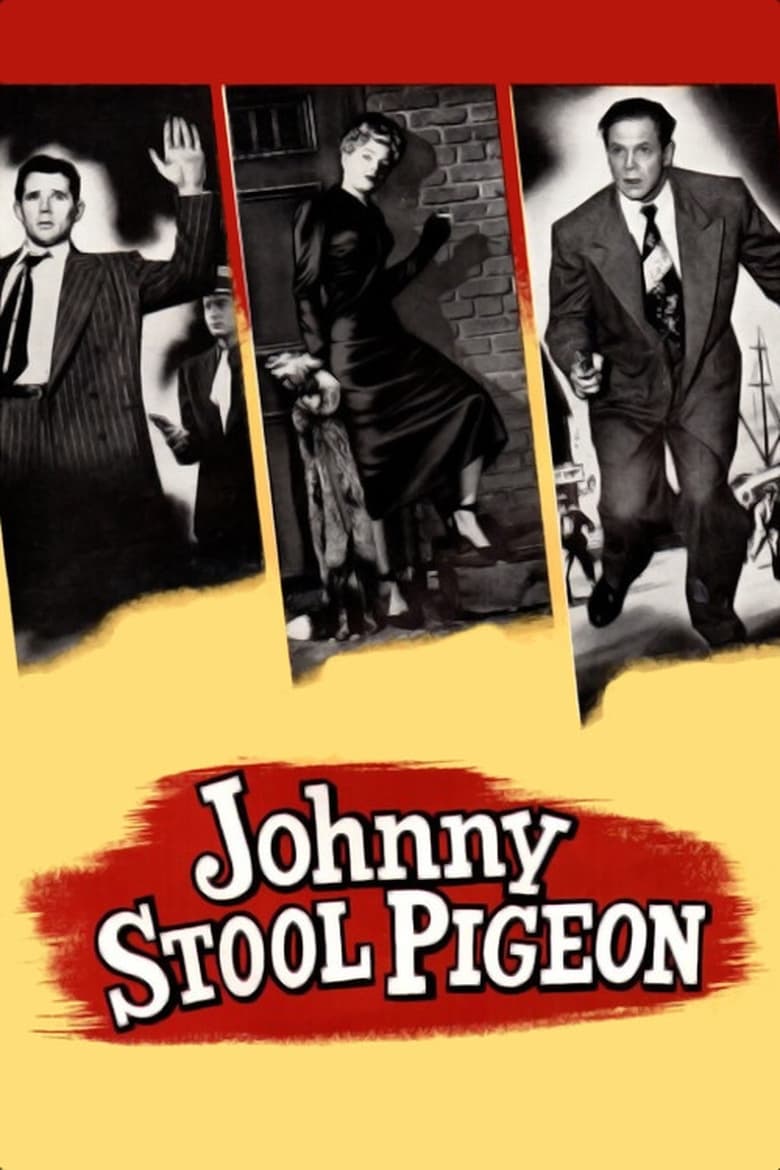
Federal narcotics agent George Morton needs an edge to crack an international drug syndicate operating across the American southwest and into Mexico. His solution is Johnny Evans, a convicted criminal serving time whose street knowledge and criminal contacts make him indispensable. Morton secures Evans' conditional release, and the two men enter an uneasy partnership built entirely on compulsion – Evans cooperates because he has no other choice, and Morton trusts him only as far as necessity demands.
The operation pulls them into Tucson and eventually across the border, where the syndicate's logistics come into focus. Joey Hyatt, a young hood in the organization's lower ranks, and Terry, a woman caught between loyalty and survival, complicate the moral arithmetic. Evans begins to demonstrate something that looks like genuine investment in the work, though whether that reflects conscience or calculation remains deliberately unclear. The syndicate's enforcer Pringle and the operation's financier McCandles apply pressure from above while Morton and Evans work to stay credible from below.
Castle stages the film as a procedural with the procedural's cold efficiency, but the informant structure gives it an undertow that straight police work lacks. The question is not whether the syndicate will be brought down but what Evans will cost – and what Morton will be willing to pay. The film belongs to a cluster of late-1940s Universal noirs that used documentary trappings to examine how institutions use and discard the people they recruit from the margins.
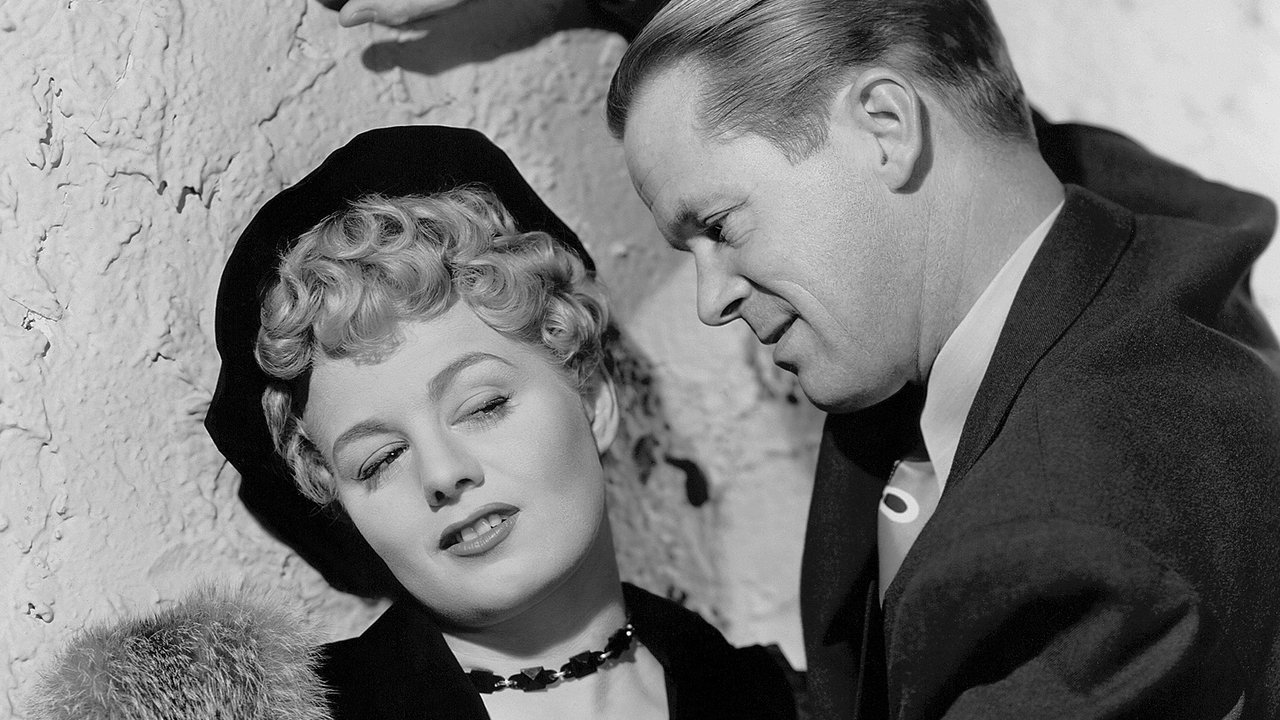
Johnny Stool Pigeon occupies a specific and underexamined position in the postwar narcotics-procedural cycle that Universal International developed alongside more celebrated entries in the genre. William Castle, working before his reputation calcified into gimmickry, directs with economy and without sentiment. Dan Duryea carries the film's moral weight in a performance that resists the easy redemption arc the script occasionally gestures toward – Evans is useful rather than reformed, and Duryea keeps that distinction intact. Howard Duff's Morton is institutional authority with a conscience he can afford only intermittently, which is precisely the procedural's implicit argument about how law enforcement operates. The early appearance of Tony Curtis, in a supporting role that offers little room for development, is historically interesting without being dramatically significant. What the film captures accurately is the transactional nature of cooperation between law and crime, a theme the era returned to repeatedly because it had no clean resolution to offer. At 75 minutes, it does not overstay its case.
– Classic Noir
Maury Gertsman shoots the scene on location in the Arizona desert, using the flat light of an overcast afternoon to strip away shadow and cover. There is nowhere to hide in the composition – the two figures are placed in medium shot against an expanse of scrub and pale sky, the horizon line low, the frame offering no architectural geometry to anchor either man. The camera holds steady rather than tracking, which has the effect of isolating the exchange from any sense of momentum or escape.
The scene works as a statement about the informant's condition: Evans exists in a terrain without allegiance, exposed to both sides simultaneously, and the emptiness of the desert makes that exposure literal. The handoff of information is the film's central transaction repeated in its purest form – knowledge exchanged for provisional safety, with no contract that either party is obliged to honor once the moment passes.
Maury Gertsman's cinematography on Johnny Stool Pigeon reflects the practical aesthetic Universal International applied to its mid-budget crime pictures of the period: location shooting used not for atmosphere but for economy, with studio interiors reserved for scenes requiring controlled light. Gertsman works the contrast between the two registers to moral purpose – the open desert sequences, lit by available daylight with minimal supplemental fill, carry a documentary plainness that aligns with the procedural surface of the narrative, while the interior scenes in bars and hotel rooms deploy harder side-lighting and tighter focal lengths that compress space and increase pressure. Shadow work in the indoor sequences is conventional by the standards of the cycle's more distinguished entries, but Gertsman's restraint keeps the film from substituting style for argument. The overall effect is a visual register pitched between the newsreel and the crime film proper, which is exactly where Castle's direction wants to operate. Miklós Rózsa's score, characteristically dense in its harmonic language, occasionally pushes harder than the images require.
Tubi has carried a number of Universal International crime titles from this period and is worth checking first for free access, though availability shifts.
Archive.orgFreePublic domain status for some prints of this film may make Archive.org a reliable fallback if streaming services do not carry it.
Amazon Prime VideoSubscription / RentUniversal catalogue titles from the late 1940s appear intermittently on Prime through third-party channel add-ons; rental purchase is the more consistent option.