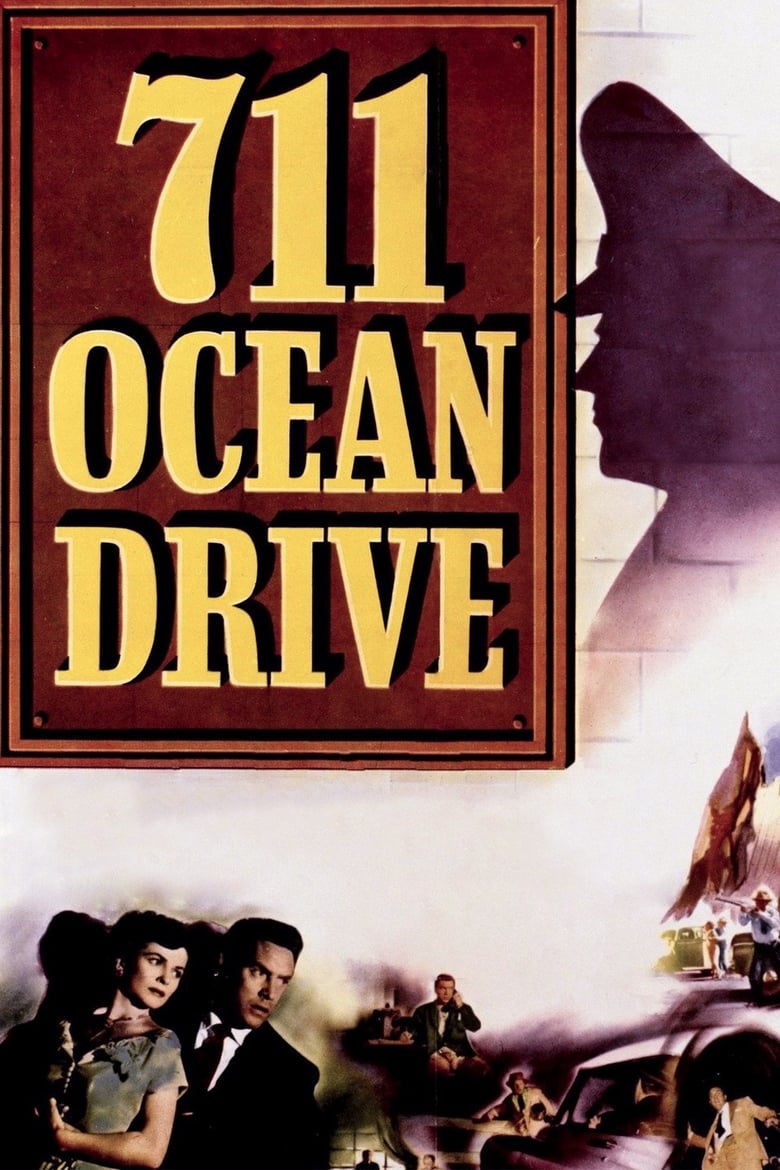
Mal Granger is a telephone repairman with a talent for electronics and an appetite for something larger than his wage. When he falls in with small-time bookie Vince Walters, Granger discovers that his skills with wire and circuitry can be turned toward building a sophisticated bookmaking operation. He rises quickly, using technology to outpace the competition and drawing the attention of Gail Mason, whose marriage to legitimate businessman Larry Mason does little to suppress her interest in Granger's ambitions.
Granger's ascent brings him into the orbit of Carl Stephans, the composed and quietly menacing representative of a national crime syndicate headquartered in Las Vegas. What begins as a business arrangement calcifies into coercion. Granger finds himself managing the syndicate's wire service across the western states, his technical ingenuity now entirely in service of men who regard loyalty as a temporary convenience. Trudy Maxwell, a woman from his earlier life, complicates the emotional landscape, while Lieutenant Pete Wright applies steady pressure from the other side of the law.
711 Ocean Drive belongs to the cycle of late-1940s and early-1950s noirs that treat organized crime not as a romantic underworld but as a bureaucratic machine that processes ambitious men and discards them. The film is notable for its procedural detail, its location shooting along the Nevada–California corridor, and a climax staged at Hoover Dam that gives the film's themes of institutional scale and individual insignificance a concrete, almost allegorical form.
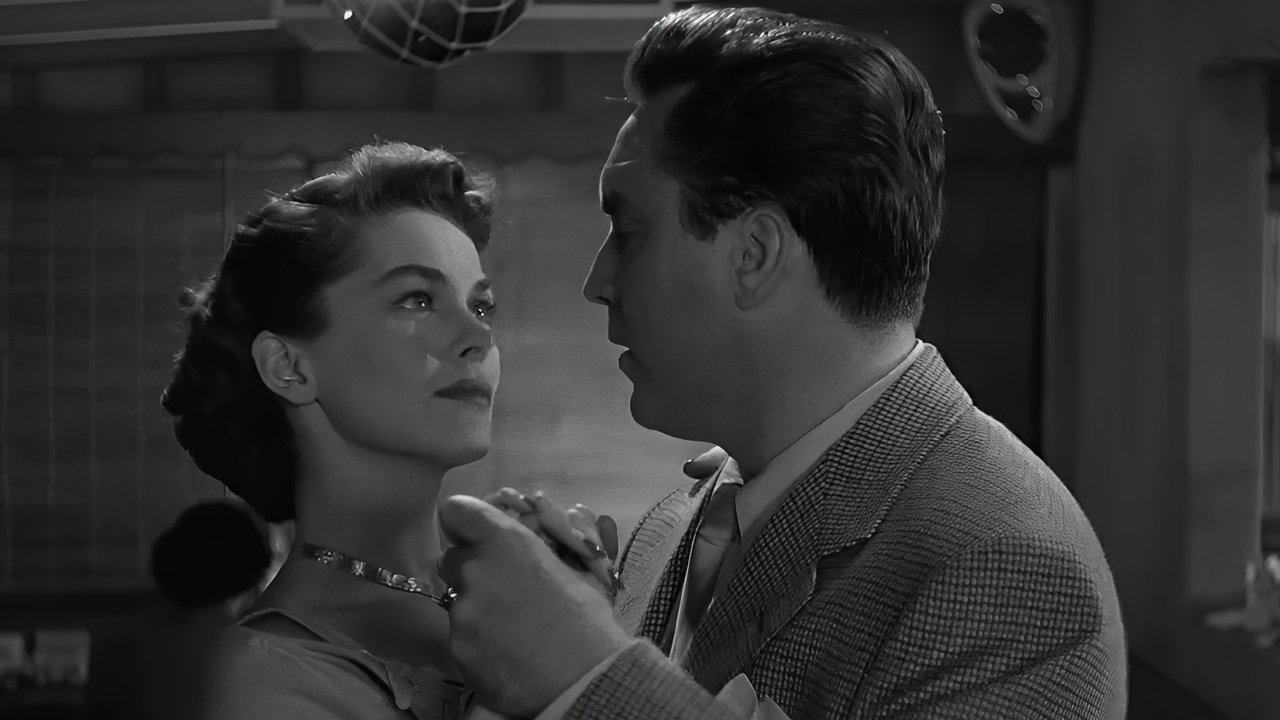
711 Ocean Drive arrived in the same year as the Kefauver Committee hearings began reshaping public understanding of organized crime in America, and the film reads now as both anticipation and symptom of that cultural reckoning. Director Joseph M. Newman keeps the focus relentlessly procedural: the mechanics of the wire service, the hierarchy of the syndicate, the geography of corruption spreading outward from a single telephone line. Edmond O'Brien's performance is characteristic of his best noir work – physically present, morally compromised without being cartoonishly venal, a man who understands too late that competence in a criminal structure earns leverage over you rather than independence from it. The film does not glamorize Granger's rise or sentimentalize his fall. What it offers instead is a fairly cold-eyed diagram of how institutional crime absorbs individual talent. Franz Planer's cinematography reinforces this reading through compositions that repeatedly diminish Granger against the infrastructure – switchboards, transmission towers, the concrete face of a dam – that both defines and will ultimately consume him.
– Classic Noir
Franz Planer's camera works almost entirely in low and wide angles during the Hoover Dam sequence, letting the curved concrete mass of the dam fill the frame and push the human figures toward the edges. The lighting is largely available and unadorned – sunlight hard off the pale stone, shadow falling in flat geometric blocks. There is no expressionist distortion here; the compositions are almost documentary in their clarity, which makes the scale disparity between man and structure feel earned rather than manipulated.
The sequence makes the film's argument explicit in visual terms. Granger has spent the entire picture believing his intelligence and technical skill give him leverage over the systems he serves. The dam renders that conviction absurd. He is not destroyed by a rival or a betrayer in the conventional noir sense – he is simply swallowed by the indifferent scale of the apparatus he mistook for a ladder. The geography does the thematic work that dialogue would have labored to articulate.
Franz Planer, whose career moved between European art cinema and Hollywood genre work with unusual fluency, brings a discipline to 711 Ocean Drive that resists the more decorative impulses of mid-period noir cinematography. Shooting extensively on location in Los Angeles, Las Vegas, and at Hoover Dam, Planer uses real environments rather than studio constructions to generate the film's visual argument about institutional scale. Interior scenes involving the wire service operation use overhead and wide-angle compositions to emphasize the mechanical network rather than individual faces, placing Granger within the apparatus before the narrative has made that entrapment explicit. Shadow work is present but functional – falling across faces at moments of moral decision, receding when the film wants to expose rather than obscure. The result is a visual register closer to documentary realism than to the gothic expressionism of canonical noir, a choice that serves the film's interest in crime as system rather than crime as passion.
Tubi has carried 711 Ocean Drive as part of its classic crime holdings; verify availability in your region as catalog rotation applies.
Archive.orgFreeThe film has circulated in the public domain and Archive.org offers streaming and download options, though transfer quality varies between uploads.
Amazon Prime VideoRentalA paid rental through Amazon typically provides a more stable transfer than public domain sources; confirm current listing as availability shifts.