Films People Pull a Fast One Night Beat Reading Room On TV Shop
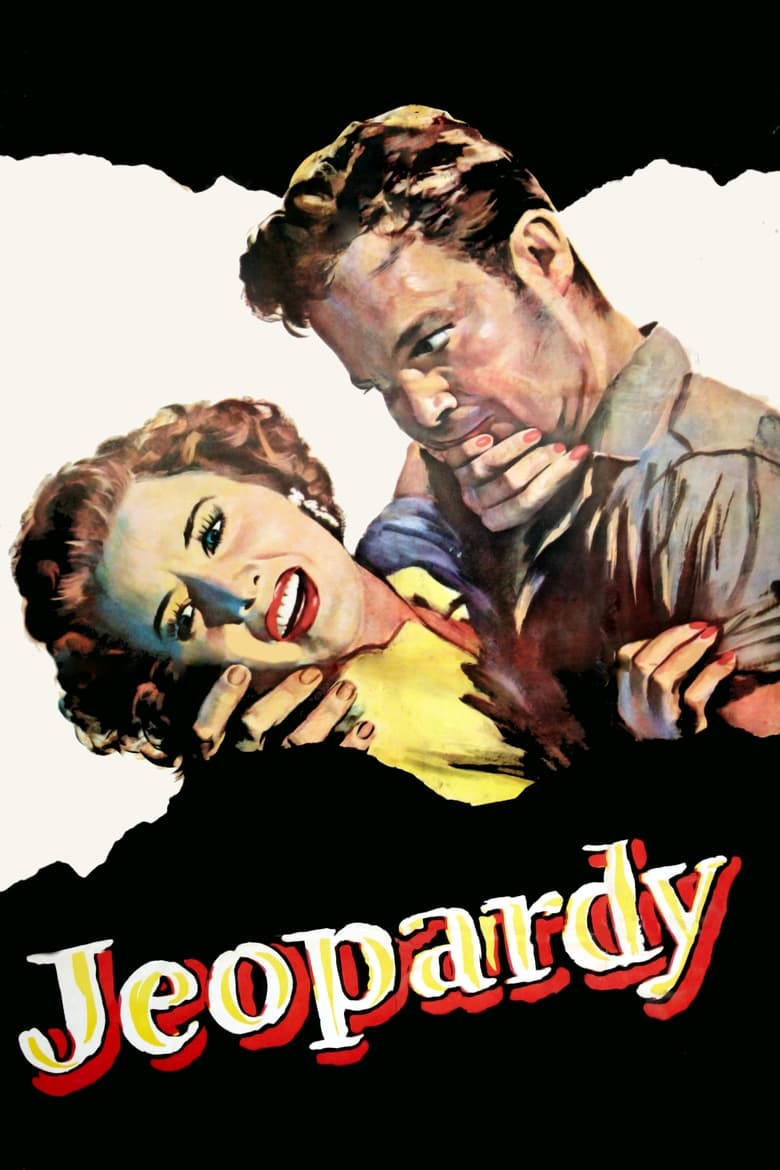
Jeopardy 1953
1953 Metro-Goldwyn-Mayer
★★★☆☆ Notable
Film Noir · 69 minutes · Black & White

Jeopardy

Directed by John Sturges
Year 1953
Runtime 69 min
Studio Metro-Goldwyn-Mayer
TMDB 6.7 / 10
"A family vacation becomes a transaction in desperation, conducted at gunpoint along the Baja coast."

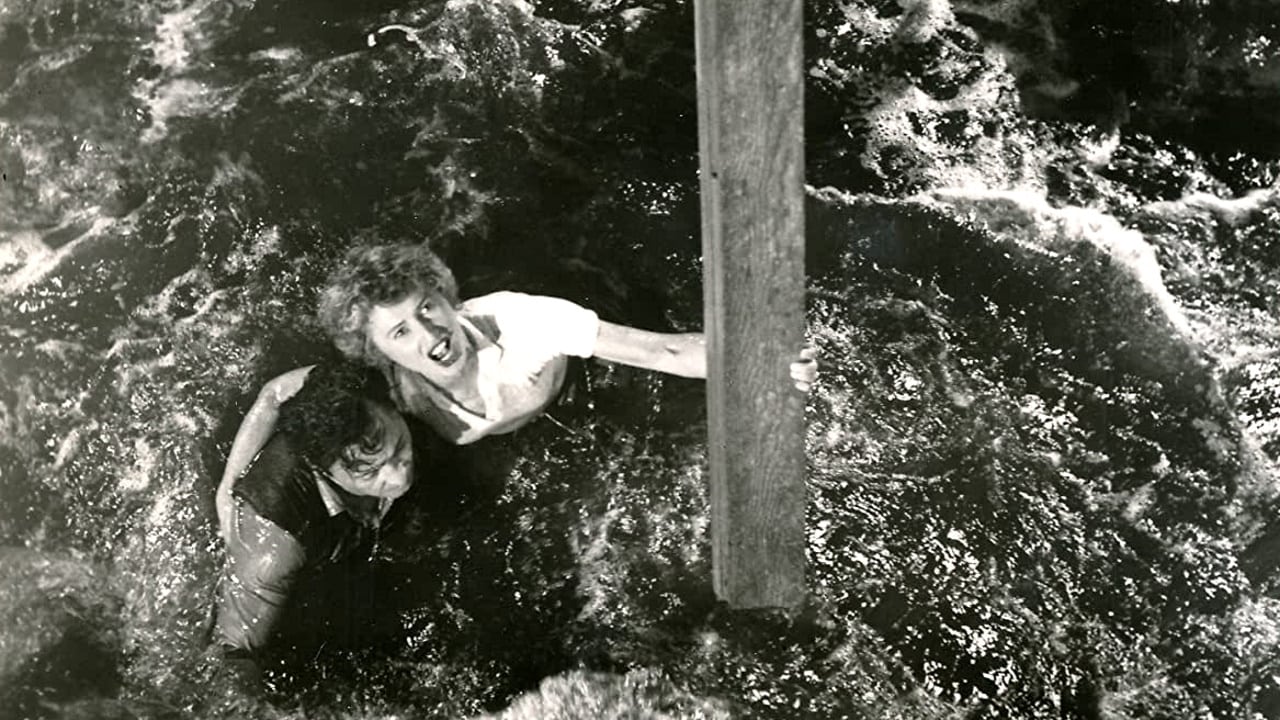
A California family – Doug and Helen Stilwin and their young son Bobby – stops for a holiday on Mexico's Baja Peninsula. While exploring an abandoned pier, Doug's leg becomes trapped beneath a rotting piling as the tide begins to rise. With no tools, no neighbors, and a truck that cannot navigate the terrain, Helen drives for help, leaving her husband to count the hours against the incoming water.

On the road, Helen encounters Lawson, an escaped convict fleeing a police dragnet that is methodically sealing off every route north. The meeting is not a rescue; it is a negotiation under coercion. Lawson holds the car, the keys, and the leverage, and Helen must calculate precisely how much of herself she is willing to offer against the diminishing time left to save her husband. The film turns on that calculation – and on whether Lawson is entirely what he appears.

Jeopardy operates in the compressed, single-crisis mode that low-budget noir perfected in the early 1950s: a tight runtime, a small cast, and a moral situation with no clean exit. The film is less concerned with crime as spectacle than with what ordinary people concede when survival narrows the available choices to one.
Classic Noir

Jeopardy belongs to a specific and undervalued strand of postwar noir – the domestic-catastrophe film, in which the violence does not originate in the underworld but descends on a respectable family from the outside. John Sturges, working with a lean MGM budget and a 69-minute mandate, strips the premise to its pressure points: time, terrain, and the body. Barry Sullivan's incapacitation removes the husband from any active role early in the picture, which is a structural decision as much as a narrative one – it places Barbara Stanwyck's Helen at the center of every choice the film makes. Stanwyck, always more interesting under duress than in repose, finds the precise register between competence and desperation that the role requires. Ralph Meeker's Lawson is recognizably of his moment: damaged, volatile, not quite reducible to villain. Victor Milner's cinematography uses the flat coastal light of the Baja location against the hard geometry of confinement, and Dimitri Tiomkin's score resists melodrama with uncharacteristic restraint. The film will not satisfy viewers expecting labyrinthine plotting, but as a study in coercion and moral compromise it is exact and honest.

– Classic Noir
3 ★★★☆☆ Notable
Credits

The Crew

DirectorJohn Sturges
ScreenplayMaurice Zimm
CinematographyVictor Milner
MusicDimitri Tiomkin
EditingNewell P. Kimlin
Art DirectionWilliam Ferrari
ProducerSol Baer Fielding
Performances

The Cast

Close Reading

The Signature Scene

Jeopardy – scene
The Pier at Low Tide The Trap Beneath the Water

Milner frames Doug's entrapment from a low angle that keeps the encroaching surf in the background, its motion steady and indifferent. The piling occupies the lower third of the frame; Sullivan's face is compressed into the upper portion, cut off from sky by the pier's decaying planks. There is almost no shadow work here – the Baja sun is flat and unsparing, which is its own kind of cruelty. The camera does not move dramatically; it holds, letting duration do what shadow and rain would do in a studio-bound noir.

The scene establishes the film's central argument before Lawson ever appears: nature is as indifferent an antagonist as any criminal, and the real subject is Helen's isolation. Doug's physical helplessness is not humiliating so much as absolute, and that absoluteness is what forces Helen onto the road and into a situation the family's normal life could never have anticipated. The trap is literal, but the film's moral geometry is already in place.

Visual Language

The Cinematography

🎞️
Victor Milner – Director of Photography

Victor Milner, a veteran whose credits stretched back to silent-era Paramount, brings to Jeopardy a visual economy suited to the film's confined scale. Shooting partly on location along the Baja coast, Milner forgoes the expressionist chiaroscuro associated with studio noir and works instead with hard natural light that bleaches surfaces and flattens depth – a choice that registers the landscape as hostile rather than merely scenic. Interior and night sequences in the second half shift registers, using tighter focal lengths and harder key-to-fill ratios to isolate Stanwyck within the frame, particularly in the scenes negotiated under Lawson's surveillance. The truck's cab becomes a compressed space where the lighting rarely allows both faces equal illumination at once. Shadow work is spare but deliberate: when it appears, it functions as moral notation, not atmosphere. Milner does not impose a visual system on the material; he lets the location set the terms and reserves his studio technique for the moments when interiority matters most.

In the Catalogue

Themes & Motifs

Availability

Where to Watch

Also in the Directory

See Also