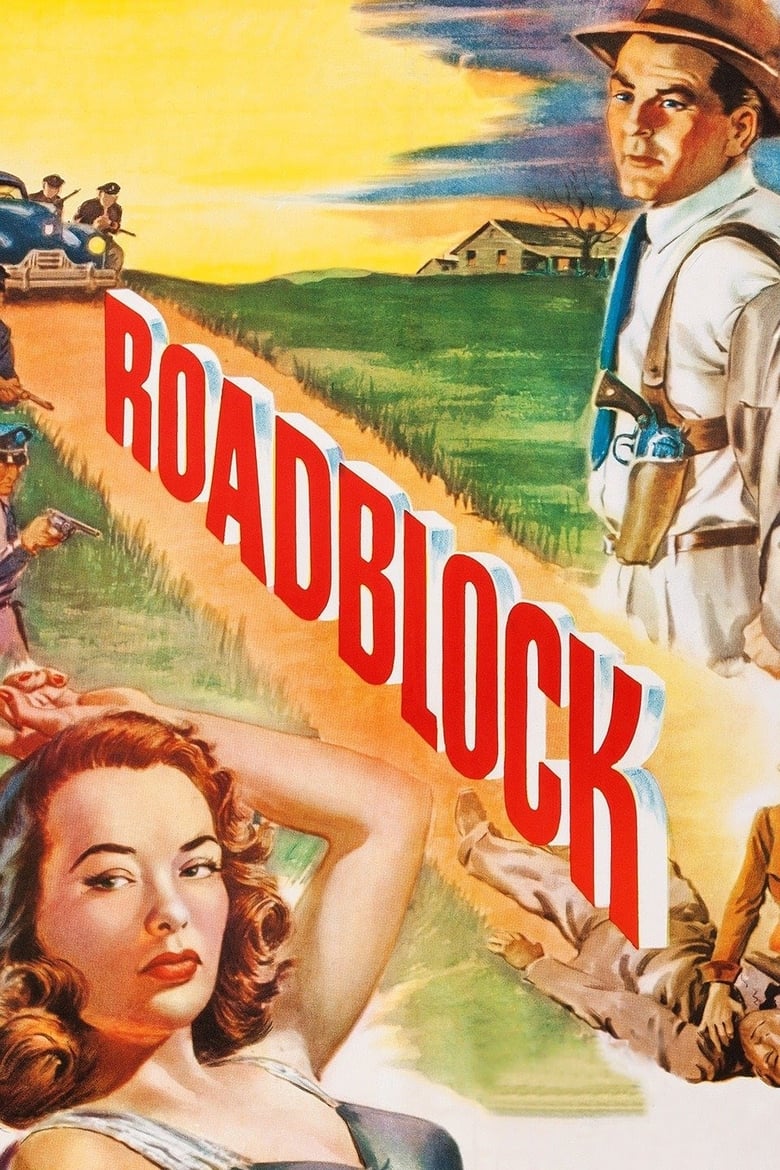
Joe Peters is an insurance investigator for the government, a steady, unglamorous man who has built his life on small certainties. On a routine job he meets Diane Morley, a woman who makes no secret of her ambitions – she wants money, comfort, and the kind of life that a federal salary cannot provide. Peters falls for her with the particular intensity of a man who has never wanted anything badly before.
Diane is already attached to Kendall Webb, a smooth operator connected to syndicate money, and she will not leave that world for a modest income. Peters, compromised by desire, agrees to feed Webb inside information that will make an armored-car robbery possible. His colleague Harry Miller, an honest man, begins to sense that something is wrong, and the investigation Peters was hired to protect starts closing in on the scheme he has helped design.
Roadblock belongs to the cycle of noir films that locate catastrophe not in criminal psychology but in economic aspiration – the conviction that a decent man can step once outside the law and step back again unchanged. The film uses the streets and infrastructure of postwar Los Angeles as both setting and moral argument, treating the city's freeways and flood channels as landscapes of inevitability rather than opportunity.
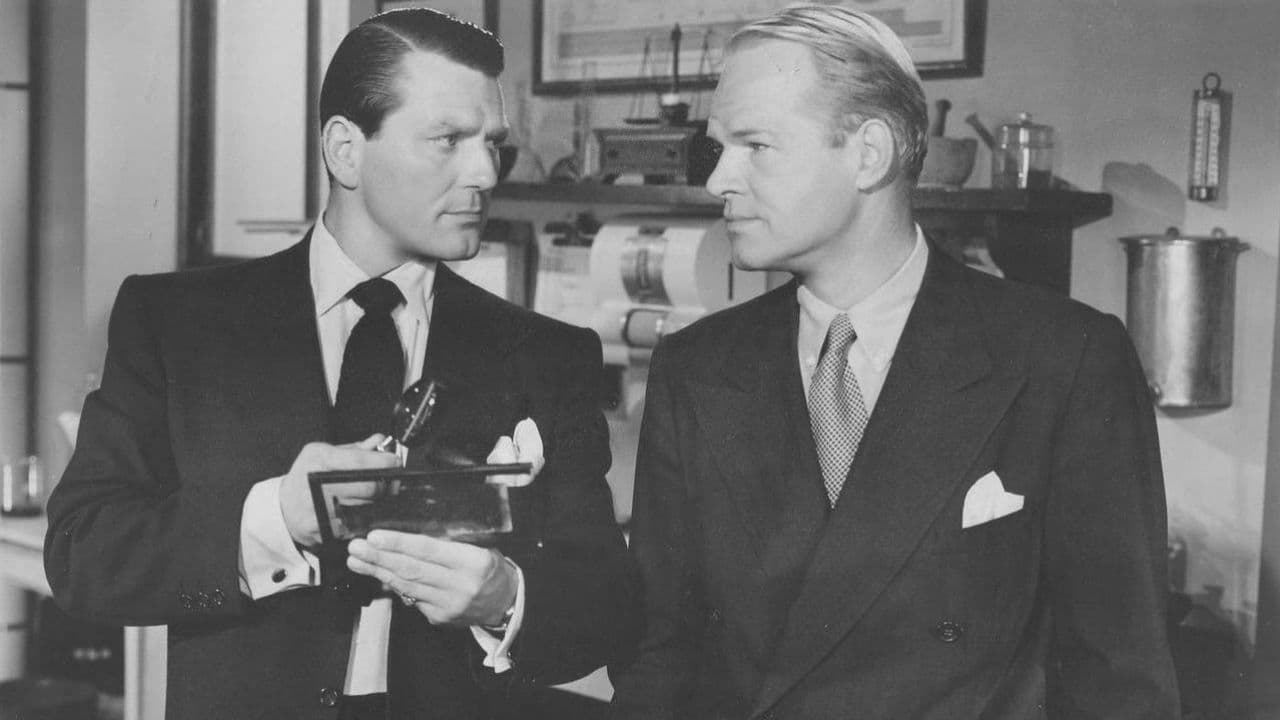
Roadblock is a compact, unsentimental entry in the RKO noir cycle, distinguished less by ambition than by precision. Harold Daniels directs without flourish, which suits the material: this is a film about a man whose ruin is entirely legible from the first reel, and nothing in the staging pretends otherwise. Charles McGraw, whose voice carries the texture of gravel and whose face registers betrayal like a slow stain, is the right instrument for Peters – a character whose tragedy is that he is not complicated enough to survive the world he has entered. The film is candid about the class resentments that make Peters susceptible: Diane's appetite for luxury is presented without contempt, and her calculation is granted a logic the narrative never fully disavows. What Roadblock achieves, within its 73 minutes, is a clean diagram of how postwar prosperity produced its own casualties – men who believed desire was a form of entitlement and discovered it was a mechanism of destruction.
– Classic Noir
The film's climax uses the concrete flood-control channels of the Los Angeles River as its final arena. Musuraca shoots the sequence with a high contrast that turns the pale concrete into something lunar and indifferent – light falls hard from above, casting no comfortable shadow, and the geometry of the channel walls creates a frame within a frame that reduces the figures to small dark shapes moving through engineered space. The camera does not pursue Peters so much as observe him, holding wide enough that the architecture dominates.
The setting is doing precise thematic work. The flood channel is a structure built to contain and redirect natural force, which is exactly what Peters believed he could do with his own desire. That the chase ends here, in infrastructure rather than landscape, in a space that is neither city nor wilderness but the violent junction of both, places his death inside the argument the film has been making: the postwar city is not indifferent to individual failure, it is designed to produce it.
Nicholas Musuraca, whose shadow work on Out of the Past remains a reference point for the genre, operates here in a register that is cooler and more observational than his most celebrated assignments. The Los Angeles locations – streets, flood channels, the utilitarian interiors of offices and cheap hotels – are lit to suppress romance rather than generate it, with key light sources placed high and slightly off-axis to flatten faces at moments of moral compromise. Studio interiors use deeper shadows in the background plane, keeping the foreground figures readable while allowing the spaces they occupy to feel unstable. Musuraca does not reach for expressionist distortion; instead he applies a documentary pressure to the imagery that makes the familiar world look quietly hostile. Lens choices stay conservative, which means the spatial relationships between characters carry weight: proximity and distance are allowed to do moral work without being forced. The result is a visual language that trusts the story's bleak geometry.
Roadblock has circulated on Tubi as part of its classic noir holdings; verify current availability, as catalogue rotation applies.
Archive.orgFreeAs a film whose rights status has been questioned over the decades, Archive.org may host a public-domain print, though transfer quality varies.
TCMSubscriptionTCM periodically screens Roadblock within RKO noir retrospectives, typically using the best available broadcast print.