Pittsburgh steelworker Matt Cvetic carries a secret that has cost him everything: for nine years he has operated as an undercover informant for the FBI inside the American Communist Party. His family believes he is a genuine party member and wants nothing to do with him. His son is ashamed of him. His brother has cut him off. The cover demands total performance, and Cvetic performs it at the price of his own identity.
When the party begins using its labor-union connections to orchestrate violence in the mills and intimidate workers, Cvetic finds himself caught between his FBI handlers, who need him to hold position, and a deepening revulsion at what he is forced to witness and enable. A schoolteacher named Eve Merrick, recruited by the party for propaganda work and growing disillusioned, complicates the equation further – she represents the civilian damage the party inflicts on ordinary lives, and her peril gives Cvetic's endurance a human focal point.
Gordon Douglas frames the material as a procedural thriller with clear noir coordinates: the double life, the cost of sustained deception, and the paranoia that corrodes even legitimate institutions. The film draws on the real Cvetic's radio serial and Saturday Evening Post account, lending it a docudrama texture that sits in productive tension with its expressionist visual inclinations. It is less interested in suspense than in the psychological toll of living as a contradiction.
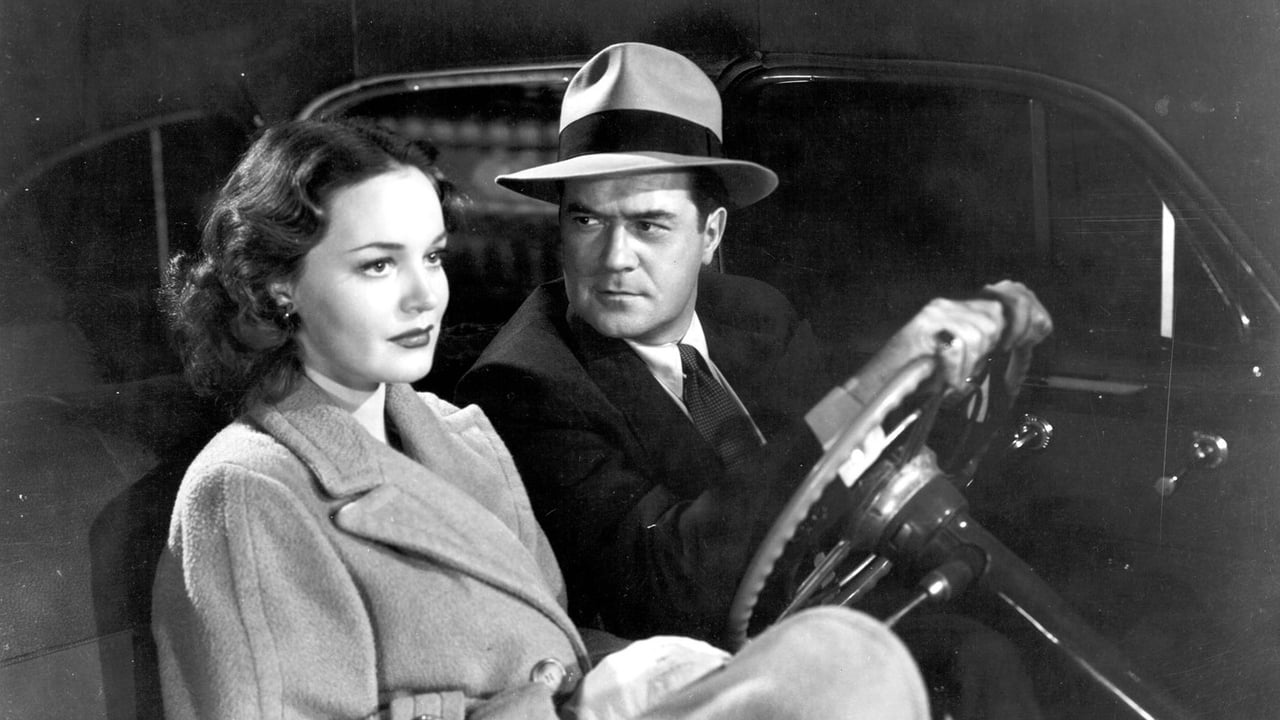
Released in the thick of the Red Scare and openly endorsed by J. Edgar Hoover, I Was a Communist for the FBI occupies an uncomfortable position in the noir canon – it is simultaneously a propaganda instrument and a surprisingly coherent study in fractured identity. The film deploys the genre's standard grammar of the wrong man, the double life, and the corroded community, but in the service of a politically sanctioned narrative rather than a subversive one. What saves it from pure agitprop is Frank Lovejoy's performance, which refuses to make Cvetic a hero in any comfortable sense. The man is isolated, alcoholic at intervals, and hollowed out by years of performance. Gordon Douglas, a director more workmanlike than visionary, keeps the procedural mechanics clean without inflating them. The film reveals, almost inadvertently, how the Cold War transformed noir's anxieties about institutional loyalty into a state-adjacent genre: the infiltrator replaces the detective, and paranoia is recast as patriotism. That tension makes it a document as much as a film.
– Classic Noir
Edwin B. DuPar lights the union hall sequence with a hard overhead source that carves deep shadow beneath brows and cheekbones, flattening faces into masks. The camera holds on medium shots that deny individual humanity to the crowd, cutting to tight close-ups on Cvetic only when he must maintain composure. The staging keeps him physically centered in the frame but spatially isolated – surrounded by figures whose faces the light renders unreadable.
The scene externalizes the film's central argument: that the party converts persons into instruments, stripping away the individual legibility that democratic community requires. Cvetic's enforced stillness – he cannot object, cannot break cover – becomes a visual correlate for the larger suppression the film is dramatizing. What the camera does to faces in this room, the party does to persons.
Edwin B. DuPar, working in Warner Bros.' characteristic mid-century style, shoots I Was a Communist for the FBI with a controlled economy that occasionally achieves genuine unease. He favors moderate wide-angle lenses in interiors that compress depth and crowd figures together, reinforcing a world in which private space is perpetually threatened. Shadow work is functional rather than baroque – this is not the deep chiaroscuro of a Deutsch or a Musuraca, but DuPar uses pools of hard light in meeting rooms and mill locations to suggest surveillance and exposure rather than mystery. The Pittsburgh steel-mill exteriors, shot partially on location, give the film an industrial texture that studio-bound productions of the era rarely achieved, grounding the ideological conflict in recognizable labor geography. Where the cinematography most directly serves the moral logic is in how it photographs Cvetic in domestic spaces: flat, even light, no shadows to hide in, the visual language of a man who has forfeited the shelter of a private self.
The film is in the public domain and available in full on the Internet Archive, making it the most direct free option, though print quality varies.
TubiFreeTubi has carried the film as part of its classic Hollywood library; confirm availability by title search as catalogue rotation applies.
Amazon Prime VideoRentalA digital rental offers a cleaner transfer than most public-domain prints; verify current listing as availability shifts.