Films People Pull a Fast One Night Beat Reading Room On TV Shop
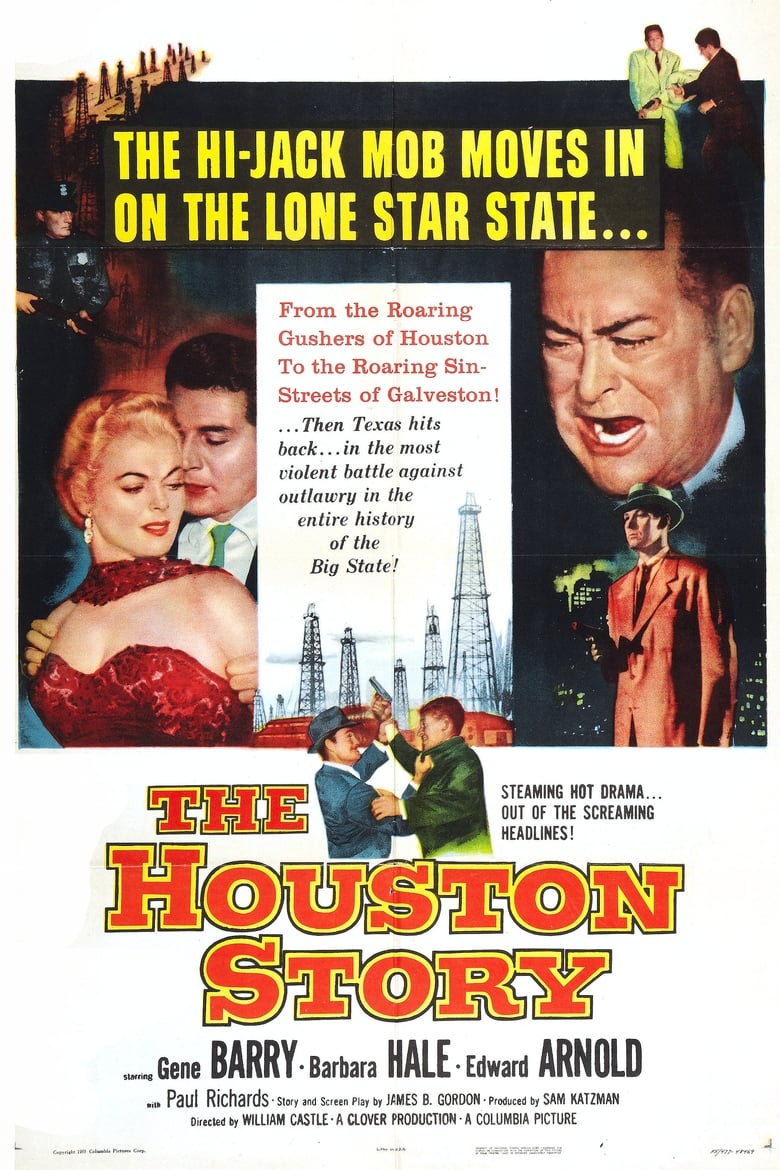
Houston Story 1956
1956 Clover Productions
★★★☆☆ Notable
Film Noir · 79 minutes · Black & White

Houston Story

Directed by William Castle
Year 1956
Runtime 79 min
Studio Clover Productions
TMDB 6.0 / 10
"In the oil fields, every deal has a cost – and someone always pays in full."

Frank Duncan is a down-on-his-luck oil worker in Houston who stumbles onto a scheme to siphon crude from legitimate wells and sell it on the black market. Seeing an opportunity he cannot afford to pass up, he insinuates himself into the operation run by Paul Atlas, a polished and ruthless syndicate boss who has built a small empire on corruption and enforced silence. Frank's ambitions are clear: he wants in, and he wants to rise. His relationship with Zoe Crane, a woman with her own survival instincts and a sharper read of dangerous men than Frank possesses, gives him a fragile foothold – and a liability he hasn't yet calculated.

As Frank pushes deeper into Atlas's organization, he draws the attention of Gordon Shay, a volatile enforcer who regards the newcomer as a threat rather than an asset. The syndicate's internal tensions are further complicated by Madge, whose loyalties shift with the financial weather, and by Louie Phelan, a small-time operator who knows too much and talks too freely. Frank, believing himself more clever than the men around him, attempts to play both sides – feeding information to federal investigator Emile Constant while continuing to profit from the theft operation. The miscalculation is structural: in a world run by men like Atlas, there is no such thing as a neutral position.

The Houston Story belongs to a strain of mid-decade noir concerned less with psychological torment than with the mechanics of institutional crime – how criminal syndicates mirror legitimate business hierarchies, and how ordinary ambition becomes the engine of self-destruction. Castle works within tight B-picture constraints, and the film's procedural bones are as much about the oil industry's postwar boom as about any individual's moral failure. The result is a compact study in the price of opportunism, with a cynical accounting that the genre rarely lets its protagonists escape.
Classic Noir

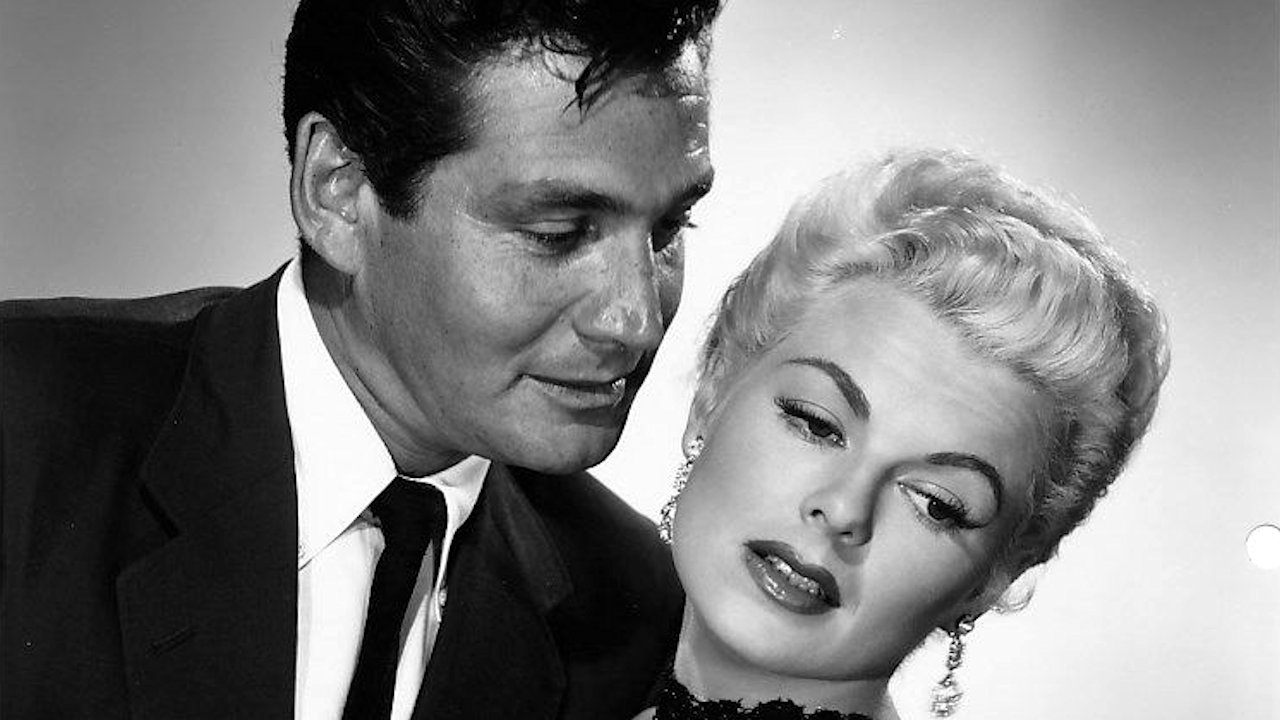
William Castle, better remembered for his theatrical horror showmanship of the late 1950s and 1960s, reveals here a more disciplined instinct for crime procedural economy. The Houston Story is neither ambitious nor careless – it is a workmanlike B-noir that understands its own limits and operates within them with reasonable intelligence. Gene Barry's Frank Duncan is a useful noir figure precisely because he is not exceptional: he is competent, vain, and strategically blind, a combination the genre treats as fatal. Edward Arnold, in one of his later character turns, brings a boardroom menace to Paul Atlas that the film uses more effectively than its budget might suggest. What The Houston Story captures, almost inadvertently, is the cultural mood of mid-1950s America, in which postwar prosperity had made the line between legitimate enterprise and criminal enterprise visibly thin. The oil industry backdrop is not decorative; it grounds the film's central argument that extraction – of oil, of loyalty, of human utility – follows the same logic whether or not it is licensed by the state.

– Classic Noir
3 ★★★☆☆ Notable
Credits

The Crew

DirectorWilliam Castle
ScreenplayRobert E. Kent
CinematographyHenry Freulich
EditingEdwin H. Bryant
ProducerSam Katzman
Performances

The Cast

Close Reading

The Signature Scene

Houston Story – scene
The Warehouse Confrontation Two Men, One Exit

Henry Freulich frames the exchange in a low-ceilinged storage space where the available light arrives from a single overhead source, cutting deep shadows across both men's faces and leaving the middle ground – the space between them – in deliberate obscurity. The camera holds at a medium distance, refusing the expressionist intimacy of a close-up, so that the geometry of threat registers spatially rather than emotionally. When one figure moves, the other's shadow shifts on the corrugated wall behind him, doubling the tension without underlining it.

The scene confirms what the film has been arguing across its first two acts: Frank has no exit strategy because he never believed he would need one. His confidence has been a form of blindness, and Freulich's staging makes that blindness architectural – the room has no visible door, and the man blocking the frame is not moving. The scene does not resolve with violence so much as with the recognition that Frank's position has been untenable from the beginning, and that everyone in the room understood this before he did.

Visual Language

The Cinematography

🎞️
Henry Freulich – Director of Photography

Henry Freulich, a Columbia contract cinematographer whose career stretched from the silent era through the mid-1950s, brings a flat, functional clarity to The Houston Story that serves its procedural temperament well. Working largely on studio sets dressed to suggest industrial Houston, Freulich relies on high-contrast lighting setups that keep the moral atmosphere legible without straining for the expressionist effects more fashionable in prestige noir. Shadows are used selectively rather than atmospherically – they mark information asymmetry rather than psychological depth, appearing when a character knows something another does not. The exterior and location footage, modest in scope, is cut against studio interiors in ways that occasionally reveal the seam, but Freulich compensates with careful attention to the frame's depth, using foreground objects – pipes, desks, doorframes – to create layered compositions that imply surveillance even in ostensibly neutral spaces. The cinematography does not announce itself, which is appropriate for a film whose argument is that crime, like oil extraction, functions best when it appears unremarkable.

In the Catalogue

Themes & Motifs

Availability

Where to Watch

Also in the Directory

See Also