Films People Pull a Fast One Night Beat Reading Room On TV Shop
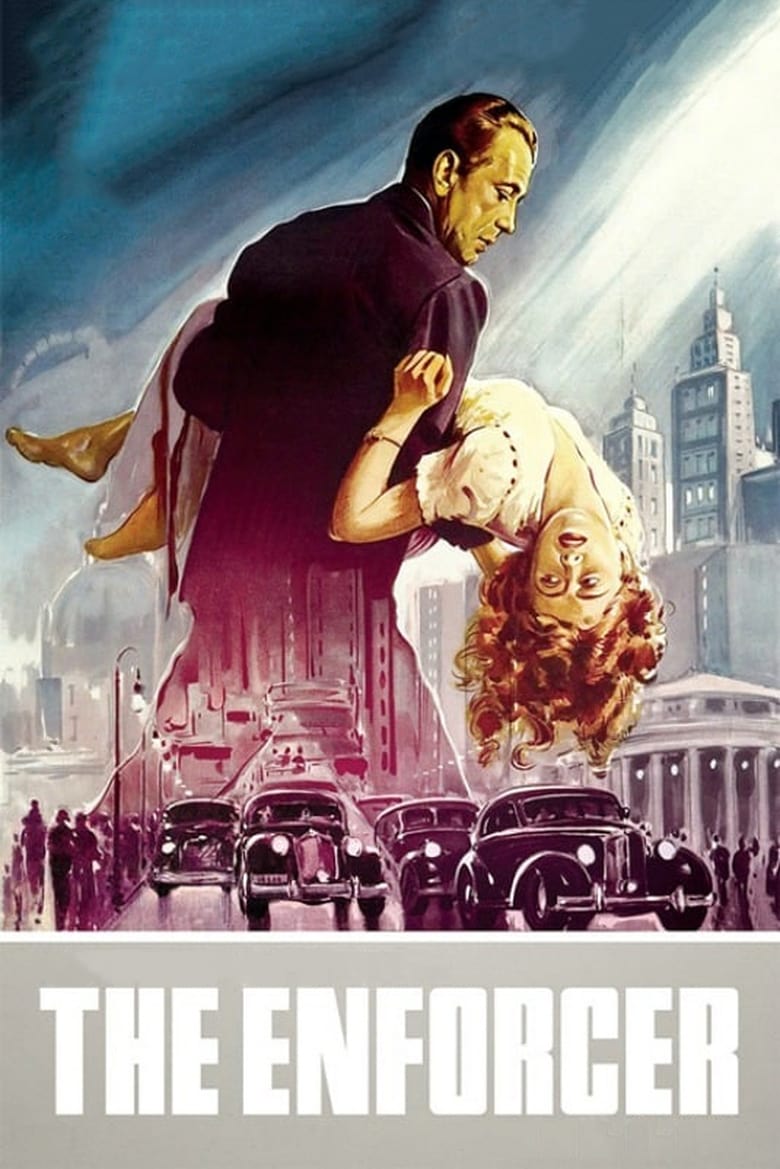
Enforcer 1951
1951 United States Pictures
★★★☆☆ Notable
Film Noir · 87 minutes · Black & White

Enforcer

Directed by Bretaigne Windust
Year 1951
Runtime 87 min
Studio United States Pictures
TMDB 7.1 / 10
"A prosecutor races the clock while a syndicate of killers waits for morning."

On the eve of a crucial murder trial, Assistant District Attorney Martin Ferguson faces the collapse of his case when his only witness – a small-time hood named Joseph Rico – falls to his death during a transfer gone wrong. With dawn approaching and the city's most dangerous crime boss, Albert Mendoza, poised for acquittal, Ferguson retreats through the evidence accumulated over years of investigation, reconstructing through flashback testimony how Mendoza built and ran a professional killing organization operating under the clinical euphemism 'Murder, Inc.'

The film's structure is essentially a legal archaeology: each deposition and transcript fragment pulls Ferguson – and the viewer – deeper into a world where murder is a service industry, contracts are fulfilled by strangers with no motive beyond payment, and the chain of evidence is perpetually threatened by the deaths of those who might speak. Zero Mostel's 'Big Babe' Lazich and Ted de Corsia's Rico represent opposite poles of the organization's human material – the dangerous and the desperate – while Everett Sloane's Mendoza operates behind a carefully maintained facade of civic normalcy.

The Enforcer belongs to the cycle of semi-documentary procedurals that characterized American noir in the late 1940s and early 1950s, films that borrowed the rhetoric of journalism and law enforcement while deploying the visual grammar of shadow and confinement. Its central concern is institutional – the difficulty of making the law work against an enemy that has systematically murdered every witness capable of testifying – and its tension derives less from action than from the grinding procedural effort to reconstruct truth before time runs out.
Classic Noir

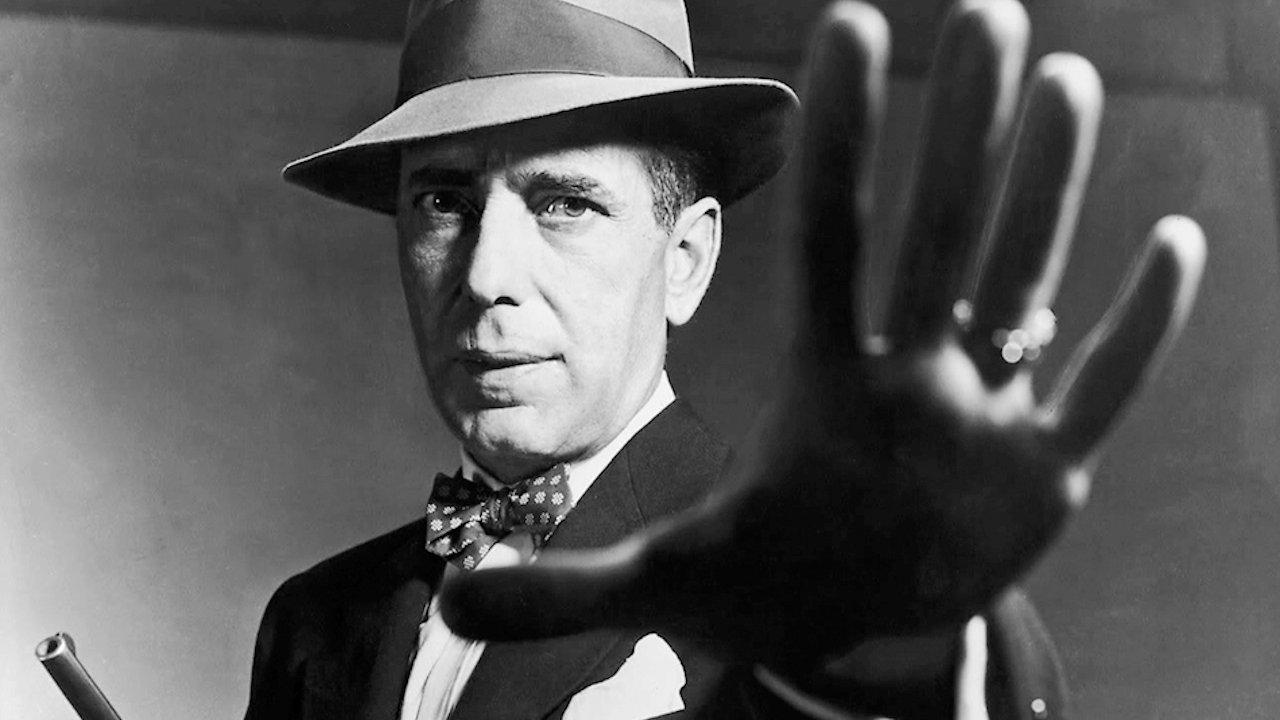
The Enforcer occupies a precise and undervalued position in the procedural wing of American noir. Produced by Humphrey Bogart's own United States Pictures and directed largely by Raoul Walsh – who replaced the ailing Bretaigne Windust for substantial portions of the shoot, though credit remained with Windust – the film translates the Senate Kefauver Committee's exposure of organized crime into noir terms. What distinguishes it from similar semi-documentaries is its structural intelligence: the flashback architecture is not decorative but argumentative, each fragment of testimony revealing how a murder syndicate achieves invisibility through the severing of motive from act. Everett Sloane's Mendoza is among the era's more controlled villain performances, functioning less as monster than as administrator. Robert Burks's cinematography refuses the melodramatic and opts instead for institutional chill – corridors, filing rooms, interview cells – spaces that make the law itself look precarious. The film arrived at a cultural moment when Americans were confronting the reality of organized crime as infrastructure rather than aberration, and it registers that anxiety without sensationalizing it.

– Classic Noir
3 ★★★☆☆ Notable
Credits

The Crew

DirectorBretaigne Windust
ScreenplayMartin Rackin
CinematographyRobert Burks
MusicDavid Buttolph
EditingFred Allen
Art DirectionCharles H. Clarke
ProducerMilton Sperling
Performances

The Cast

Close Reading

The Signature Scene

Enforcer – scene
The Stairwell Fall Rico Goes Over the Rail

Robert Burks frames the sequence from a high angle that emphasizes the vertical drop of the stairwell, the geometry of bannisters and landings creating a cage-like lattice around the descending figures. Light comes hard from above, casting each landing into relative darkness before the next light source catches the men mid-movement. There is no elaborate choreography – the violence is abrupt, spatially compressed, and over before the frame has time to settle.

The scene crystallizes the film's central argument: that legal procedure is perpetually vulnerable to the single catastrophic instant. Rico's fall does not resolve anything; it erases the one connection Ferguson has built between Mendoza and documented murder. The stairwell becomes a figure for the entire case – a structure that looks solid until, without warning, it isn't.

Visual Language

The Cinematography

🎞️
Robert Burks – Director of Photography

Robert Burks, who would move from this assignment to his extended collaboration with Alfred Hitchcock, brings to The Enforcer a visual discipline suited to its procedural logic. Rather than the expressionist shadows associated with classic noir, Burks works in what might be called institutional light – the flat, unforgiving illumination of offices and interrogation rooms that denies characters the shelter of darkness. His lens choices favor moderate focal lengths that flatten space just enough to make confinement legible without resorting to distortion. Where shadows appear – in the flashback sequences that reconstruct the syndicate's operations – they are architectural, produced by doorframes, venetian blinds, and overhead practicals rather than projected as psychological states. This disciplined approach reinforces the film's argument that organized crime is not gothic horror but bureaucratic procedure, and that the law confronting it operates under similarly impersonal conditions. The cinematography serves the story's moral logic precisely because it refuses atmosphere as a substitute for structural analysis.

In the Catalogue

Themes & Motifs

Availability

Where to Watch

Also in the Directory

See Also