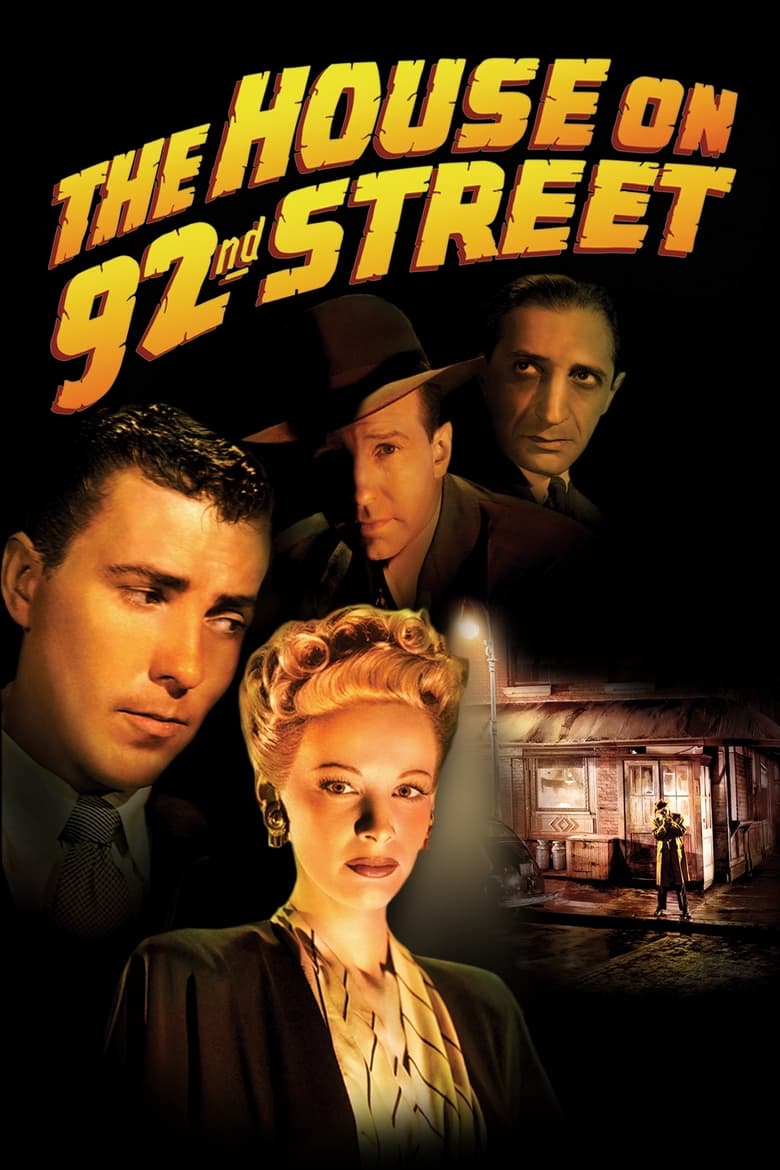
In the months before America enters the Second World War, Bill Dietrich, a German-American student with family ties to the Reich, is recruited by Nazi intelligence to courier information out of the United States. He instead walks into FBI headquarters and volunteers as a double agent. Agent George A. Briggs takes charge of Dietrich, running him as a penetration asset inside a New York-based espionage ring whose members move through the city's brownstones and shop fronts with practiced anonymity.
The ring is controlled by the enigmatic Elsa Gebhardt, who operates a salon on the Upper East Side as cover for transmitting atomic research to Berlin. Dietrich must earn her trust while feeding disinformation to his handlers, navigating a web that includes the nervous middleman Roper and the coldly efficient Colonel Hammersohn. The closer Dietrich moves to the ring's center, the more the line between his performed loyalty and genuine danger begins to collapse.
The film unfolds with the procedural discipline of a case file brought to screen, situating personal jeopardy inside institutional machinery. Where most noir locates moral corruption in private desire, House on 92nd St. finds it in political allegiance and national identity, asking what a man owes to a country that may not fully claim him. The tension is less fatalistic than clinical, but the shadow of betrayal falls across every transaction.
House on 92nd St. occupies a specific and instructive position in the development of American noir. Produced with the cooperation of the FBI and shot partly on location in New York, it belongs to a cycle of semi-documentary procedurals that 20th Century Fox would refine through the late 1940s, a cycle that traded the genre's typical nocturnal psychology for institutional authority and factual texture. Henry Hathaway directs with the efficient confidence of someone who trusts his material and his locations over atmospheric embellishment. The film's ideological investment in federal competence is real and worth naming – it is, in part, a recruitment and reassurance document – yet this does not entirely diminish its craft. Lloyd Nolan's Briggs carries the procedural weight with credible control, and Signe Hasso brings an unsettling stillness to Gebhardt that the script's exposé structure cannot quite contain. The film's value to genre history lies precisely in its tension: between the open city and the hidden room, between the public record and the classified file, between a documentary impulse and noir's instinct for the irresolvable.
– Classic Noir
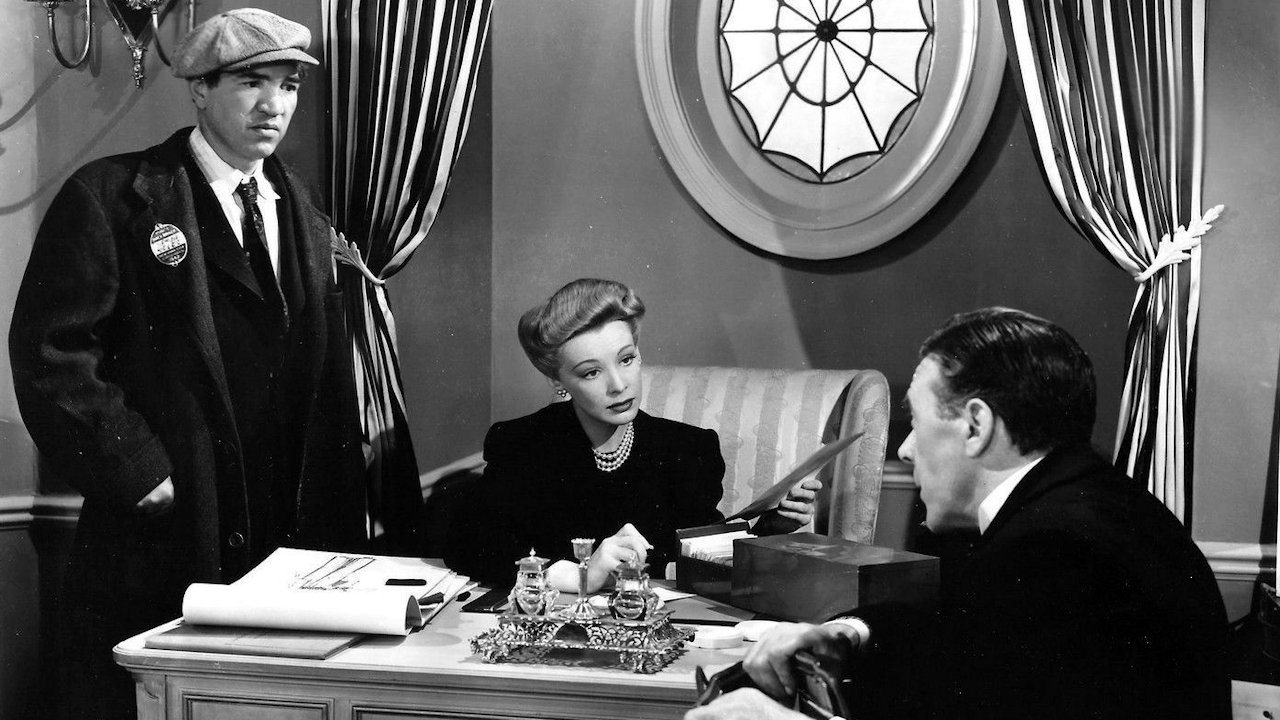
Norbert Brodine positions the camera at a slight remove, framing the salon's interior through a half-open doorway so that the foreground edge of the frame functions as a physical threshold. The light is flat and institutional in the surveillance space, while the room beyond is lit with the warm, social gloss of a respectable interior. Hasso moves through that warmer light as though entirely at ease, her silhouette never fully resolving into legibility.
The scene articulates the film's central argument through spatial logic alone: observation and exposure are always partial. The state's apparatus can see through walls and trace transmissions, but it cannot fully read a person. Gebhardt's composure under unseen scrutiny makes her the film's most genuinely noir figure – less a villain to be caught than a cipher the procedural form cannot metabolize.
Norbert Brodine's work on House on 92nd St. is disciplined and deliberate, shaped by the dual demands of the semi-documentary form and the espionage subject. Shooting extensively on location in New York – Federal buildings, midtown streets, the actual 92nd Street townhouse – Brodine uses available architectural geometry to structure frames that feel surveilled rather than composed, a visual rhetoric that reinforces the FBI's omniscient narrative posture. In studio interiors, he shifts register, employing harder shadows and tighter lens compression to signal the enclosed, duplicitous world of the spy ring. The lighting in Elsa Gebhardt's salon is conspicuously warm against the procedural cold of the Bureau sequences, a contrast Brodine maintains with enough consistency to read as argument. The film does not pursue the deep-focus expressionism of the period's more self-consciously stylized noirs, but Brodine's restraint is calibrated rather than cautious – his camera serves the story's moral claim that truth is a matter of record, even when the frame withholds it.
The Criterion Channel has periodically featured the Fox semi-documentary cycle and represents the most reliable streaming home for a clean, uncompressed print.
TubiFree (Ad-Supported)Tubi carries a publicly available transfer of the film at no cost, though print quality varies and should be verified before a critical viewing.
Archive.orgFreeA public domain version is accessible via the Internet Archive, suitable for research access though not for primary viewing due to variable source quality.