Films People Pull a Fast One Night Beat Reading Room On TV Shop
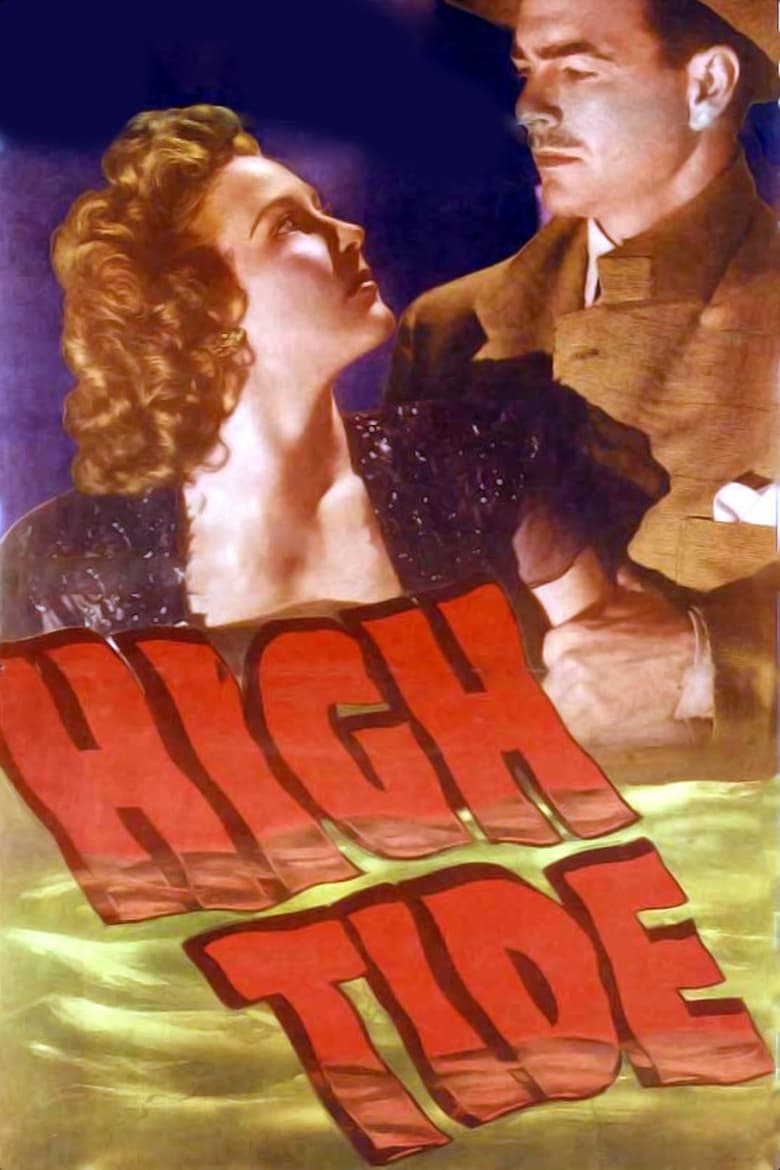
High Tide 1947
1947 Wrather Productions
★★★☆☆ Notable
Film Noir · 72 minutes · Black & White

High Tide

Directed by John Reinhardt
Year 1947
Runtime 72 min
Studio Wrather Productions
TMDB 6.0 / 10
"A man who knows too much finds the tide running against him."

Hugh Fresney (Lee Tracy) is a washed-up newspaper columnist working the night beat in a coastal California town, nursing a drinking problem and a talent for being in the wrong place. When a body turns up near the waterfront and a young woman named Dana Jones (Anabel Shaw) is pulled into the orbit of the investigation, Fresney finds himself caught between his instinct for a story and something that might, in a weaker man, pass for conscience. Tim Slade (Don Castle), a harder and more ambitious operator, moves through the same circles with less scruple and more nerve.

The murder draws tighter connections to Julie Vaughn (Julie Bishop) and her brother Clinton (Douglas Walton), whose involvement complicates whatever clean lines the investigation might have followed. Inspector O'Haffey (Regis Toomey) presses from the institutional side while syndicate muscle, represented by Nick Dyke (Anthony Warde), applies pressure from below. Fresney's loyalties shift with each new piece of information, and the distinction between protecting a source and protecting himself grows steadily harder to maintain.

High Tide operates in the compressed tradition of the low-budget studio noir, using its 72-minute runtime to keep the waterfront setting oppressive and the character motivations deliberately murky. The film belongs to a cycle of late-1940s crime pictures that locate moral corruption not in any single villain but in the accumulated compromises of men who once believed they were merely practical.
Classic Noir

High Tide is a minor entry in the late-1940s noir cycle, but a representative one, and that representativeness is itself worth examining. Produced by the small Wrather operation and directed by John Reinhardt with efficiency rather than distinction, the film derives most of its interest from Lee Tracy, whose fast-talking, ethically elastic persona from pre-Code cinema had by 1947 taken on a useful layer of wear. Tracy's Fresney is not a romantic antihero but a recognizable American type: the cynic who discovers, at some cost, that cynicism has limits. The waterfront setting – docks, tidal flats, the particular darkness of coastal California nights – gives Henry Sharp's cinematography a physical texture that the screenplay alone could not provide. What the film reveals about its moment is the postwar press on the genre toward procedural realism, even within modest budgets: institutions, inspectors, and professional routines appear alongside the fatalistic impulses that define the mode. The result is not a film that redefines the genre, but one that demonstrates how thoroughly noir had become a working grammar for American crime storytelling.

– Classic Noir
3 ★★★☆☆ Notable
Credits

The Crew

DirectorJohn Reinhardt
ScreenplayRaoul Whitfield
CinematographyHenry Sharp
MusicRudy Schrager
EditingStewart S. Frye
Art DirectionLewis H. Creber
ProducerJack Wrather
Performances

The Cast

Close Reading

The Signature Scene

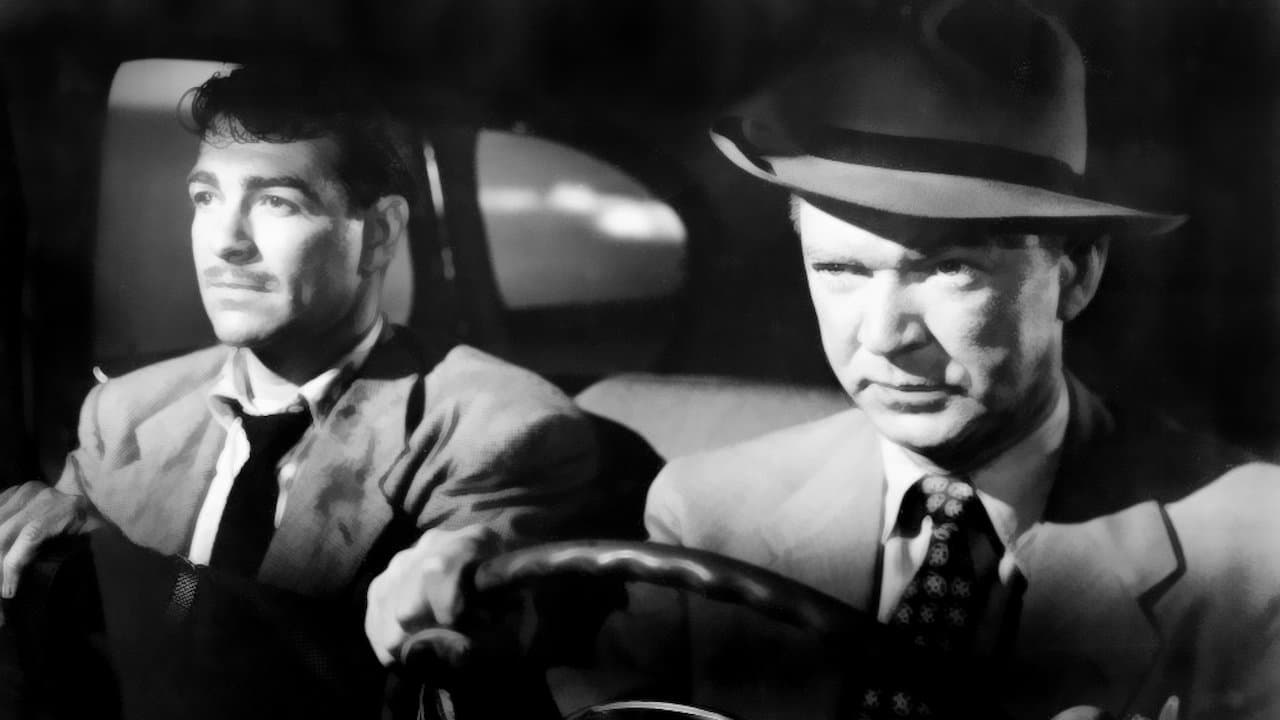
High Tide – scene
The Waterfront Confrontation Tide Coming In Fast

The scene is composed in deep shadow along the dock edge, Sharp placing his key light low and lateral so that faces are half-consumed by darkness and the water behind registers only as a restless, lightless mass. The frame is tight on the two men, with the horizontal line of the dock railing cutting across the lower third, anchoring the geometry even as the blocking keeps both figures in unstable relation to it. When one of them moves toward the edge, the camera holds rather than follows, letting the threat accumulate in stillness.

What the scene argues, visually, is that the waterfront is not a backdrop but a moral condition: proximity to the tide means proximity to erasure. The conversation that takes place here is nominally about information – who knows what, who told whom – but the staging makes it about leverage and the bodies that leverage eventually costs. Fresney's position in the frame, slightly off-center and nearer the drop than he seems to notice, is the film's clearest statement about where his choices have left him.

Visual Language

The Cinematography

🎞️
Henry Sharp – Director of Photography

Henry Sharp, a cinematographer whose career stretched back to silent pictures, brings to High Tide a workmanlike command of low-key lighting that, within the constraints of a modest budget, sustains the film's atmosphere more reliably than its script. Sharp favors tight source motivations – practical dock lights, a single overhead in a cramped office – that allow shadow to do structural work, dividing the frame into zones of knowledge and concealment. His lens choices tend toward the slightly longer end for interiors, compressing space and keeping actors in uncomfortable proximity, while the waterfront sequences open up enough to let the coastal darkness register as genuinely threatening rather than merely decorative. There is little optical flourish; Sharp's contribution is control rather than expressionism, and that discipline suits the film's procedural undertow. The result is a visual language in which moral exposure and physical shadow are treated as the same problem, solved by the same means.

In the Catalogue

Themes & Motifs

Availability

Where to Watch

Also in the Directory

See Also