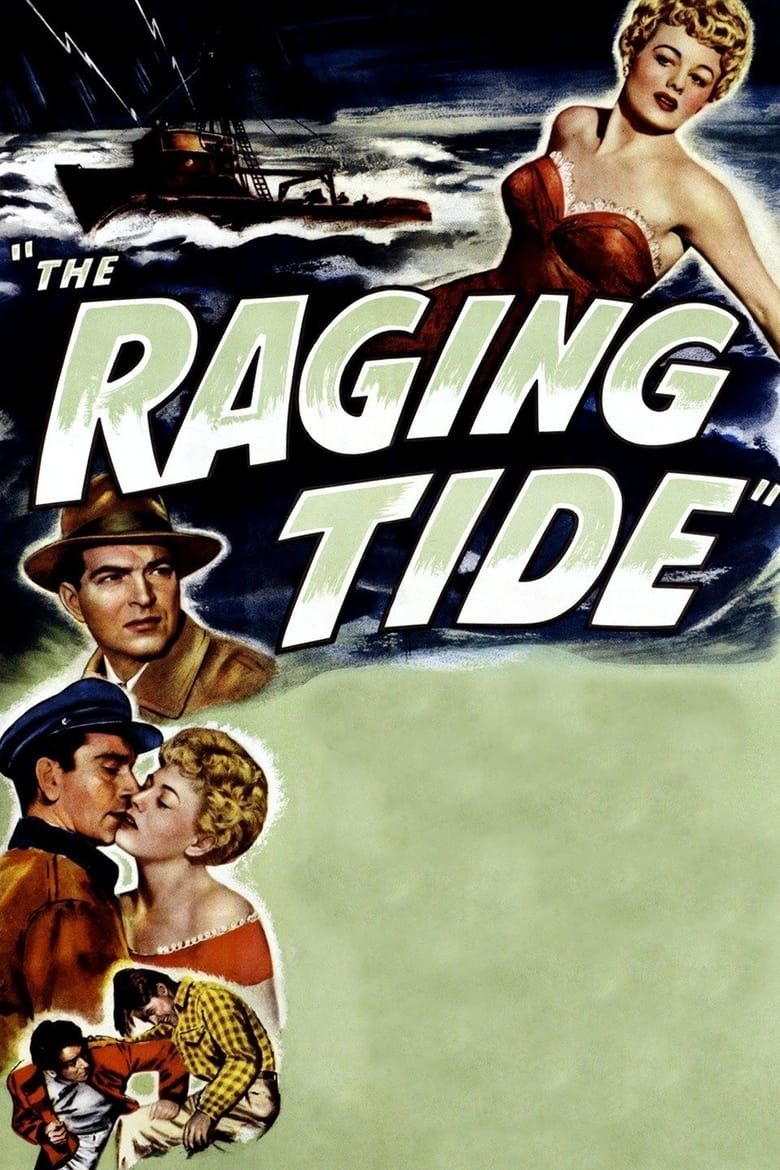
In San Francisco, Bruno Felkin is a mid-level syndicate enforcer who shoots a rival gangster and flees the city before Lieutenant Kelsey, a methodical homicide detective, can close the net. Seeking anonymity, Bruno slips aboard a fishing vessel captained by Hamil Linder, a weathered, principled man who works the bay with his son Carl. Bruno assumes a false identity, trading the city's neon corridors for fog, salt water, and the measured rhythms of working-class life. Connie Thatcher, a woman with her own complicated ties to the criminal world, remains onshore, caught between what she knows about Bruno and what she is willing to say.
On the water, Bruno's harder instincts begin to erode under Hamil's quiet moral authority. Carl, younger and more volatile, takes to Bruno with an admiration that carries its own danger – he is drawn to the man's confidence without understanding its source. Kelsey works the shoreline methodically, following the thread of Bruno's disappearance through waterfront contacts and informants. As the fishing community tightens around Hamil and Carl, Bruno finds himself in the unfamiliar position of owing something to people who have extended him uncomplicated trust, a condition his entire life has been spent avoiding.
Raging Tide belongs to a strand of early 1950s noir that relocates its moral reckoning away from city streets and into working environments where guilt has fewer places to hide. The film's central tension – between a man's criminal nature and the possibility of something like redemption – is never resolved cheaply. The San Francisco waterfront setting gives the film a texture distinct from the studio-bound crime pictures of the same period, and the casting of Bickford and Conte as opposing moral poles gives the conflict genuine weight.
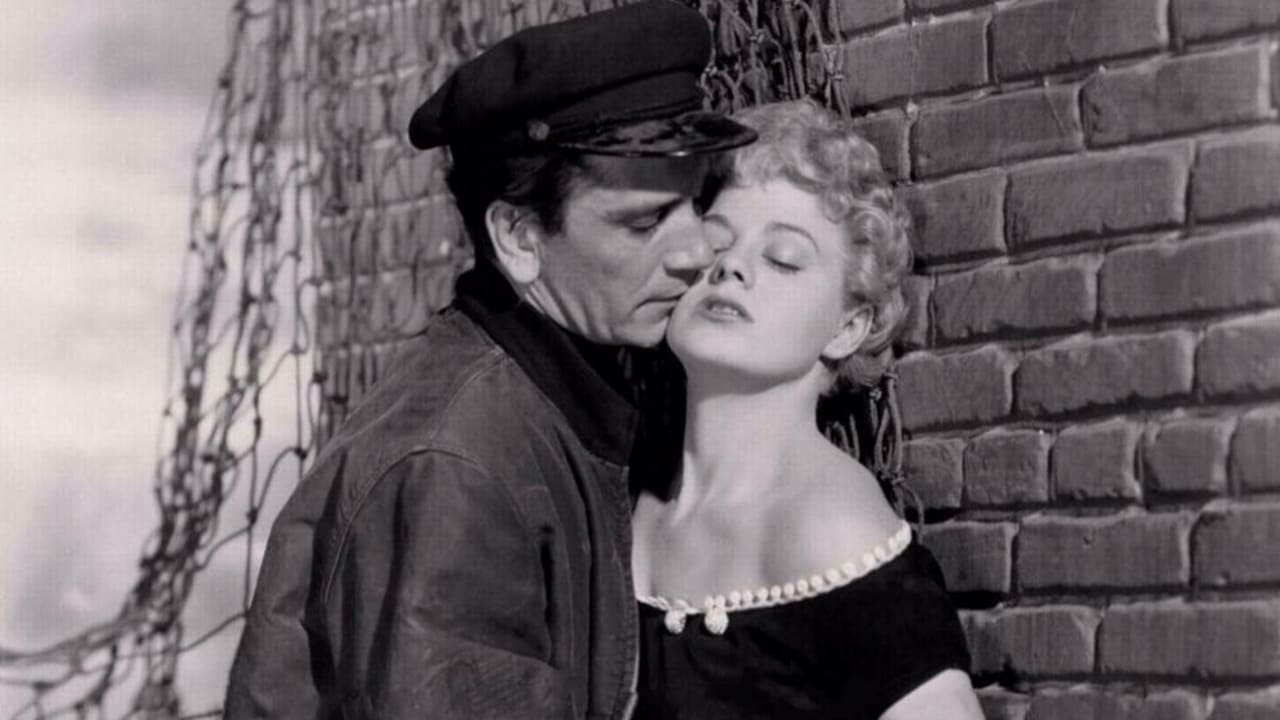
Raging Tide occupies a quiet but defensible position in the Universal International crime cycle of the early 1950s – neither a programmer to be dismissed nor a canonical text, but a film that earns its place through restraint and casting intelligence. George Sherman, better known for westerns, handles the waterfront milieu with more assurance than his reputation might predict, and the film benefits from a script adapted from Ernest K. Gann's novel, which carries the procedural credibility of maritime life. Richard Conte, who always worked best when playing men whose violence was partly buried under fatigue, finds the right register for Bruno – dangerous but not operatic. Charles Bickford's Hamil Linder is the film's moral anchor, and Bickford refuses to sentimentalize the role. What the film reveals about its era is the period's persistent desire to test whether the noir protagonist can be redeemed by contact with labor and community, a question the decade would keep returning to without ever settling.
– Classic Noir
Russell Metty shoots the sequence with a wide lens that keeps the boat small against the bay's opacity, the horizon line dissolved into fog so that the vessel appears to exist in a space without geography or consequence. Interior light from the wheelhouse spills in a narrow band across the deck, catching Conte's face from below and to the left – the classic low-key setup, but softened here by ambient moisture in the air, which diffuses the shadows and gives the image an unusual quality of suspension. The camera holds rather than moves, observing rather than pursuing.
The stillness of the scene is precisely the point. Bruno has spent the film in motion – fleeing, calculating, positioning – and here the water and the fog impose a pause that the city never offered. What the frame argues, quietly, is that geography can function as moral pressure: the bay does not care who Bruno is, which is a different condition from the city, where everyone's knowledge of him is a form of leverage. The scene does not promise transformation, but it opens the possibility of it, which in this cycle of films is as much as the form typically allows.
Russell Metty, whose work across this period ranged from Touch of Evil to routine Universal programmers, brings to Raging Tide a discipline appropriate to its modest scale. Shooting on location around the San Francisco waterfront as well as on studio-built interiors, Metty uses the natural textures of the bay – fog, reflected water light, the dull gleam of wet deck planking – to establish a visual grammar distinct from the hard-shadow city noir of the same era. His lighting setups for the interior scenes rely on practical sources motivated by the boat's own fixtures, which keeps the shadows organic rather than expressionistic. The lens choices favor mid-range focal lengths that neither flatten the space nor exaggerate depth, a choice that suits a film more interested in behavior than sensation. Where Metty applies sharper contrast is in the city sequences framing Kelsey's investigation, a deliberate shift that aligns visual style with moral condition: the waterfront is ambiguous and diffused, the city is hard and declarative.
Tubi has carried a number of Universal International titles from this period and is the most likely free option, though availability should be confirmed as library rights shift.
TCMBroadcast / Subscription (Max)TCM periodically programs waterfront and syndicate noir cycles where Raging Tide has aired; check the schedule or the Max streaming library for current availability.
Archive.orgFreeIf the title has lapsed into the public domain, Archive.org may carry a watchable print – verify the upload quality before committing to the full runtime.