Films People Pull a Fast One Night Beat Reading Room On TV Shop
Footsteps in the Night 1957
1957 Allied Artists Pictures
★★★☆☆ Notable
Film Noir · 62 minutes · Black & White

Footsteps in the Night

Directed by Jean Yarbrough
Year 1957
Runtime 62 min
Studio Allied Artists Pictures
TMDB 5.7 / 10
"A dead man's alibi holds until the living start to lie."

When a man is found dead under circumstances that point to homicide, Detective Sergeant Mike Duncan is assigned to untangle the case alongside Andy Doyle, a tenacious investigator whose methods run closer to instinct than procedure. The victim's connections reach into the respectable surface of everyday business life, and the initial impression of an accidental death quickly dissolves under the pressure of conflicting testimony. Mary Raiken, whose relationship to the dead man carries emotional weight she works to conceal, becomes a figure of central interest.

As Duncan and Doyle press deeper, a web of financial grievance and personal betrayal takes shape around suspects including the smooth Henry Johnson and the edgier Pat Orvello. Fred Horner and the formidable Mr. Bradbury each carry secrets that complicate the apparent motive, and the investigators find that nearly every witness has a reason to redirect the truth. The allegiances that seemed fixed at the outset shift in ways that implicate the professional world the victim inhabited.

Footsteps in the Night operates within the procedural branch of noir, where guilt is less a matter of fate than of methodical exposure. The film belongs to the cycle of low-budget crime pictures that Allied Artists produced through the mid-1950s – efficient, unadorned works that depended on economy of storytelling rather than visual extravagance. Its interest lies in how ordinary social environments – offices, apartments, the routines of working life – become the terrain of criminal concealment.
Classic Noir

Footsteps in the Night sits at the utilitarian end of the noir spectrum, a sixty-two-minute procedural from Allied Artists that trades expressionist atmosphere for the plainer logic of the police investigation. Jean Yarbrough directs without flourish, which is not entirely a limitation – the film's restraint gives its institutional settings a deadpan credibility that more stylized productions sometimes sacrifice. Bill Elliott brings a weathered economy to Andy Doyle that suits the material; his work here belongs to a lineage of no-nonsense screen investigators who operate by persistence rather than inspiration. What the film reveals about its era is the degree to which postwar American crime cinema had domesticated noir's darkest energies into workable genre product – the shadows remain, but they fall on filing cabinets and office corridors rather than rain-slicked alleys. As a document of the B-picture ecosystem in its final productive decade, the film is instructive: it shows how efficiently a lean crime narrative could be constructed within severe commercial constraints, and how much that discipline occasionally clarifies rather than diminishes the moral questions at the genre's core.

– Classic Noir
3 ★★★☆☆ Notable
Credits

The Crew

DirectorJean Yarbrough
ScreenplayElwood Ullman
CinematographyHarry Neumann
MusicMarlin Skiles
EditingNeil Brunnenkant
Art DirectionDave Milton
CostumesBert Henrikson
ProducerBen Schwalb
Performances

The Cast

Close Reading

The Signature Scene

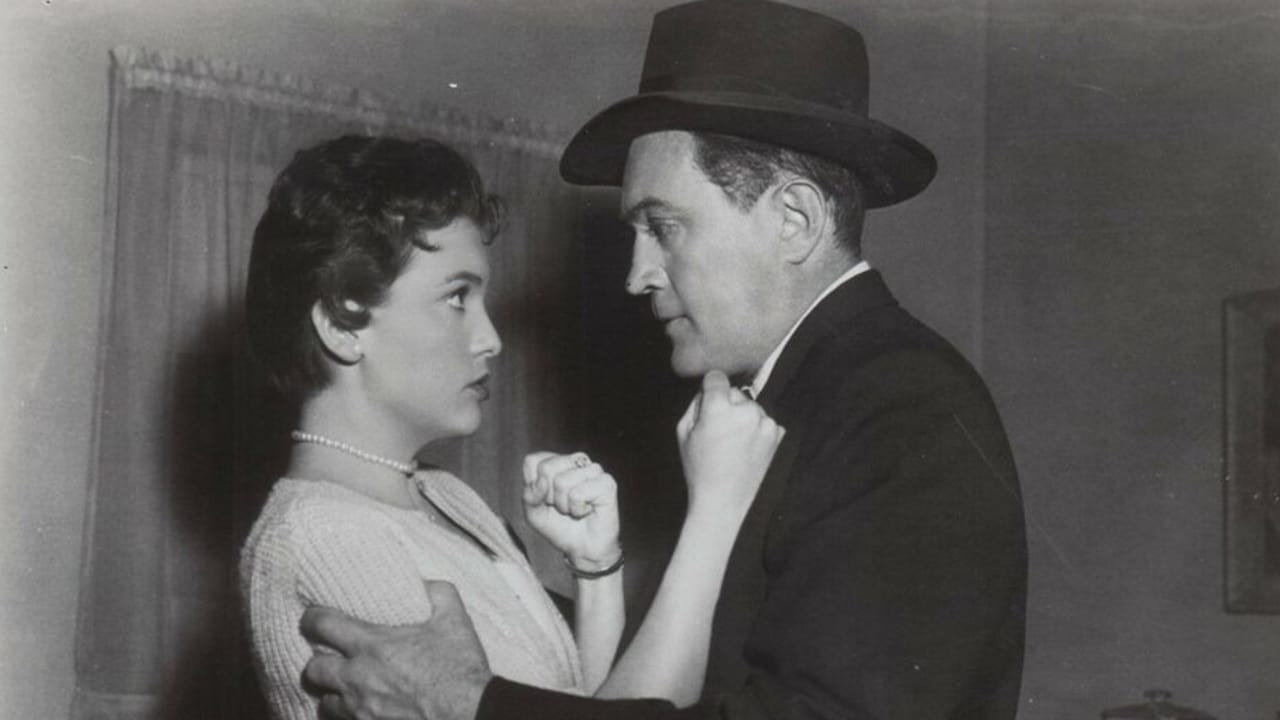
Footsteps in the Night – scene
The Suspect's Office Light Across the Desk

Harry Neumann positions the camera at a low angle across the desk's surface, so that the overhead practical lamp throws a cone of light that catches the suspect's hands while leaving the upper face in soft shadow. The frame is composed to place the investigator at the edge of the shot, his silhouette a steady pressure on the right side of the image. The depth of the room behind the seated figure dissolves into grey, stripping away any context that might offer comfort or escape.

The scene argues, quietly, that guilt has a physical address – that it lives in the body before it surfaces in words. The way the suspect's hands move across documents they cannot afford to let be read tells the investigators, and the audience, everything the dialogue is careful not to confirm. It is a moment that demonstrates what the procedural format can do when the camera is patient enough to wait.

Visual Language

The Cinematography

🎞️
Harry Neumann – Director of Photography

Harry Neumann's cinematography on Footsteps in the Night reflects the professional economy that defined his long career in B-picture production. Working within the constraints of Allied Artists' budget and schedule, Neumann favors practical light sources – desk lamps, ceiling fixtures, the flat light of institutional interiors – rather than the elaborate chiaroscuro associated with A-picture noir. His lens choices tend toward moderate focal lengths that render the office environments with a documentary flatness, which is itself a form of moral argument: there is nowhere exotic for guilt to hide in these ordinary rooms. Shadow work is present but restrained, deployed at moments of interrogation or revelation rather than as a continuous atmospheric texture. What Neumann achieves is a visual grammar that supports the procedural logic of the narrative – the camera does not speculate or editorialize, it observes, and that observed neutrality makes the moments when the frame tightens around a face or a pair of hands carry proportionally more weight.

In the Catalogue

Themes & Motifs

Availability

Where to Watch

Also in the Directory

See Also