Films People Pull a Fast One Night Beat Reading Room On TV Shop
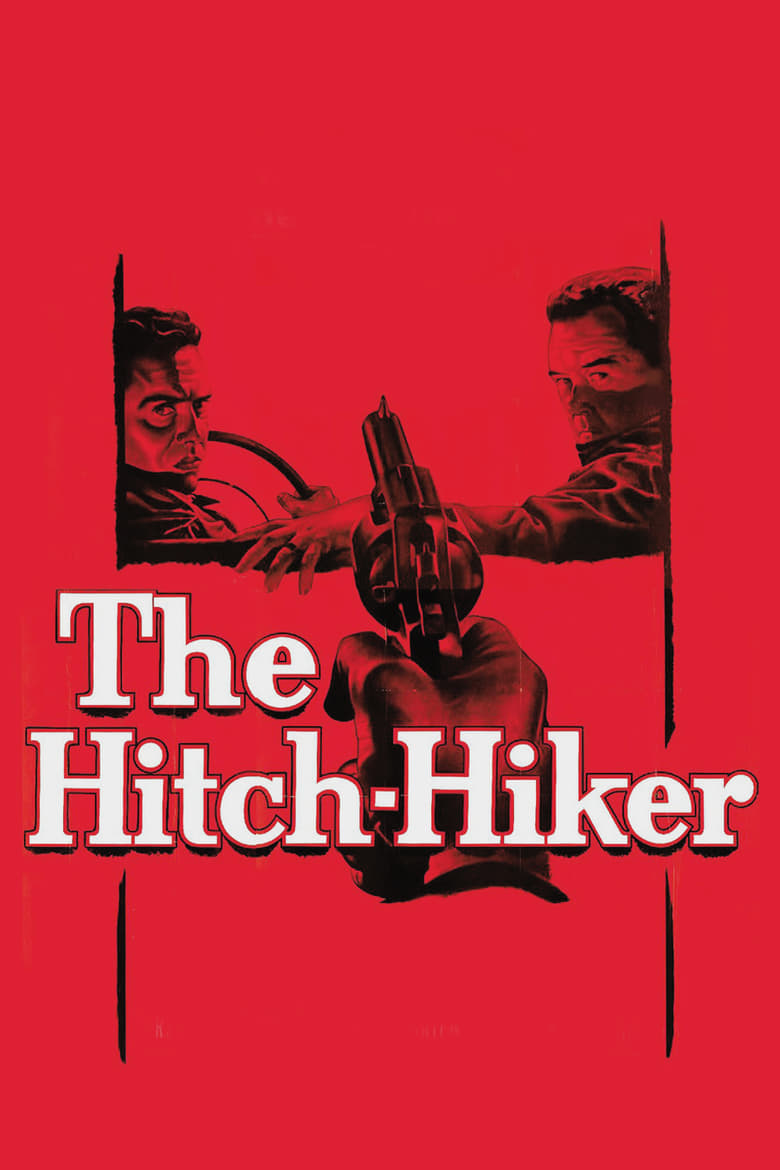
Hitch-Hiker 1953
1953 The Filmakers
★★★★☆ Recommended
Film Noir · 71 minutes · Black & White

Hitch-Hiker

Directed by Ida Lupino
Year 1953
Runtime 71 min
Studio The Filmakers
TMDB 6.8 / 10
"Two men on a fishing trip become prisoners of the road."

Roy Collins and Gilbert Bowen are old friends driving south through California toward a Mexico fishing vacation when they make the mistake of stopping for a hitchhiker. The man they pick up is Emmett Myers, a wanted serial killer moving down the Baja peninsula, and within moments of entering the car he has a gun at their backs. Myers is not a figure of psychological mystery – he is a predator of settled conviction, distinguished by one eye that never fully closes, which means his captives can never be certain whether he sleeps.

As the trio moves deeper into the Mexican desert, Myers uses Roy and Gilbert as cover, forcing them to interact with locals and cross checkpoints while he sits behind them with the pistol. The two friends, otherwise ordinary men of the postwar middle class, begin to fracture under the sustained pressure. Each attempts small acts of resistance – a dropped cigarette, a hesitation at a gas station – but Myers reads every move before it becomes action. Captain Alvarado of the Mexican police tracks the trio from the north, assembling the evidence of Myers's passage through murdered witnesses, but the desert geography works against any swift intervention.

The film's formal distinction is its refusal of the domestic. There is no femme fatale, no corrupt institution, and no urban setting to anchor the moral geography. The menace is a single man, the trap is open sky and empty road, and the question the film poses is not whether Myers will be caught but what the prolonged experience of powerlessness costs the two men who survive it.
Classic Noir

The Hitch-Hiker carries the distinction of being the first film noir directed by a woman and the first noir produced by a woman – Lupino working through The Filmakers, the independent company she co-founded. That fact matters not as biographical decoration but because it clarifies the film's structural choices. Lupino strips the genre of its usual feminine object: there is no woman in the film at all. What remains is a study of male vulnerability, conducted with methodical economy in 71 minutes. William Talman's Myers is not a figure of romantic doom but of functional brutality – the eye that never closes functions less as a grotesque touch than as a precise instrument of domination, collapsing the boundary between waking threat and sleeping threat. The film was based on the actual crimes of Billy Cook and was produced during the early years of the Red Scare; Lupino and producer Collier Young had to negotiate FBI cooperation. That institutional context gives the procedural passages their weight. The film argues, quietly and without sentiment, that ordinary men are not equipped for sustained proximity to evil.

– Classic Noir
4 ★★★★☆ Recommended
Credits

The Crew

DirectorIda Lupino
ScreenplayCollier Young
CinematographyNicholas Musuraca
MusicLeith Stevens
EditingDouglas Stewart
Art DirectionAlbert S. D'Agostino
ProducerCollier Young
Performances

The Cast

Close Reading

The Signature Scene

Hitch-Hiker – scene
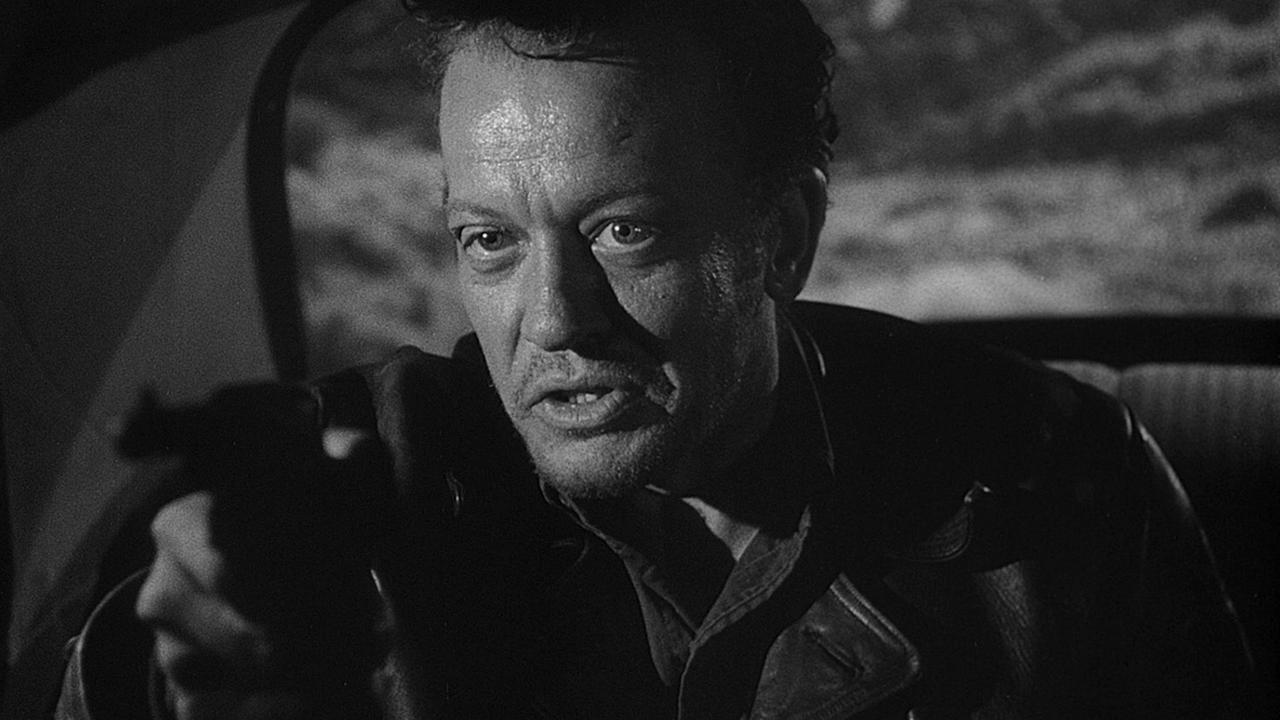
The Sleeping Watch The Eye That Never Closes

Musuraca places the camera at close range on Myers's face as he appears to rest in the back seat, the frame tilted slightly to isolate his head against the dark interior of the car. Light enters from the passenger window at a low horizontal angle, cutting across the orbital bone and leaving the jawline in shadow. The unclosing eye catches that light and returns it flat and without depth, the pupil indistinguishable in the glare. Roy and Gilbert occupy the foreground in soft focus, their heads turned just enough to watch Myers without appearing to watch him – a geometry of surveillance and counter-surveillance conducted entirely through the composition of a single shot.

The scene does what the film as a whole does: it relocates the source of dread from event to duration. Myers need not act. His eye, open or seemingly open, is sufficient to immobilize the two men in the front seat. Lupino and Musuraca understand that the real subject of the film is not the threat of death but the exhaustion of waiting for it – the way sustained powerlessness reshapes men who consider themselves competent, capable, and free.

Visual Language

The Cinematography

🎞️
Nicholas Musuraca – Director of Photography

Nicholas Musuraca, whose work on Cat People and Out of the Past established his command of shadow as psychological material, here faces a different problem: the Baja desert offers almost no architecture, no city geometry, and very little darkness. His solution is to treat the car interior as a sealed world and the landscape outside it as a bleached and indifferent void. Shooting on location in Baja California and supplementing with studio work, Musuraca uses tight focal lengths to compress the space inside the vehicle until the three men seem physically fused by proximity and tension. Exterior shots deploy high-contrast printing to drain the desert of warmth, making the open road feel as claustrophobic as any urban alley. When shadow does appear – at checkpoints, inside buildings, along arroyo walls at dusk – Musuraca uses it precisely to mark the boundary between the world that can help Roy and Gilbert and the world that cannot reach them. The cinematography's moral logic is spatial: confinement is everywhere, relief is always just outside the frame.

In the Catalogue

Themes & Motifs

Availability

Where to Watch

Also in the Directory

See Also