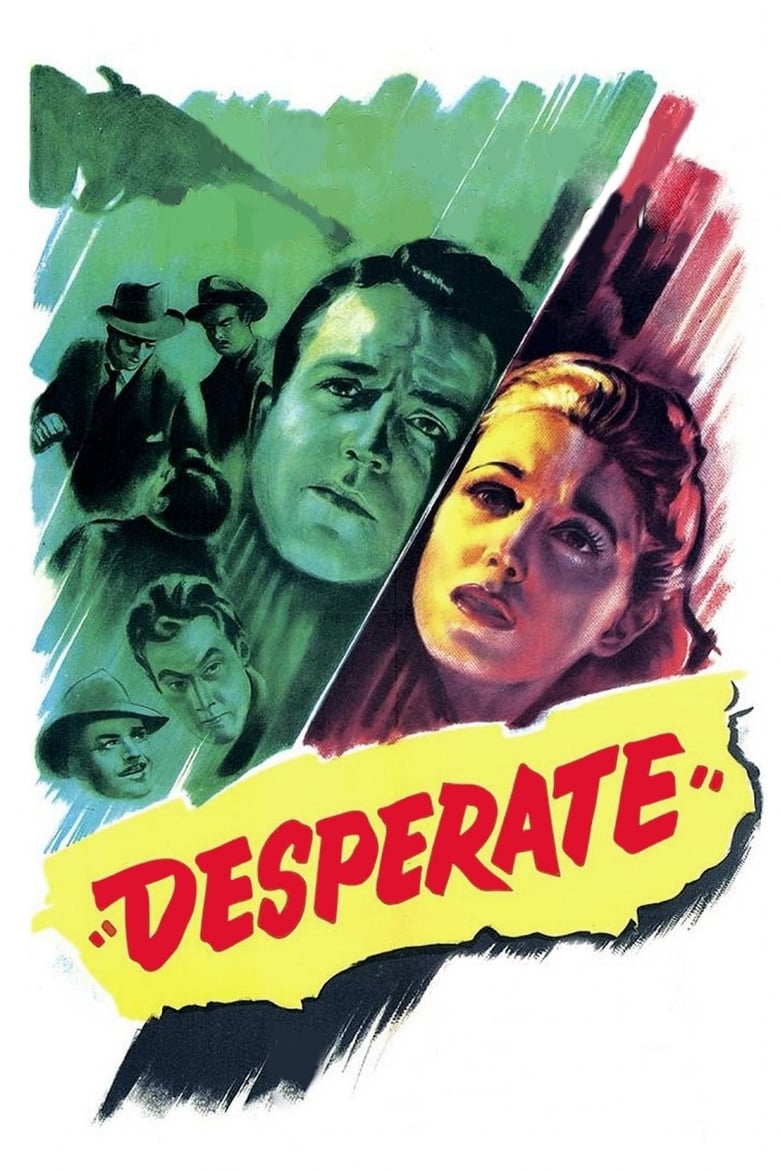
Steve Randall is a young truck driver newly married to Anne, content with modest ambitions and a clean record. When a former acquaintance, Walt Radak, pressures him into hauling what turns out to be stolen goods, the job goes violently wrong: a policeman is killed and Radak's brother is arrested at the scene. Steve, appalled and desperate to distance himself from the crime, flees with Anne before Radak can silence him permanently.
Radak, a cold and methodical criminal played by Raymond Burr with considerable menace, pursues Steve and Anne across a nocturnal urban landscape. Because Radak's brother now faces execution for the killing, Radak is determined that Steve will not testify or survive long enough to matter. The couple moves through a series of temporary shelters and uneasy alliances, trusting no one, while the police close in from one direction and Radak's men from the other. Anne's pregnancy sharpens the stakes without softening the moral geometry: Steve's choices have consequences that extend beyond his own survival.
Desperate belongs to the compressed, low-budget noir cycle that RKO sustained through the late 1940s, films built around the logic of entrapment rather than investigation. Anthony Mann, already developing the visual grammar he would refine in T-Men and Raw Deal, uses the film's short runtime as a structural asset, denying both characters and audience any space to breathe. The wrong-man premise is familiar, but the film's interest lies less in plot mechanics than in how ordinary domestic life dissolves under criminal pressure.
Desperate arrived in 1947 as one of several lean RKO noirs that Anthony Mann directed in rapid succession, and it stands as an early indicator of what distinguished him from journeymen working the same territory. The film's premise – an innocent man conscripted into crime by a sociopathic gangster – is generic enough, but Mann's handling of spatial constriction and escalating dread gives it a consistency of tone that transcends its modest budget. Raymond Burr, not yet typecast as a defender, is genuinely unsettling here: his Radak operates on a logic of cold arithmetic rather than passion, which makes him more disturbing than a volatile villain would be. The film also reflects a postwar anxiety about the fragility of domestic normalcy, a concern running through much American noir of this period. Ordinary men did not need to be corrupt to be destroyed; proximity to corruption was sufficient. Mann would explore this territory with greater resources and depth in later work, but Desperate is a precise, economical statement of his thematic concerns.
– Classic Noir
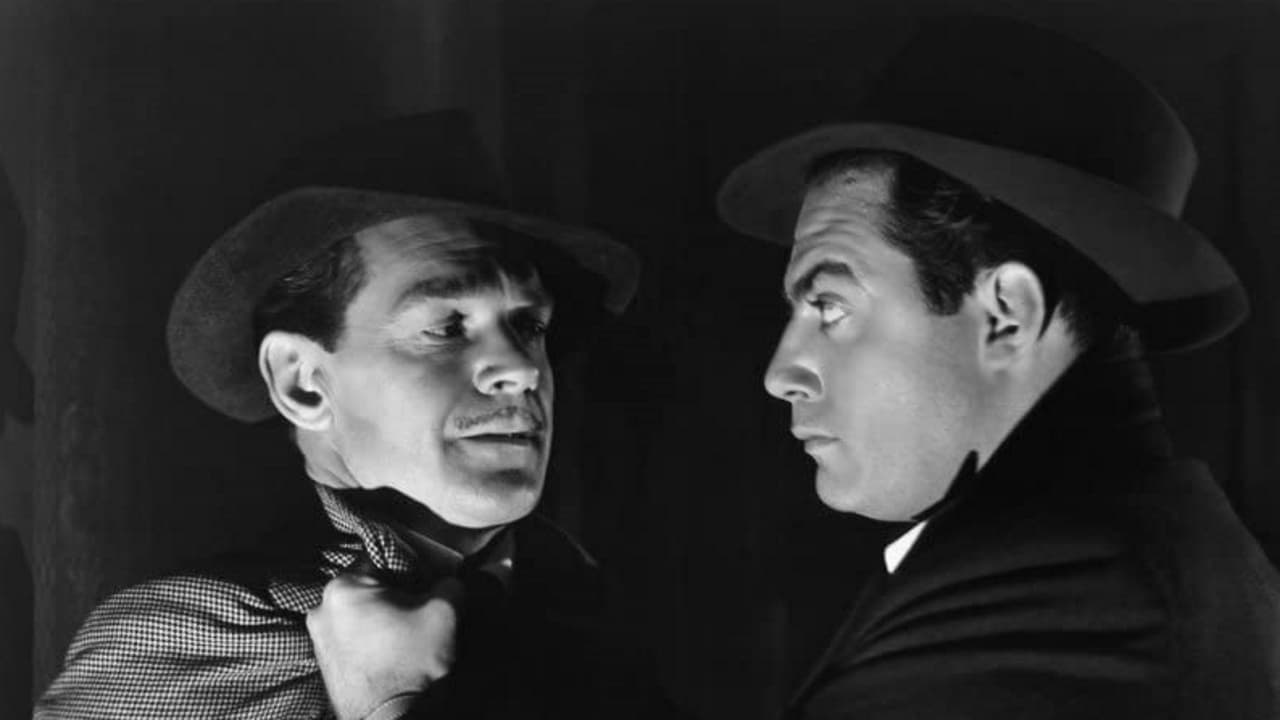
Mann and cinematographer George E. Diskant stage the scene around a single suspended lamp that swings in a slow arc above Steve, casting the assembled gangsters in and out of shadow with each pass. The camera holds at a low angle, making Burr's Radak loom over the frame while Steve is pressed down and diminished. Shadow patterns rotate across the walls like a slow clock, giving the violence a rhythmic, almost mechanical quality. The light source is diegetic and physically present, yet Diskant uses it to produce an expressionist effect that feels entirely earned within the scene's logic.
The swinging lamp does more than create atmosphere: it externalizes Steve's disorientation and the cyclical trap he has entered. There is no exit visible in the frame, no door, no window, only the rotating dark and the faces of men who have already decided his fate. The scene establishes early that Steve's innocence is legally meaningful but morally insufficient – the world Radak operates in does not negotiate with innocence, and the film will not pretend otherwise.
George E. Diskant was one of the more underappreciated cinematographers working the low-budget noir circuit, and Desperate gives him material well suited to his strengths. Shooting on studio interiors with constrained resources, Diskant relies on hard, directional light sources – single practicals, bare overhead fixtures – rather than the diffused glamour of higher-budget productions. The result is a visual scheme in which faces are frequently half-obscured and architectural space feels compressed and hostile. Diskant favors low camera placements that distort the apparent scale of figures, making authority figures physically dominant within the frame and the protagonist perpetually diminished. His shadow work is functional rather than decorative: shadows indicate danger and enclosure rather than simply mood. This approach reinforces Mann's central argument – that the world Steve has stumbled into operates by its own spatial rules, rules that were in place long before he arrived and will persist after him. The film's visual language serves its moral logic precisely because neither offers the protagonist any margin.
The Criterion Channel has featured Anthony Mann noir packages and offers the most reliable print quality for this era of RKO productions.
TubiFreeTubi carries a number of RKO noirs from this period at no cost, though print quality may vary; confirm current availability before viewing.
Archive.orgFreeAs a public domain title, Desperate is available on Archive.org, though transfers differ widely in condition.