Michael David Mason (Gerald Mohr), a drifter with a talent for reinvention, assumes the identity of Louis Deverman, a small-time operator whose death has gone unnoticed by the criminal network that employed him. Mason's plan is simple: trade on Deverman's name long enough to collect whatever money is owed and disappear. Standing in his way is Paula Warren (Liz Renay), a woman with her own claims on Deverman's past, and Edith Dale (Stephanie Farnay), whose connection to the dead man runs deeper than Mason initially calculates.
Lt. George Caddell (Harry Lauter) and Det. Lt. Art Joslin (Ed Erwin) are already circling Deverman's orbit, sensing that the man who has surfaced under that name is not who he claims to be. Meanwhile Nicky Potter (Lew Markman), the syndicate's chief enforcer, grows suspicious of Mason's improvisations. The aliases begin to collapse inward: allegiances shift between Paula and Edith, and Mason finds himself trapped between two law enforcement officers who want the truth and a criminal organization that prefers him silent.
Date with Death works within the tradition of the false-identity thriller, a subgenre that flourished in the late 1950s as the classic noir cycle exhausted its more baroque possibilities. The film strips the premise to its procedural bones, locating its tension not in expressionist shadow play but in the accumulating pressure of a lie that must be sustained across too many contradictory relationships. Whether Mason survives the arithmetic of his deception remains, until the final reel, genuinely open.
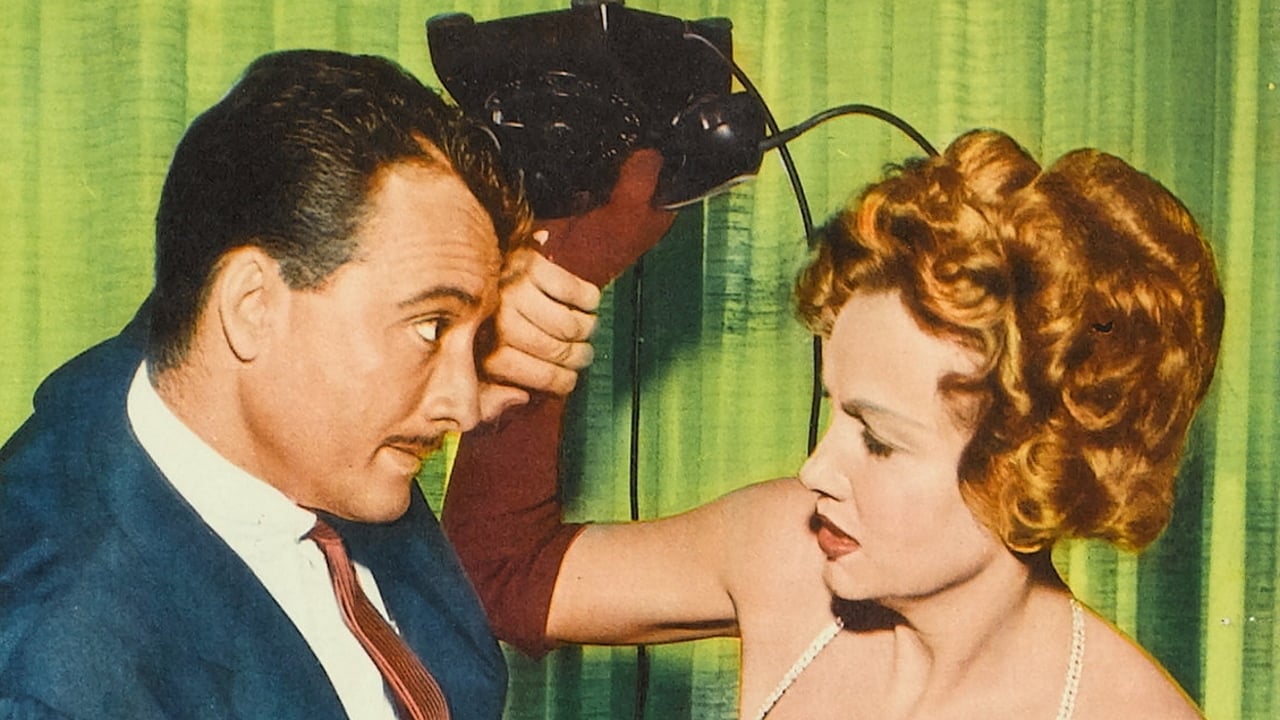
Date with Death is late-cycle noir operating on a modest budget with a clear-eyed understanding of its own limitations. Harold Daniels, whose career was built on Republic programmers and independent productions, keeps the machinery moving without reaching for effects the budget cannot support. Gerald Mohr brings a studied ambivalence to Mason that distinguishes him from the usual B-picture surrogate hero: the character's intelligence is never quite sufficient for the situation, which is precisely the point. Liz Renay, whose off-screen notoriety would later overshadow her film work, delivers a performance of controlled calculation. What the film reveals about its moment is instructive: by 1959, the syndicate thriller had become a recognizable formula, and Daniels makes no pretense of transcending it. The interest lies instead in the procedural honesty – the way institutional law enforcement and organized crime function as parallel bureaucracies, each demanding accurate paperwork. That is a noir argument, even when made quietly.
– Classic Noir
Carl E. Guthrie frames Mason at the center of a cramped interior, Paula Warren to his left and Edith Dale to his right, the geometry of the shot making explicit what the script has only implied: the man occupies a point equidistant from two versions of a story he did not write. The key light is hard and slightly overhead, leaving the lower halves of faces in mild shadow without resorting to the expressionist extremes the film otherwise avoids. A standing lamp in the background creates a secondary point of illumination that separates the two women in the frame without quite connecting them.
The scene functions as the film's structural hinge. Until this point Mason has managed his double identity through spatial separation, keeping the women in different narrative compartments. The forced cohabitation of the frame dismantles that strategy visually before the dialogue catches up. What is revealed is not merely a plot complication but the film's central argument: identity borrowed under pressure will eventually be called in, and the interest charges are paid in exposure rather than currency.
Carl E. Guthrie, a Warner Bros. contract cinematographer whose credits stretched from the studio system through independent television work, brings a functional classicism to Date with Death that suits both the material and the budget. Working in black and white on what appear to be predominantly studio-built interiors, Guthrie relies on high-contrast key lighting with limited fill, creating pools of definition rather than the deep-focus compositions of the preceding decade's prestige noir. Lens selection stays in the middle range, avoiding the wide-angle distortions that would signal stylistic ambition the film does not claim. Shadow work is disciplined rather than decorative: darkness accumulates at the edges of frames to suggest confinement without the theatricality of a Lang or a Tourneur. The net effect is a visual register that mirrors the narrative's moral logic – a world that is not expressionistically corrupt but merely inadequately lit, where the truth is obscured by ordinary shadow rather than by design.
Date with Death is in the public domain and streams in full on the Internet Archive, making it the most immediate and cost-free option available.
TubiFreeTubi has carried late-1950s independent noir of this type; availability may vary by region and is worth confirming before viewing.
Amazon Prime VideoSubscriptionBudget and independent titles from this era have appeared on Prime Video through third-party channels; confirm current availability before subscribing.