Films People Pull a Fast One Night Beat Reading Room On TV Shop
Vice Raid 1959
1959 Edward Small Productions
★★★☆☆ Notable
Film Noir · 71 minutes · Black & White

Vice Raid

Directed by Edward L. Cahn
Year 1959
Runtime 71 min
Studio Edward Small Productions
TMDB 6.3 / 10
"A city runs on vice, and someone always pays the toll."

In a mid-sized American city, police sergeant Whitey Brandon works a vice detail trying to dismantle a prostitution syndicate operated by Vince Malone, a cold-blooded racketeer with deep connections to corrupt city officials. When Brandon's investigation brings him into contact with Carol Hudson, a young woman caught on the edges of Malone's operation, the case shifts from procedural to personal. Carol is not a willing participant in the racket – she is a woman trapped by circumstance, watching the machinery of exploitation grind forward with institutional indifference.

The stakes sharpen when Carol's younger sister Louise becomes entangled with Malone's organization, giving Brandon both a moral reason and an emotional one to push the investigation past the limits his superiors prefer. Phil Evans, a slippery functionary who serves as Malone's intermediary with the political establishment, complicates every move Brandon makes – evidence disappears, witnesses recant, and the boundary between the police department and the syndicate proves disturbingly permeable. Carol, positioned between Brandon's promise of protection and Malone's capacity for violence, becomes the investigation's most vulnerable instrument.

Vice Raid works within the cycle of late-1950s semi-documentary crime films that treat organized vice as a systemic problem rather than a matter of individual villainy. The film draws on the procedural tradition while centering a female perspective on exploitation that gives it a different moral register than the standard police thriller. Its seventy-one minutes move with efficiency toward a confrontation that implicates institutions as thoroughly as individuals.
Classic Noir

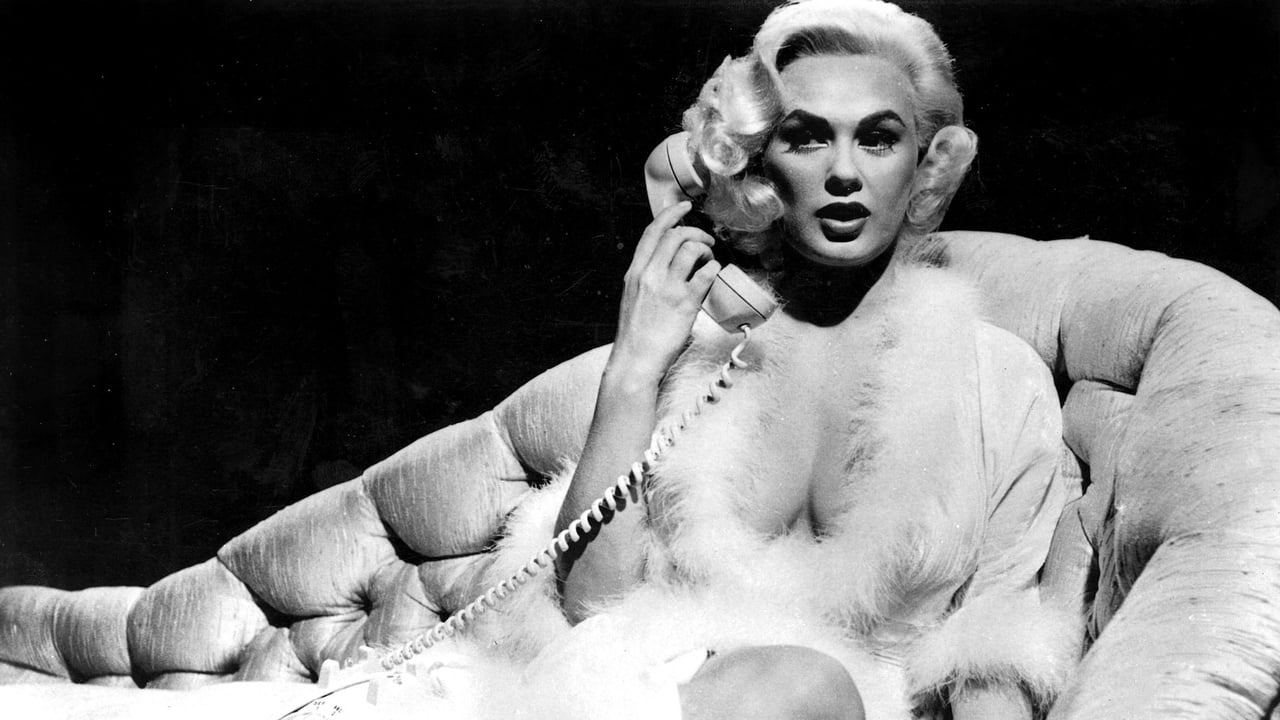
Vice Raid occupies a precise coordinate in late noir's decline and consolidation. Produced by Edward Small and directed by Edward L. Cahn – one of Hollywood's most reliably competent journeymen – the film channels the social-problem energy of the Kefauver era into a modest but focused procedural. What distinguishes it from routine exploitation fare is its treatment of Carol Hudson, played by Mamie Van Doren with more controlled anxiety than her publicity image typically suggested. The film uses her vulnerability not as spectacle but as structural argument: the syndicate functions because respectable institutions accommodate it. Brad Dexter's Malone is effective precisely because he is not theatrical – his menace is bureaucratic and patient. Stanley Cortez, a cinematographer who had shot The Magnificent Ambersons and would later shoot The Night of the Hunter, is working well beneath his ceiling here, but his contribution is still visible in the contrast between the film's institutional interiors and its street-level darkness. Vice Raid belongs to a recognizable category of programmers that documented American organized crime with more moral seriousness than their budgets announced.

– Classic Noir
3 ★★★☆☆ Notable
Credits

The Crew

DirectorEdward L. Cahn
ScreenplayCharles Ellis
CinematographyStanley Cortez
MusicBert Shefter
EditingGrant Whytock
Art DirectionWilliam Glasgow
ProducerRobert E. Kent
Performances

The Cast

Close Reading

The Signature Scene

Vice Raid – scene
The Hotel Corridor Confrontation Light Through a Cracked Door

Cortez angles the camera low along a narrow corridor, a single practical light source at the far end pulling the geometry of the hallway into deep focus while the foreground falls into gradated shadow. Carol stands at the threshold of a half-open door, her face caught in the wedge of light that spills from inside the room – one half illuminated, one half dark, the compositional choice doing the thematic work without underlining it. The frame holds longer than a programmer's rhythm typically allows, the stillness itself a form of pressure.

The scene crystallizes the film's central argument about exposure and complicity. Carol is not yet committed to helping Brandon, and the threshold she occupies is literal as well as moral. The light coming from inside the room belongs to Malone's world; the darkness behind her is the unknown quantity of what cooperation with the police might cost. Cortez's framing denies her a neutral position – she is already partly inside, and the film understands that partial complicity is how syndicate power sustains itself.

Visual Language

The Cinematography

🎞️
Stanley Cortez – Director of Photography

Stanley Cortez brings to Vice Raid a restrained but purposeful visual intelligence that lifts the film above its budget category. Working largely on studio interiors dressed to suggest cheaply maintained urban spaces – hotel rooms, back offices, precinct corridors – Cortez uses hard side-lighting and controlled fill to establish a moral geography in which characters are rarely fully visible and never fully safe. His lens choices favor a slightly compressed middle range that collapses spatial comfort without resorting to wide-angle distortion, a technique that makes even mundane conversations feel subtly constricted. The street sequences, shot with available urban light augmented by portable units, carry the semi-documentary texture that the script's procedural ambitions require. Cortez does not overreach – he is working on a seventy-one-minute picture for a modest independent producer – but his shadow work, particularly in scenes involving Carol Hudson, consistently aligns visual obscurity with moral ambiguity. The cinematography treats darkness not as atmosphere but as information.

In the Catalogue

Themes & Motifs

Availability

Where to Watch

Also in the Directory

See Also