Films People Pull a Fast One Night Beat Reading Room On TV Shop
Dark Tower 1943
1943 Warner Bros. Pictures
★★★☆☆ Notable
Film Noir · 90 minutes · Black & White

Dark Tower

Directed by John Harlow
Year 1943
Runtime 90 min
Studio Warner Bros. Pictures
TMDB 6.2 / 10
"In the glare of the circus ring, jealousy finds its darkest performance."

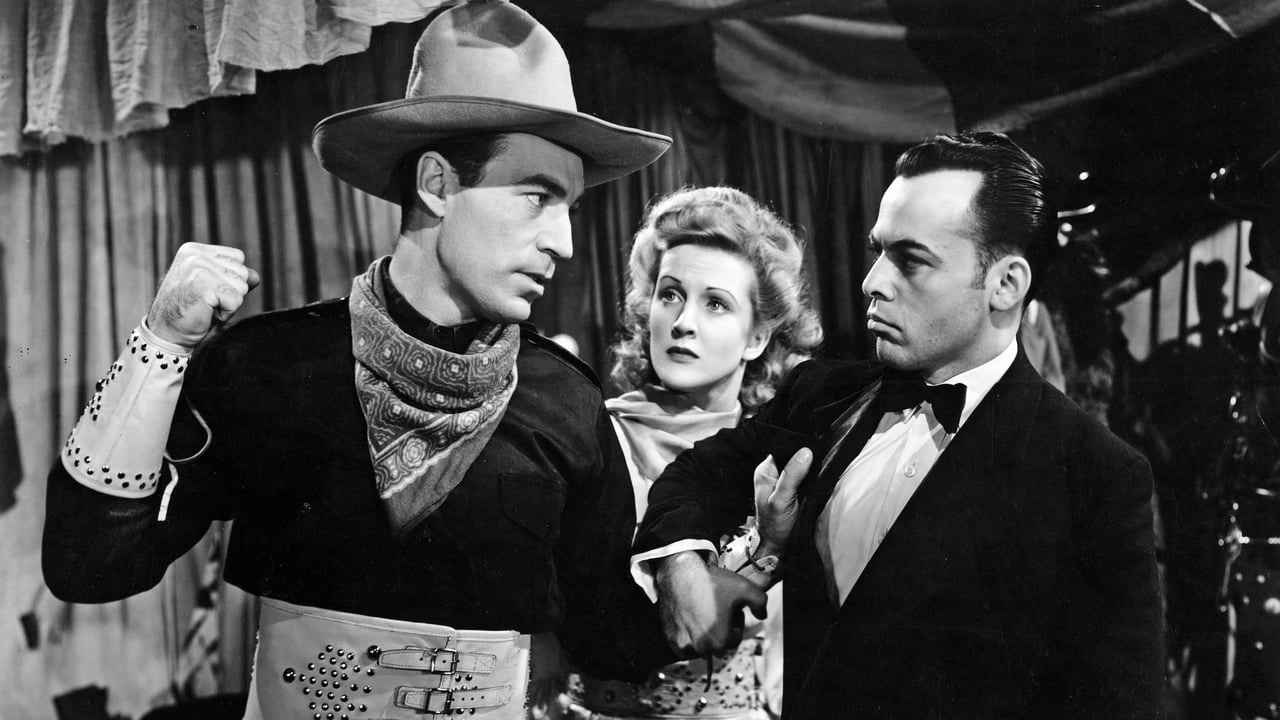
Phil Danton manages a successful circus act built around his brother Tom and Tom's wife Mary, a high-wire and hypnotism troupe that draws crowds across wartime Britain. The partnership holds a fragile equilibrium: Phil loves Mary in silence, Tom performs with dangerous charisma, and Mary navigates her loyalty between two men whose bond is as much rivalry as brotherhood. Into this closed world arrives Stephen Torg, a menacing hypnotist with designs on Mary and a willingness to use his psychological gifts as instruments of coercion.

Torg's influence over Mary deepens with unsettling speed, and the act's internal tensions begin to fracture. Tom, already volatile, grows suspicious of both Torg and Phil, while circus manager Willie Wainwright and his wife Eve watch the deterioration with mounting unease. Jim Towers, a pragmatic figure on the margins, becomes caught in the widening net of accusation and suspicion. When violence enters the picture, the question of who holds genuine power over whom becomes impossible to disentangle from guilt.

Dark Tower belongs to the wartime cycle of British noir that borrowed Hollywood's shadows while inflecting them with a distinctly insular claustrophobia. The circus setting allows the film to treat performance, illusion, and coercion as interchangeable currencies, positioning hypnotic control as an analogue for the manipulations that drive noir's moral universe. The film resists easy resolution, keeping its audience as uncertain about culpability as the characters themselves.
Classic Noir

Dark Tower occupies a minor but legitimate position in the wartime British noir cycle, functioning as evidence that Warner Bros.' transatlantic operations could export not just resources but temperament. John Harlow's direction is workmanlike rather than visionary, yet he understands the circus milieu well enough to exploit its inherent dread: the crowd's gaze, the enforced intimacy of the troupe, the way performance requires submission to another's will. Herbert Lom, in one of his early British roles, brings a cold economy to Torg that the script does not always earn on the page. The hypnotism conceit, which might seem a pulp convenience, functions more seriously as a figure for the coercive dynamics within the love triangle – desire as domination, loyalty as susceptibility. The film does not fully resolve its moral ambiguities, a limitation that also keeps it from feeling schematic. For historians of British wartime cinema it represents a useful data point: noir conventions absorbed and domesticated, the American genre translated into an English register of restraint and social unease.

– Classic Noir
3 ★★★☆☆ Notable
Credits

The Crew

DirectorJohn Harlow
ScreenplayReginald Purdell
CinematographyOtto Heller
EditingTerence Fisher
Performances

The Cast

Close Reading

The Signature Scene

Dark Tower – scene
The Hypnotism Sequence Torg Commands the Dark

Otto Heller frames Torg in close shot, his face bisected by a hard key light that collapses one side into full shadow. The camera holds on his eyes as he addresses Mary, then cuts to a reverse that places her in softer, more diffuse illumination – the lighting itself encoding the asymmetry of power between them. The background is reduced to indistinct studio blackness, eliminating spatial context and trapping both figures in a pocket of enforced intimacy. There is minimal camera movement; the stillness amplifies the psychological pressure.

The scene makes explicit what the film has been arguing in subtler registers throughout: that control in this world is never physical but always psychological, and that the circus, with its trained compliance and staged surrender, is the perfect arena for such arguments. Mary's vulnerability is rendered not through performance alone but through Heller's deliberate choice to flood her face with neutral light while leaving Torg's half-consumed by darkness – a visual proposition about who holds knowledge and who is held.

Visual Language

The Cinematography

🎞️
Otto Heller – Director of Photography

Otto Heller, who would later shoot The Ipcress File (1965) with a very different palette, brings to Dark Tower the controlled studio chiaroscuro he had developed across his Central European career before exile brought him to British production. Working on Warner's Teddington lot, Heller uses hard single-source lighting to carve performers out of deliberately underlit backgrounds, a technique that serves the film's circus setting by mimicking the isolating effect of a spotlight. Shadow falls not decoratively but structurally, marking the boundaries between characters who know and characters who are deceived. His lens choices favor a moderate focal length that keeps faces readable without flattening depth, preserving the sense of enclosed space that the plot demands. The film's moral argument – that manipulation can be invisible, that coercion can wear the face of charm – is underwritten consistently by a cinematographic strategy that uses darkness not as atmosphere but as information.

In the Catalogue

Themes & Motifs

Availability

Where to Watch

Also in the Directory

See Also