Films People Pull a Fast One Night Beat Reading Room On TV Shop
Mr. Perrin and Mr. Traill 1948
1948 Two Cities Films
★★★☆☆ Notable
Film Noir · 92 minutes · Black & White

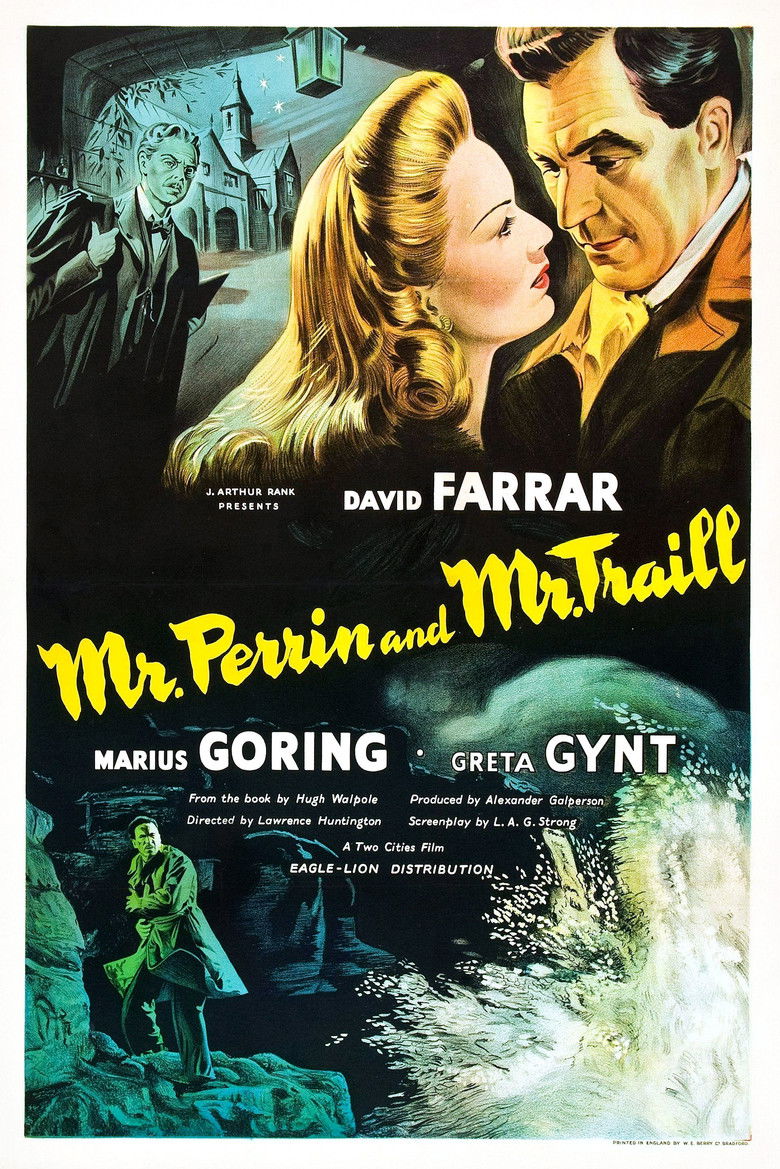
Mr. Perrin and Mr. Traill

Directed by Lawrence Huntington
Year 1948
Runtime 92 min
Studio Two Cities Films
TMDB 7.6 / 10
"Two men share a school, a woman, and a hatred that only one of them will survive."

At a fog-bound English boys' school, Vincent Perrin has spent decades calcifying into the institution's furniture – a Latin master whose thwarted ambitions have curdled into petty authority and social resentment. When the younger David Traill arrives as a games master, vigorous and at ease in a way Perrin has long since forgotten how to be, the older man's carefully maintained equilibrium begins to crack. The school itself – its corridors, its hierarchies, its rituals of small humiliation – functions less as a setting than as a trap.

The arrival of Isobel Lester, a nurse from the nearby town, draws both men into a triangle whose outcome seems inevitable from the first shared glance. Traill pursues her with the confidence of a man who has never had reason to doubt himself; Perrin watches with the fixity of a man who has never had reason to hope. As the term progresses, the film shifts its sympathies carefully, refusing to position either man as simply villain or victim. The school's senior staff, embodied in Moy-Thompson's cold bureaucratic watchfulness, adds a layer of institutional complicity to the private war unfolding beneath it.

Adapted from Hugh Walpole's 1911 novel and relocated into the unease of postwar Britain, Mr. Perrin and Mr. Traill operates at the intersection of psychological study and noir fatalism. The enclosed world of the school amplifies every slight and every desire until the pressure can no longer be contained, and the film's final movements carry the weight of a tragedy long prepared. It sits closer to the British noir of frustrated longing – the darkness of confined men in confined spaces – than to any American counterpart.
Classic Noir

Lawrence Huntington's film is frequently overlooked in surveys of British noir, in part because it refuses the genre's more legible iconography: there are no rain-slicked city streets, no femme fatale in the conventional sense, no criminal underworld. What it offers instead is something arguably more unsettling – the noir of institutional life, in which a man's soul is eroded not by a single catastrophic choice but by years of accumulated diminishment. Marius Goring's performance as Perrin is the film's true argument: a portrait of psychological deterioration rendered with precise, uncomfortable specificity. David Farrar, so effective in Black Narcissus a year earlier, provides the necessary counterweight, embodying the kind of effortless social confidence that corrodes Perrin's self-possession simply by existing. Erwin Hillier's cinematography finds shadow within the most mundane institutional interiors, and the film understands that the closed world of the English public school – with its petty fiefdoms and suppressed violence – is its own species of noir environment. The film positions postwar British anxiety not in bombed cities but in the suffocating continuity of old structures that the war failed to alter.

– Classic Noir
3 ★★★☆☆ Notable
Credits

The Crew

DirectorLawrence Huntington
ScreenplayT. J. Morrison
CinematographyErwin Hillier
MusicAllan Gray
EditingRalph Kemplen
Art DirectionThomas N. Morahan
ProducerAlexander Galperson
Performances

The Cast

Close Reading

The Signature Scene

Mr. Perrin and Mr. Traill – scene
The Clifftop Confrontation Two Men, One Edge

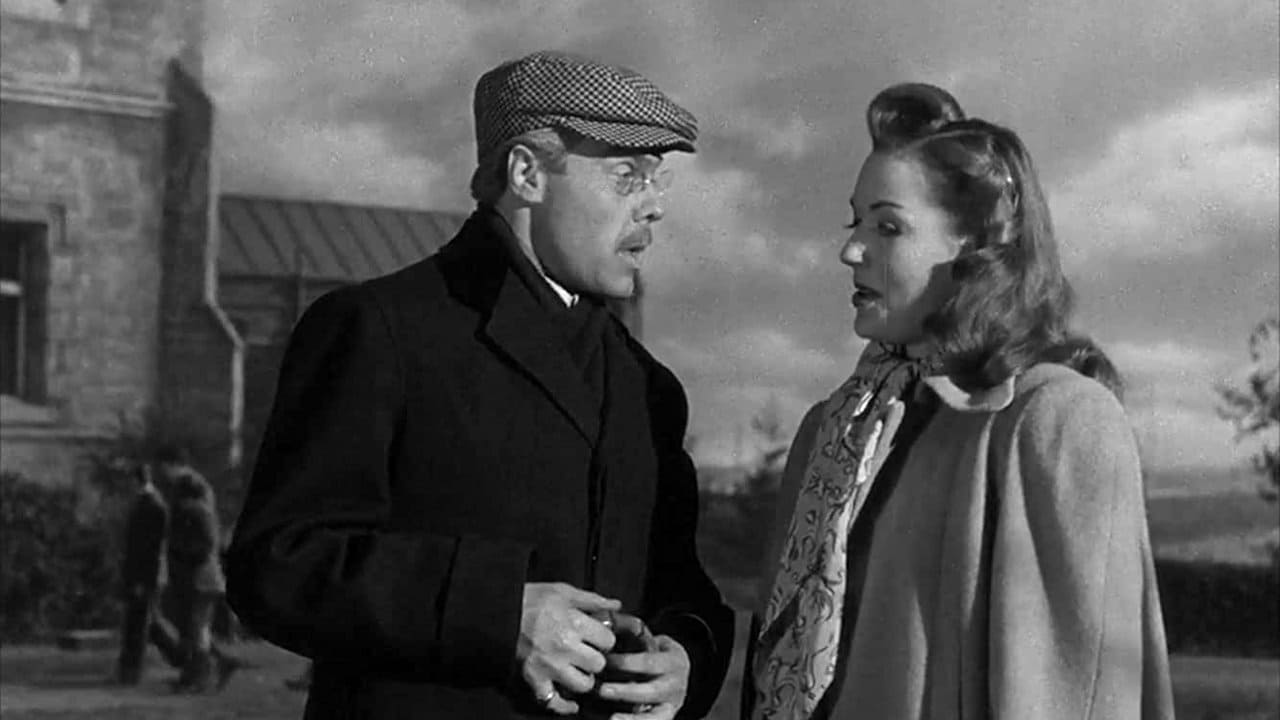
Huntington and Hillier place the two men against a pale, overcast sky that offers no horizon a viewer can trust. The camera holds at a middle distance, refusing the intimacy of close-up, so that the figures are registered as shapes against emptiness rather than faces in dialogue. The light is flat and coastal – the kind that flattens shadow rather than deepening it, which paradoxically makes every feature more exposed. The composition keeps the drop implied rather than shown; the danger is spatial and psychological before it becomes physical.

The scene crystallises the film's central argument about the relationship between self-knowledge and violence. Perrin has arrived at a point where his humiliation is total and his options have narrowed to a single terrible one; the sequence reveals that what he is enacting is not a crime of passion in any operatic sense but the logical endpoint of a lifetime's repression. The open sky above him makes the interiority more suffocating, not less.

Visual Language

The Cinematography

🎞️
Erwin Hillier – Director of Photography

Erwin Hillier, working here in the same period as his contributions to A Canterbury Tale and I Know Where I'm Going, brings a disciplined restraint to Mr. Perrin and Mr. Traill that suits the film's thematic argument precisely. Shooting largely on studio sets constructed to suggest the school's oppressive interiors, Hillier uses low-key lighting not for expressionist flourish but for the systematic reinforcement of confinement – corridors swallowed by shadow at their ends, common rooms in which light sources are always partial and slightly wrong. His lens choices favour a moderate focal length that keeps the figures embedded in their environments rather than isolated from them, a technique that prevents Perrin from ever becoming simply a victim of circumstance rather than a product of place. When the film does move outdoors, the coastal exteriors are handled with a cooler, more diffuse light that reads as liberation made threatening rather than relief.

In the Catalogue

Themes & Motifs

Availability

Where to Watch

Also in the Directory

See Also