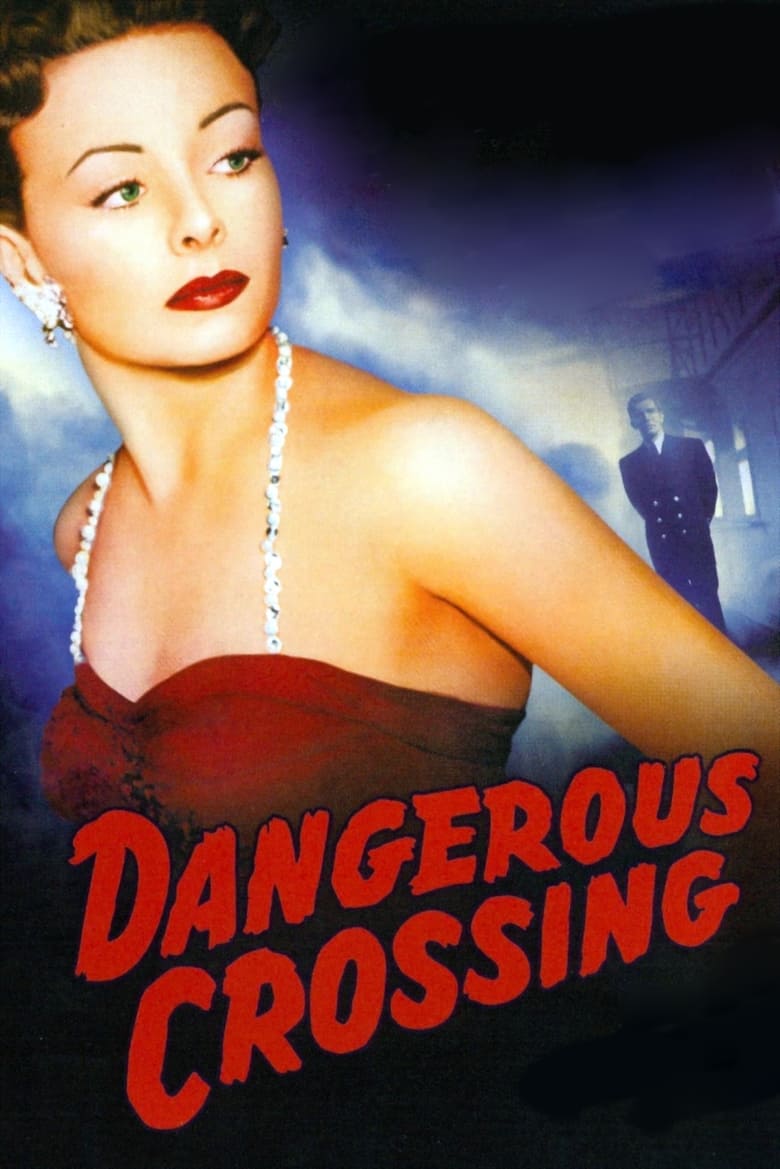
Ruth Stanton has been married only hours when she boards an ocean liner bound for Europe with her new husband, John Bowman. Before the ship clears port, John vanishes – and when Ruth appeals to the crew, she is met with a more unsettling problem: the passenger manifest carries no record of John Bowman, and no one aboard can confirm he ever existed. Ruth is left alone in a cabin booked for one, her marriage reduced to a certificate no one will credit.
Ship's doctor Paul Manning takes a professional interest in Ruth's increasingly desperate claims, uncertain whether she is a woman in genuine danger or one suffering a breakdown under the strain of a hasty marriage. The investigation draws in a small cast of shipboard characters – a suspicious stewardess, a watchful fellow passenger, and a ship's officer whose cooperation never quite extends to belief – and as Manning peels back the layers of Ruth's account, the possibility hardens that someone aboard has a precise interest in her being thought unstable.
Dangerous Crossing belongs to the confined-space suspense tradition, stranding its protagonist in a world where the architecture of her own life has been quietly dismantled around her. The film works the boundary between psychological thriller and noir, drawing on the postwar decade's anxiety about identity, trust, and the violence that can be embedded in intimacy. Whether Ruth is a victim, a mark, or something more compromised is the question the film holds in careful suspension for most of its seventy-five minutes.
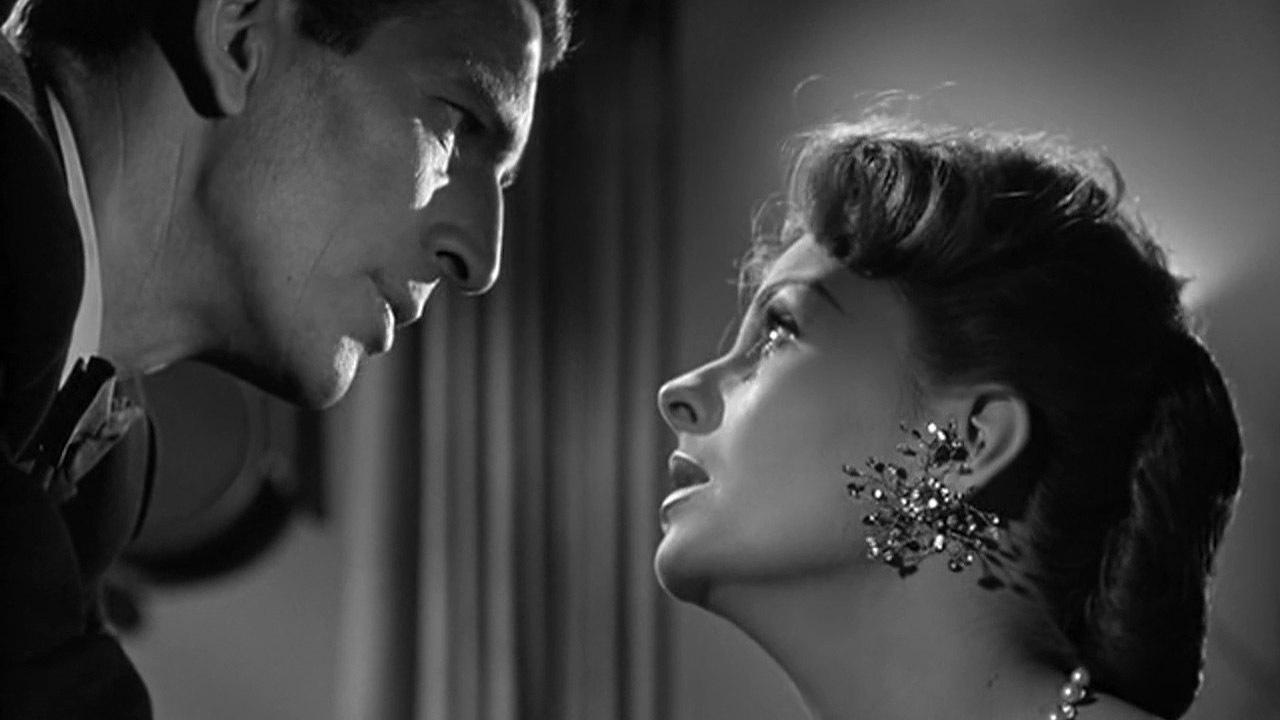
Dangerous Crossing is a minor but coherent entry in the cycle of mid-century Fox thrillers that tested the noir sensibility against enclosed, procedural settings. Joseph M. Newman directs with economy rather than invention, keeping the film's confined ocean-liner geography working in the service of Ruth's mounting isolation. Jeanne Crain carries the film's credibility problem – a woman whose testimony is her only asset – with restraint, avoiding the hysteria the script occasionally invites. Michael Rennie brings a measured ambiguity to Manning that the film needs; his professional detachment could read as skepticism, concern, or something more calculated depending on where the viewer stands at any given moment. Adapted from John Dickson Carr's radio play Cabin B-13, the film inherits a puzzle-box structure that prioritizes mechanism over atmosphere, which limits its claim on the genre's deeper registers. What it captures, almost incidentally, is something true about the postwar marital compact: the ease with which a woman's account of her own experience could be reclassified as symptom rather than evidence.
– Classic Noir
The scene turns on a negative – the absence of John Bowman's name in the ship's register. Newman and LaShelle frame Ruth at the purser's desk in a medium shot that places her slightly off-center, the ledger occupying the foreground in sharp focus while her face softens behind it. The light is institutional, overhead and flat, the kind that offers no shadows to hide in. As the purser traces his finger down the column of names, the camera holds on Ruth rather than the page, making her the text being read.
The blocking argues something the dialogue does not quite say: that Ruth is already being processed as a problem of documentation rather than a person in distress. The frame positions her as a claimant without standing, a woman whose account of reality has already been weighed against the ship's paperwork and found wanting. It is the film's clearest statement of its central anxiety – that in certain institutional spaces, the woman without a corroborating witness simply does not register.
Joseph LaShelle, who had taken the Academy Award for Laura nine years earlier, brings a controlled professionalism to Dangerous Crossing that the film's modest budget does not always deserve. Working largely on studio-constructed sets that simulate the liner's corridors, cabins, and public rooms, LaShelle uses the ship's interior geometry – narrow passageways, low ceilings, porthole frames – as natural vignetting, compressing Ruth's world without resorting to expressionist distortion. His lighting schema favors a cool, high-key register for the ship's official spaces, reserving deeper contrast for the moments when Ruth is alone with her doubt. The effect is clinical rather than shadowy, which suits the film's argument: the threat here is not the darkness of the back alley but the bright, well-ordered world that refuses to credit what a woman reports. LaShelle's lens choices keep focal planes tight in conversation scenes, isolating faces against the blur of shipboard activity and reinforcing the sense that each character is being examined in isolation from the social fabric around them.
Tubi has carried Dangerous Crossing as part of its rotating classic thriller catalog; verify current availability before viewing.
Archive.orgFreeThe film has circulated in the public domain and may be available via the Internet Archive, though print quality varies by upload.
Amazon Prime VideoSubscriptionAvailable periodically through Prime Video's classic film catalog; confirmation of current licensing is advised.