Films People Pull a Fast One Night Beat Reading Room On TV Shop
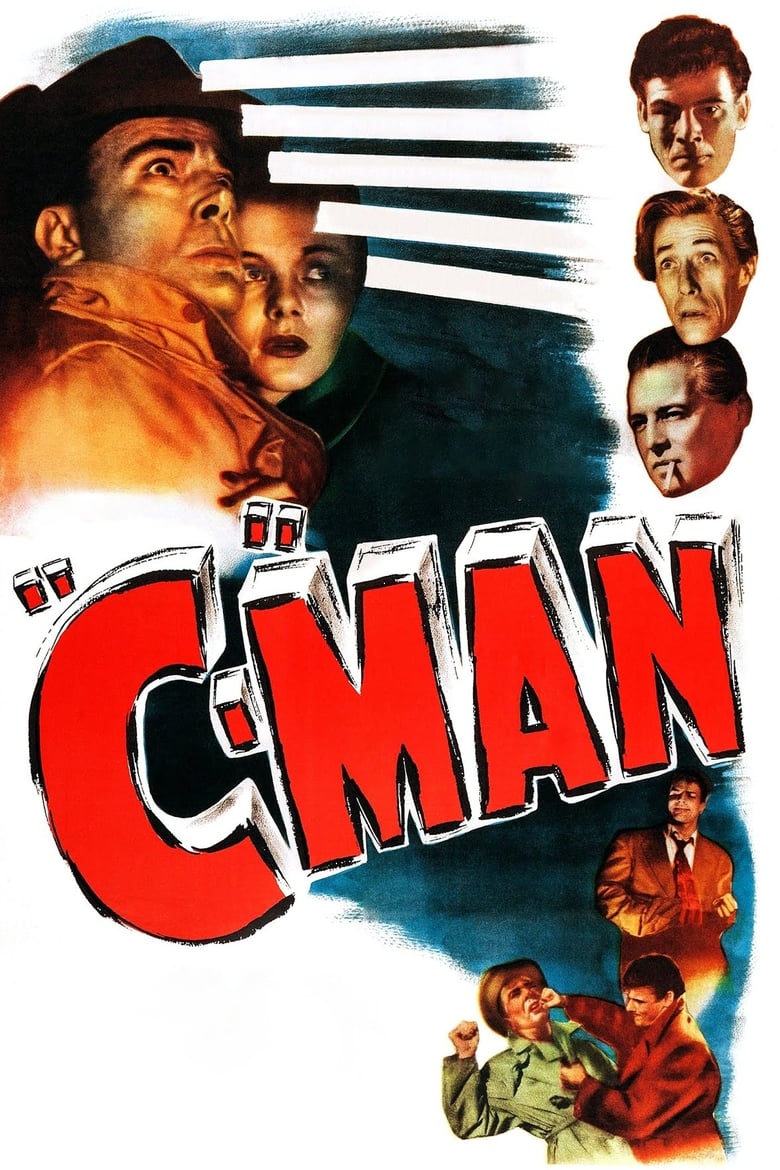
C-Man 1949
1949 Laurel Films
★★★☆☆ Notable
Film Noir · 75 minutes · Black & White

C-Man

Directed by Joseph Lerner
Year 1949
Runtime 75 min
Studio Laurel Films
TMDB 5.3 / 10
"A customs agent follows a dead man's trail into the city's lowest rooms."

When a fellow agent is murdered at the New York docks while investigating a smuggling operation, Customs Inspector Cliff Holden – working under the alias William Harrah – takes the case personally and goes undercover to identify those responsible. The contraband pipeline runs through a network of small operators and intermediaries, and Holden must work his way inward, concealing his identity among men who have little reason to trust strangers and every reason to eliminate them.

His path draws him into contact with Doc Spencer, a gaunt and calculating figure who serves the criminal organization as a fixer, and with Kathe van Bourne, a woman whose loyalties remain ambiguous long enough to complicate Holden's progress. As Holden moves deeper into the syndicate's operations, the line between his cover identity and his actual self begins to blur, and the alliances he forms carry their own risks of exposure and betrayal.

C-Man belongs to the cycle of semidocumentary crime films that flourished in American cinema during the late 1940s, drawing on the procedural format to lend authenticity to its urban underworld. Shot largely on New York locations, it situates federal law enforcement against a backdrop of real streets and docks, grounding its moral stakes in the postwar anxiety about organized crime and the fragility of civic order.
Classic Noir

C-Man is a lean, unfussy entry in the procedural wing of American noir, produced by Laurel Films on a budget that forces economy in nearly every department – and largely turns that constraint to its advantage. Joseph Lerner keeps the pace deliberate without allowing it to go slack, and the New York locations give the film a gritty material credibility that studio-bound productions of the era could not replicate. Dean Jagger brings an unusual quality of exhaustion to Holden: this is not a romantic hero but a working federal agent who understands the cost of the job. John Carradine, cast against the more flamboyant register he sometimes occupied, plays Doc Spencer with a cold restraint that makes the character genuinely unsettling. The film does not pretend to psychological depth it cannot sustain, but within its 75 minutes it constructs a coherent argument about institutional duty and personal risk that places it comfortably within the serious lower tier of the genre.

– Classic Noir
3 ★★★☆☆ Notable
Credits

The Crew

DirectorJoseph Lerner
ScreenplayBerne Giler
CinematographyGerald Hirschfeld
MusicGail Kubik
EditingGeraldine Lerner
Performances

The Cast

Close Reading

The Signature Scene

C-Man – scene
The Waterfront Approach Shadow at the Pier Gate

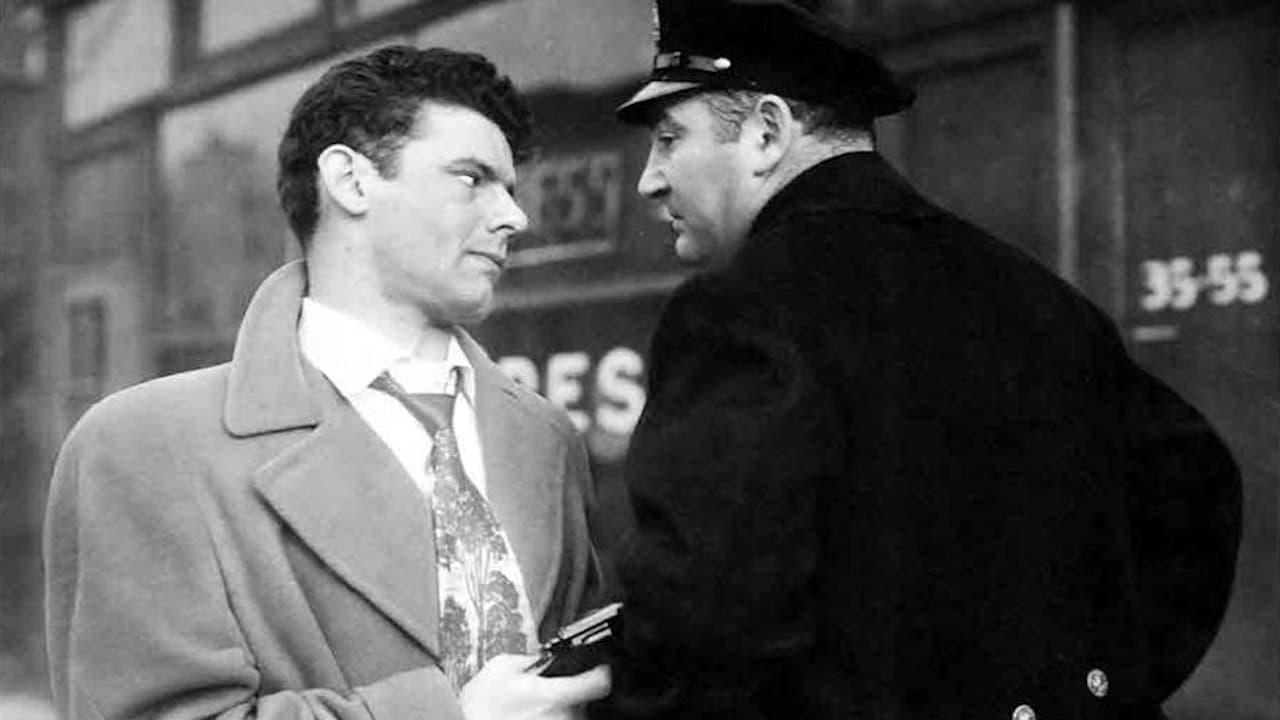
Gerald Hirschfeld frames Holden's approach to the docks at night with the camera held low, so that the pier infrastructure – iron stanchions, stacked crates, overhead cable lines – crowds the upper portion of the frame and compresses the available space. Light arrives from industrial sources off-screen, casting long parallel shadows across wet concrete. Holden moves through this geometry in partial silhouette, his form intersected by shadow bars that the camera holds steady rather than tracks, so that the figure passes through zones of darkness rather than being accompanied by the light.

The compositional choice is not decorative. It situates Holden inside a structure he does not control, a man entering a system whose rules he can only partially read. The shadows that cross him are the shadows of the operation itself – its infrastructure, its reach, its indifference to the individual. What the scene establishes is that procedure, however disciplined, cannot fully protect its practitioner from the logic of the environment he enters.

Visual Language

The Cinematography

🎞️
Gerald Hirschfeld – Director of Photography

Gerald Hirschfeld, early in a career that would later include Goodbye, Columbus and Young Frankenstein, shoots C-Man with the documentary-inflected realism that defined the semidocumentary noir cycle. Working on New York locations with available architecture and practical light sources, Hirschfeld favors medium-wide framings that let the city's actual geometry impose on the action rather than constructing a stylized version of it. Shadow work is functional rather than expressionist: darkness marks danger zones and moral ambiguity without announcing itself as atmosphere. Interior scenes use tight, high-contrast setups that isolate faces and hands, directing attention to transaction and deception. Lens choices stay in the middle range, avoiding the distorting wide angles that a more theatrical production might deploy. The overall effect is of a camera that trusts the material and the locations to carry the film's moral logic, subordinating visual style to the procedural argument the film is making about how crime operates inside recognizable American spaces.

In the Catalogue

Themes & Motifs

Availability

Where to Watch

Also in the Directory

See Also