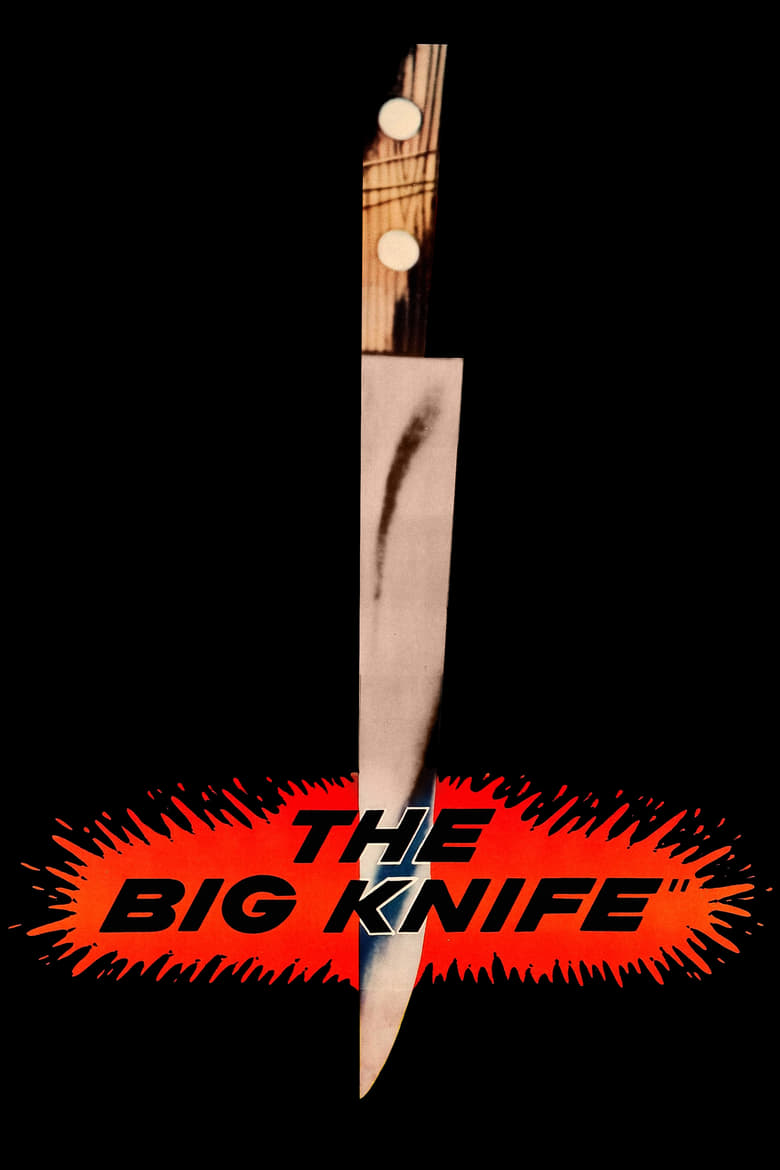
Charles Castle is a major Hollywood film star living under the thumb of Stanley Hoff, the studio chief who holds his career – and a far darker secret – in an iron grip. Castle's wife Marion has grown cold to the life they lead in their Bel Air home, a house that functions less as a refuge than as a gilded cage. When Marion arrives to negotiate the terms of their fractured marriage, she finds a man already besieged: by Hoff's demands that he sign a new long-term contract, by Smiley Coy, Hoff's polished enforcer, and by the weight of a past crime Castle has helped the studio bury.
The crime at the center of the story is a hit-and-run killing that Castle was involved in years earlier, with the studio covering it up to protect its investment. Now Dixie Evans, a woman with too much knowledge and too little leverage, has become an inconvenient liability in Hoff's calculation. As Hoff tightens the screws and Coy moves quietly through the margins of every scene, Castle finds himself caught between his last remaining moral instincts and the machinery of an industry that has purchased his conscience outright. His agent Nat Danziger counsels capitulation; Marion demands integrity; the gossip columnist Patty Benedict circles with practiced patience.
Adapted from Clifford Odets's stage play of the same name, the film belongs to a small and caustic subset of noir that turns the camera on Hollywood itself, treating the studio system as a species of organized crime. The pressure never dissipates – every conversation is a negotiation, every room a trap – and the film builds toward a reckoning that strips away whatever illusions remain about the cost of selling oneself by degrees.
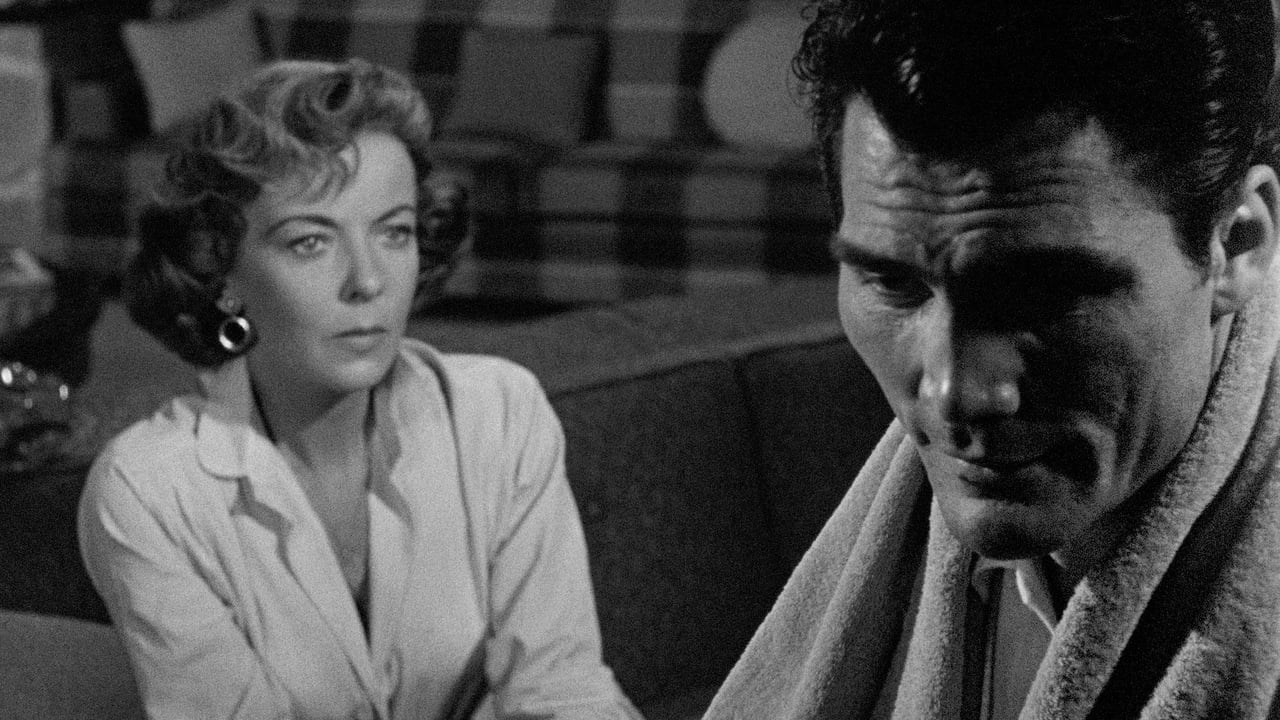
Robert Aldrich's adaptation of Clifford Odets's Broadway play arrives on screen fully committed to its theatrical origins, and this is both a limitation and a source of genuine power. The film is confined, almost suffocatingly so, to the Castle residence and the social rituals that play out within it – but Aldrich and cinematographer Ernest Laszlo convert that confinement into a formal argument: the house is a cell, and every elegant surface conceals a wall. What distinguishes the film within the noir canon is its target. Where most noirs locate corruption in the criminal world or in private moral failure, this one implicates the studio system directly, treating a major entertainment corporation as the syndicate that controls, blackmails, and ultimately destroys its own product. Rod Steiger's Hoff is one of the period's most precisely observed portraits of institutional power – charming, wounded, and ruthless in the same breath. The film belongs to an era when American cinema was beginning, cautiously, to examine its own conditions of production.
– Classic Noir
Aldrich and Laszlo position Steiger's Hoff at the center of the frame in a wide shot that makes the room feel small rather than spacious – furniture pushed to the edges, other characters displaced to the periphery where shadow begins. The light source is high and lateral, cutting across Hoff's face so that his expressions shift between visibility and near-obscurity as he moves. When the camera closes on Palance's Castle, the framing tightens to the point of compression, as though the architecture itself is responding to the pressure of the conversation.
The scene distills the film's central argument: that the power Hoff exercises is not simply financial but psychological, built from a detailed inventory of Castle's weaknesses and desires. Castle cannot leave the frame without Hoff filling it again. The blocking makes dominance visual, and the moment when Castle finally turns away is less a gesture of defiance than an admission that the room – and everything it represents – no longer belongs to him.
Ernest Laszlo shoots the film almost entirely on studio-constructed interiors, and the apparent limitation becomes a deliberate tool. Working in high-contrast black and white, Laszlo uses a relatively short focal length to keep backgrounds present and pressing – no character is ever truly alone in the frame, even in ostensibly private moments. Shadow is not decorative here but architectural: it defines the portions of each room that remain beyond Castle's control, the corners where Coy lingers or where an unanswered telephone sits. Laszlo varies the ceiling height implicitly through lighting, making the same room feel more or less confining depending on the power dynamics of the scene in progress. There are no location exteriors of consequence; the outside world is kept offscreen by design, reinforcing the sense that Castle's world has contracted to this house, this contract, and this conversation. The visual language consistently serves the film's moral logic: the more enclosed the frame, the less freedom remains.
The most reliably curated presentation of the film, with stable picture quality drawn from a clean archival print.
TubiFreeAvailable at no cost with advertisements; print quality may vary, but it offers the most accessible entry point for new viewers.
Amazon Prime VideoRentalAvailable for digital rental in standard definition; confirm availability by region before purchasing.