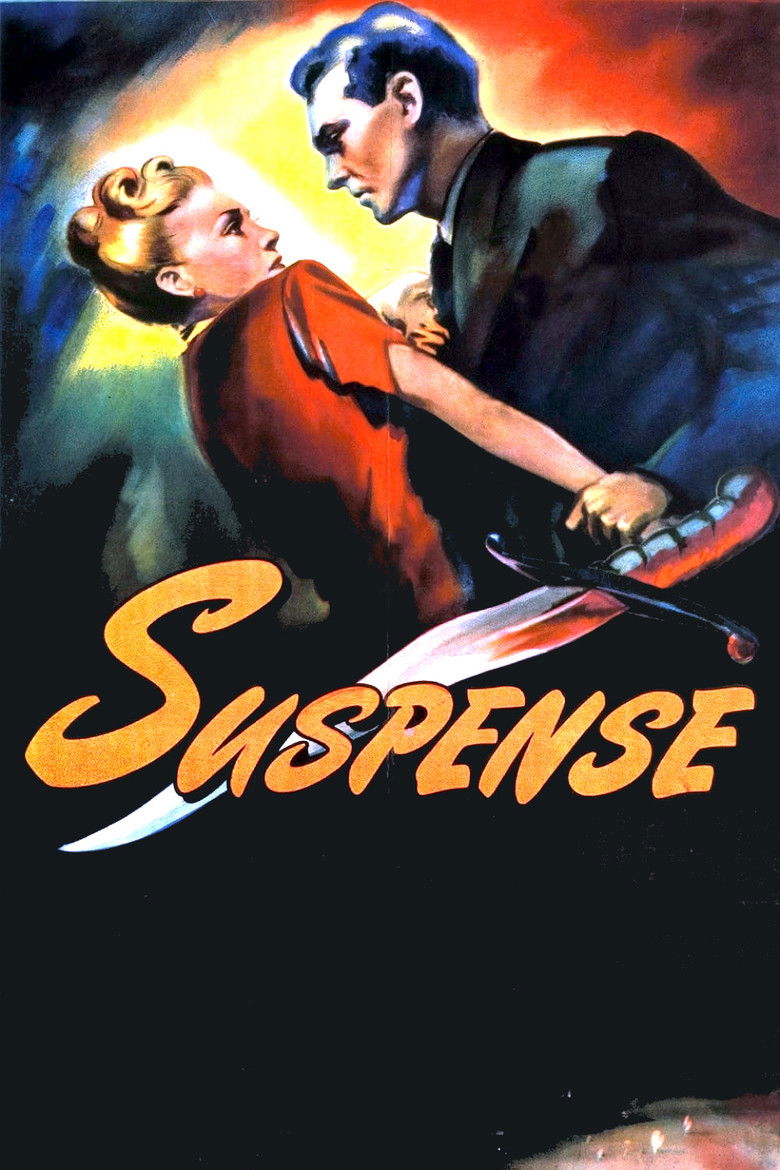
Joe Morgan is a drifter with ambition and little else when he talks his way into a job at a lavish ice show run by the imperious Frank Leonard. The show's star is Roberta Leonard, Frank's wife, a celebrated skater whose cool, luminous presence draws audiences and, inevitably, Joe. Frank is older, possessive, and aware of the dynamic around his wife, yet confident enough in his control to keep Joe close rather than expel him. The supporting world is populated by Ronnie, a young woman infatuated with Joe, and a circle of associates who understand that proximity to Frank Leonard is a conditional privilege.
Joe's ambitions sharpen into a deliberate campaign to displace Frank and claim both the woman and the empire she is attached to. What begins as opportunism hardens into calculation, and the film tracks the moral erosion that follows. Ronnie's attachment to Joe becomes a complication he cannot fully discard, and Frank's tolerance curdles into something more dangerous as he reads the situation with growing clarity. Allegiances in the show's back corridors shift with the same fluid grace the skaters display on the ice, and loyalty proves to be the one performance no one in the film can sustain.
Suspense operates as a study in the mechanics of social climbing within a sealed, theatrical world, where the spectacle of performance extends offstage into every relationship. The ice arena setting gives the film a distinctive visual grammar, and the story uses it to place its characters in a world of controlled surfaces over uncertain depths – a structure native to noir and here given literal form. The film belongs to the mid-decade cycle of noir that examines ambition rather than crime as the primal disorder, with violence arriving not as rupture but as the logical conclusion of choices made with full awareness.
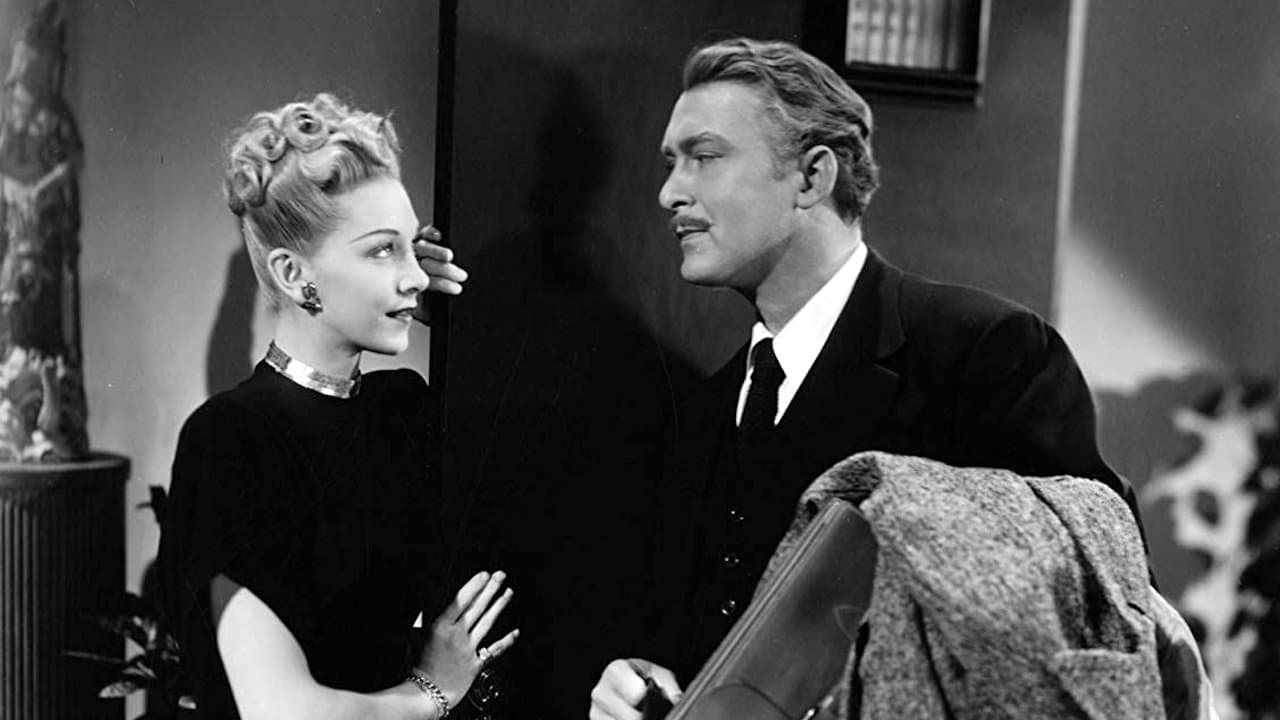
Suspense is a modestly scaled but coherent noir from King Brothers Productions, a poverty-row outfit that occasionally punched above its budget when matched with capable collaborators. Frank Tuttle, better known for his pre-Code work and the Alan Ladd vehicle This Gun for Hire, brings professional economy to the material without imposing a strong personal signature. The film's genuine distinction lies in its setting: the ice show milieu is unusual in the noir canon and allows cinematographer Karl Struss to work with reflective surfaces, theatrical lighting rigs, and a cold luminosity that suits the genre's moral temperature. Belita, a real skating champion, carries the film's visual center with a physical authority her dramatic work only partially matches. Barry Sullivan's Joe Morgan is a recognizable noir type – the man whose intelligence exceeds his patience – rendered without sentimentality. The film does not resolve its tensions cleanly, and that irresolution is a point in its favor. As a document of mid-decade noir's preoccupation with postwar masculine ambition and the women men instrumentalize in pursuit of it, Suspense earns serious consideration.
– Classic Noir
Karl Struss frames Roberta in the empty arena late at night, the vast ice sheet stretching into darkness beyond the reach of a single overhead light source that catches the surface in a cold, reflective shimmer. The camera holds at a distance that emphasizes isolation rather than beauty, and when it moves it is slowly, as if reluctant to disturb the stillness. Shadow pools at the edges of the rink where the lights do not reach, and the contrast between the illuminated ice and the surrounding dark is managed without melodrama – the geometry of the space does the work.
The scene crystallizes the film's central argument about Roberta's position: she is most fully herself in performance, in a space defined by control and precision, and it is precisely that self-possession that makes her an object of desire for men who wish to own what they cannot fully comprehend. Her solitude here is not vulnerability but sovereignty, which makes the events that follow it feel less like fate than like invasion.
Karl Struss, a cinematographer whose career stretched from silent-era pictorialism through his Oscar-winning work on Sunrise, brings a disciplined eye to Suspense that the production's modest resources do not always reward. Working largely on studio-constructed sets, Struss uses the ice arena as a primary instrument: the rink's reflective surface doubles available light and creates a low-key luminosity that is cooler and more diffuse than the hard-shadow chiaroscuro of street-set noir. When the film moves into tighter interiors – offices, dressing rooms, corridors – Struss tightens the frame and deepens the shadow, reinforcing the moral compression of those spaces. His lens choices favor a moderate focal length that keeps backgrounds legible and slightly threatening rather than soft. The theatrical lighting rigs visible within the diegetic world of the show give him motivation for high-contrast overhead sources that he uses with restraint. The result is a visual scheme in which brightness is public and performance, darkness is where the real transactions occur.
Tubi has carried public-domain and low-rights titles from this era regularly, and Suspense has appeared there; check current availability as library rotation applies.
Archive.orgFreeThe film has circulated in the public domain and is likely available via the Internet Archive, though print quality varies by upload source.
Amazon Prime VideoRental or PurchaseA paid rental or purchase may yield a cleaner transfer than public-domain sources; verify current listing as availability shifts.